VIZSLA COPPER DRILLS 48.5 METERS OF 3.32% COPPER WITHIN 266.0 METERS OF 0.97% COPPER AT THE DEERHORN DEPOSIT, WOODJAM PROJECT, CENTRAL BRITISH COLUMBIA
Vizsla reported 266m of 0.97% Cu including a 48.5m 3.32% Cu core at its project.
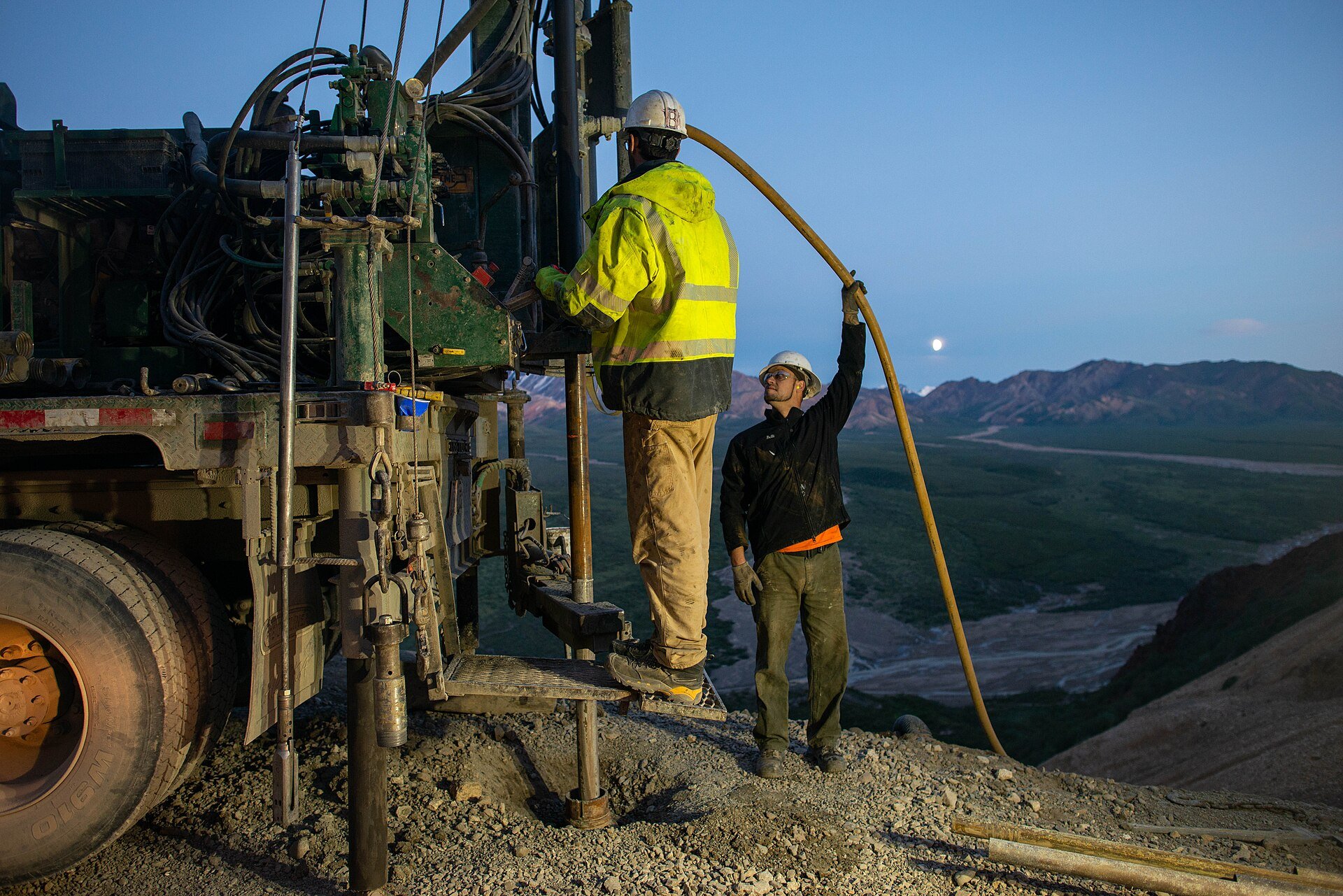
Vizsla Copper Corp. (VCU) announced on August 26, 2026, the initial results from its 6,055-meter, 11-hole summer 2026 drilling program at Woodjam in central British Columbia. The company reported data from a single hole, DH26-136 at the Deerhorn deposit, while results for DH26-134 and DH26-137 remain pending. Additionally, eight holes targeting the Three Firs and Great Plains areas are yet to be reported.
DH26-136 returned two main intervals based on downhole core lengths. The upper near-surface interval measured 129.9 meters at 0.30% copper, 0.21 grams per tonne gold, and 0.94 grams per tonne silver, starting from 70.1 meters. This includes a higher-grade segment of 50.0 meters at 0.46% copper, 0.40 grams per tonne gold, and 1.43 grams per tonne silver, starting from 150.0 meters. The lower high-grade interval measured 266.0 meters at 0.97% copper, 0.06 grams per tonne gold, and 4.29 grams per tonne silver, starting from 306.0 meters. This lower interval includes 107.7 meters at 2.01% copper, 48.5 meters at 3.32% copper, and 21.5 meters at 5.63% copper.
Copper equivalent (CuEq) grades were calculated using metal prices of US$4.00 per pound for copper, US$2,500 per ounce for gold, and US$25 per ounce for silver, with recoveries assumed at 64% for copper, 56% for gold, and 65% for silver. Vizsla Copper noted that true thickness is unknown and that the reported intervals represent downhole core lengths. The company plans to conduct core relogging and 3D modeling of historical eastern Deerhorn core to guide future drilling efforts.
Vizsla Copper Corp. (VCU) has identified a potentially significant new high-grade copper zone at its Deerhorn project. The discovery, described as a single-hole step-out intercept located approximately 100 meters below the historical resource, could add a higher-grade underground component to the Woodjam deposit if confirmed by follow-up drilling, specifically hole DH26-137.
The company currently carries only a historical estimate for Deerhorn, and this new result does not yet change any existing mineral resource. No resource update or economic study is presented with the release. While the finding is materially new relative to the previously low-grade Deerhorn historical resource, it is not yet deposit-defining due to the single-hole nature of the intercept and unknown true width.
Against market expectations, Vizsla Copper’s stock had fallen from C$2.55 in January to C$0.99 in early July before recovering to C$1.33 prior to this announcement. This price movement suggests the result is not already priced in as a major new discovery, although the recent run-up into the release raises the near-term bar.
Vizsla Copper Corp. is a Vancouver-based critical-minerals exploration and development company focused on copper. Its main assets include the Palmer VMS project in Southeast Alaska, the Poplar project in central BC, the Woodjam project in central BC, and the Redgold project along with other exploration assets in British Columbia.
The Palmer VMS project holds an indicated resource of 4.77 Mt @ 1.69% Cu, 5.17% Zn, and an inferred resource of 12.0 Mt @ 0.57% Cu, 3.92% Zn, per an NI 43-101 report dated January 2025. The Poplar project features the Thira porphyry Cu-Mo discovery, which contains long intervals of 0.3–0.5% CuEq. The Woodjam project hosts the Deerhorn porphyry-related Cu-Au deposit, with a historical estimate of 32.8 Mt @ 0.22% Cu and 0.49 g/t Au.
The company closed the Palmer acquisition and a C$44.24 million private placement in December 2025. The current post-financing share structure is approximately 88 million shares based on disclosed issuance. Financial statements provided only cover periods up to October 31, 2025; they show no revenue, negative operating cash flow, and limited cash prior to the December 2025 financing.