Canstar Resources Reports 1.8 m Grading 6.1% Zinc, 106 g/t Silver and 2.0 g/t Gold at Mary March; Mobilizes for Fall Drilling
Canstar reports narrow high-grade VMS hits from funded fall drilling, though no true width was disclosed.
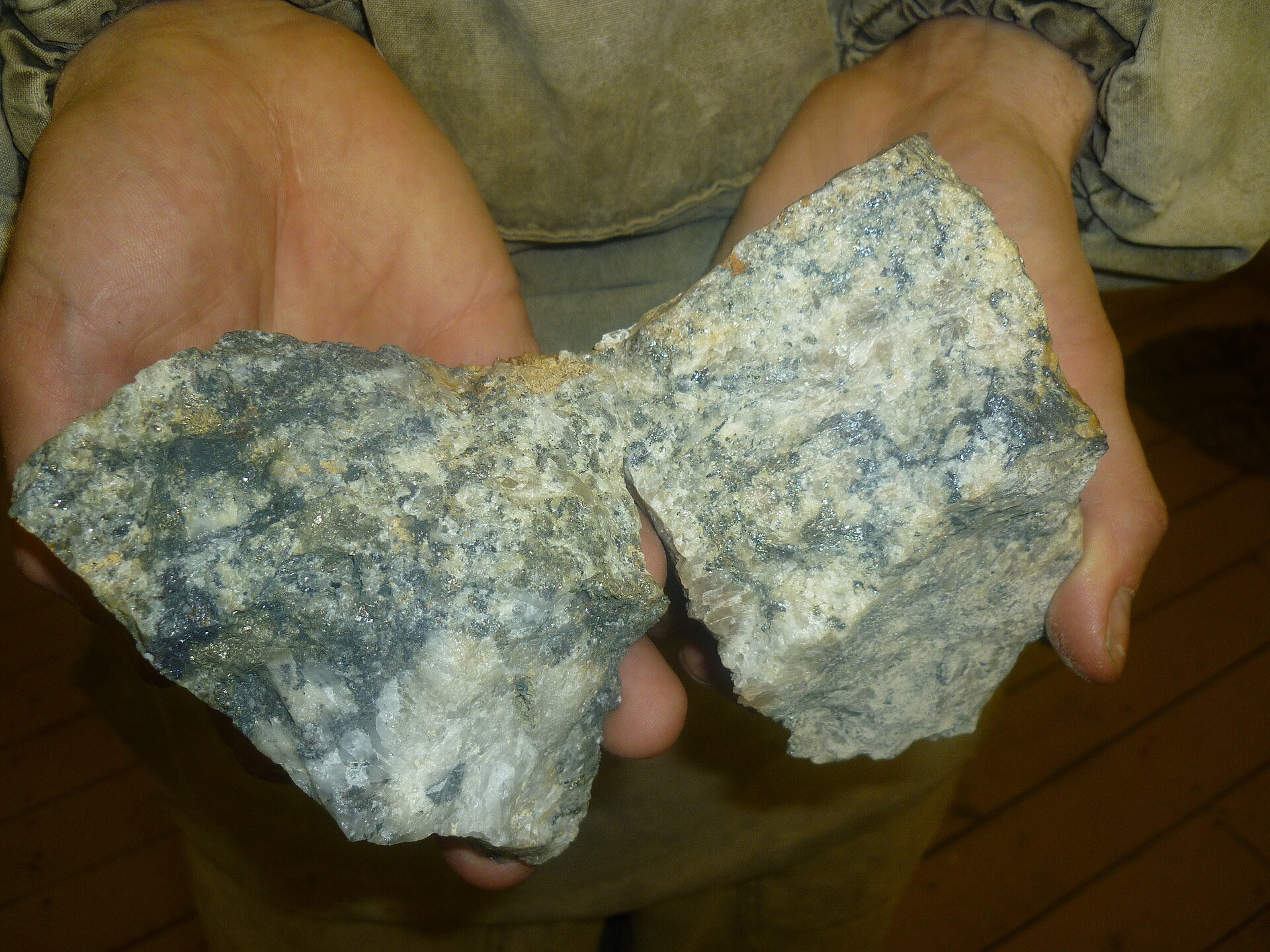
Canstar Resources Inc. (ROX) has released additional assay results from its 2,756-meter summer 2026 Mary March drilling program, which comprised four holes. The company states that all four holes intersected mineralization, with the provided tables selecting intervals exhibiting CuEq grades of 0.5% or greater after rounding.
MM-26-44 returned two intervals at the upper Fleetway Rhyolite contact, described as fault-bounded and separated by 0.3 meters of barren rhyolite. The first interval measured 1.2 meters from 330.7 to 331.9 meters, grading 1.43% Zn, 18.6 g/t Ag, 0.45 g/t Au, 0.60% Pb, and 0.19% Cu (1.3% CuEq). The second interval measured 1.8 meters from 332.2 to 334.0 meters, grading 6.13% Zn, 106.3 g/t Ag, 2.00 g/t Au, 2.53% Pb, and 0.75% Cu (6.0% CuEq).
MM-26-43 returned 1.8 meters from 506.0 to 507.8 meters at 0.95% Cu, 1.45% Pb, 3.42% Zn, 1.55 g/t Au, and 43.3 g/t Ag (4.1% CuEq). This interval is located approximately 28 meters below the upper rhyolite contact and about 130 meters from the MM-26-42 intercept. Fourteen samples remain pending, including one immediately below the interval that may extend it.
The release recaps results from MM-26-42, which returned 15.6 meters from 467.4 to 483.0 meters at 2.4% CuEq, including 9.75 meters at 3.4% CuEq and 5.0 meters at 4.0% CuEq. A second interval of 2.7 meters at 1.4% CuEq was returned from 500.0 to 502.7 meters.
MM-26-41 is described as a potential feeder zone containing approximately 271 meters of altered rhyolite carrying copper- and zinc-bearing stringer and disseminated mineralization. The only assay shown is 1.0 meter from 729.0 to 730.0 meters at 0.18% Cu and 0.77% Zn (0.5% CuEq).
The fall 2026 program is approximately 2,250 meters, contracted to MCL Drilling and fully funded by earn-in partner VMS Mining Corporation under the Earn-In Agreement. The first two holes will test BHEM conductors modelled down-dip from the MM-26-42 and MM-26-43 intercepts. All four summer holes were PVC-cased and surveyed by Crone Geophysics; off-hole conductors were modelled at MM-26-42 and MM-26-43.
The release states that no cutoff grade was applied, no internal dilution was excluded, true widths have not been determined, and all assays are uncut. CuEq is calculated with disclosed metal prices and recoveries borrowed from the Lemarchant VMS deposit; no metallurgical testwork has been completed on Mary March. Net smelter returns and payability factors are not applied.
Canstar Resources Inc. (ROX) is a pre-resource explorer with no revenue, no resource estimate, and a market capitalization of approximately C$7.4 million at C$0.04 per share. The company’s August 27 release reported the widest massive sulphide intercept in project history, measuring 15.6 m at 2.4% CuEq. The stock traded around C$0.06 on the release date and has since drifted to C$0.04. The new best intercept is 1.8 m at 6.0% CuEq, which is higher grade but much narrower than the previous anchor.
The release adds a high-grade polymetallic interval at the upper rhyolite contact and a gold-bearing interval 28 m below the contact. It also includes a 130 m step-out, BHEM conductors that provide specific targets for the next holes, and a fully funded fall program. These developments confirm the system is mineralized at several contact positions but do not change the scale of the deposit.
Prior-period financial context not disclosed in today’s release includes a FY2026 net loss of C$2,959,661, cash of C$102,520, a working capital deficiency of C$1,329,556, shareholders’ deficiency of C$1,319,990, and a going-concern flag. The company cites C$4 million in VMSC funding notes maturing October 31, 2026 and dependence on completing the Kuroko joint venture and raising more equity. The project-level earn-in is non-dilutive to Canstar shares, but prior releases describe VMSC earning up to 65%, leaving Canstar with a reduced share of the project at full earn-in.
Canstar Resources Inc. (TSXV: ROX; OTCID: CSRNF) is a TSXV-listed VMS explorer with no revenue and no mineral resource estimate. Its flagship asset is the Mary March VMS Project in the Buchans district of central Newfoundland, covering approximately 148 km². The project is advanced under an earn-in agreement with VMS Mining Corporation.
The earn-in arrangement provides up to C$12 million of project funding, of which C$12 million has been received. Prior releases describe VMSC earning up to a 65% project interest at full earn-in, meaning Canstar’s economic interest is reduced as VMSC funds the work. The current release states the funding is non-dilutive to Canstar’s share capital, though it represents project-level dilution.
The company also holds the Skellefte VMS Project in northern Sweden, comprising approximately 68,000 hectares and currently at early till geochemistry. Additionally, Canstar options the Golden Baie gold-antimony project in southern Newfoundland to Churchill Resources. Golden Baie provides cash, Churchill shares, and a 0.5% NSR, but is no longer the operating focus.
Prior-period financial context, not disclosed in today’s release, includes a FY2026 net loss of C$2,959,661. The company held cash of C$102,520, a working capital deficiency of C$1,329,556, total debt of C$1,921,127, and a shareholders’ deficiency of C$1,319,990, accompanied by a going-concern flag. The company is dependent on the Kuroko joint-venture transactions and additional financing.