Canstar Resources Intersects 15.6 Metres of Massive Sulphide Grading 2.3% CuEq at Mary March, Including 9.75 Metres at 3.3% CuEq
Canstar’s Mary March massive sulphide intersection marks the widest intercept to date, though grades remain below the 1999 anchor.
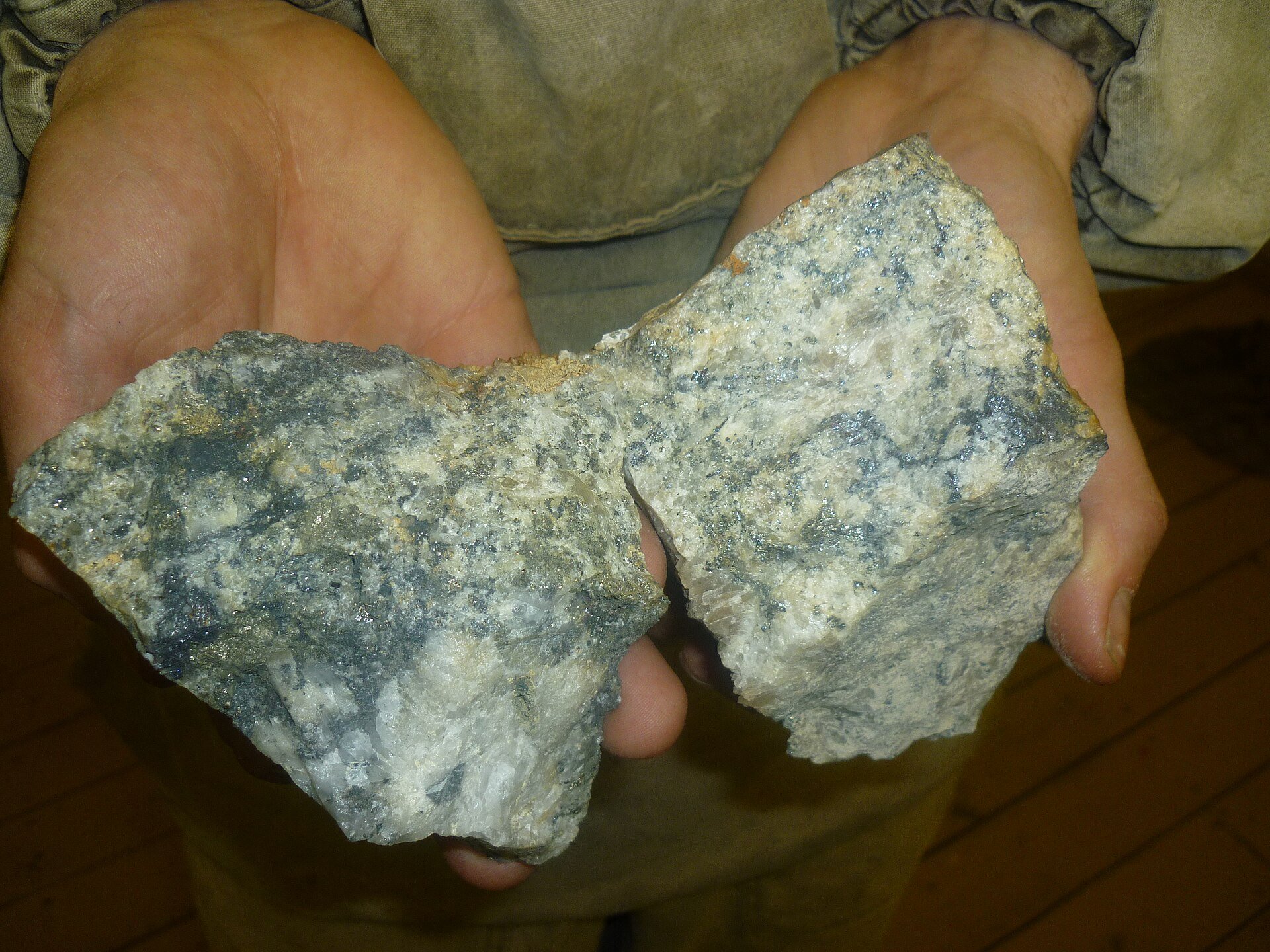
Canstar Resources Inc. (ROX) reported that hole MM-26-42 returned 15.6 m grading 2.3% CuEq from 467.4 m to 483.0 m downhole. The interval includes 9.75 m at 3.3% CuEq, which includes 5.0 m at 3.9% CuEq. Primary metal grades in the 15.6 m interval are 0.73% Cu, 0.73% Pb, 2.10% Zn, 0.71 g/t Au, and 19.0 g/t Ag. The massive sulphide is fault-bounded and the full width was not intersected. Hole MM-26-42 was stopped at 576 m due to unstable ground before reaching the lower rhyolite contact.
Assays are pending for holes MM-26-41, MM-26-43, and MM-26-44, plus a 1 m visual massive sulphide interval in MM-26-42. MM-26-44 visually intersected two narrow massive sulphide intervals at the upper rhyolite contact. Step-out hole MM-26-43 intersected the upper rhyolite contact about 130 m from MM-26-42. VMSC advanced an additional $2.0M, and the Glencore legacy interest converted to a 2% NSR royalty.
Canstar Resources Inc. (ROX) is a pre-resource, pre-revenue grassroots VMS explorer with a market capitalization near C$12M. The company’s recent results represent a genuine geological step-out and model-validation event for Mary March, proving that massive sulphide occurs in a second position approximately 100 m from the historical Mary March discovery.
However, the discovery does not yet transform the scale, grade, or economic thesis of the project. The finding is based on only one assayed hole, with the true width remaining unknown. The grade is materially lower than the historical high-grade intercept, and the system has not yet been demonstrated as continuous or repeatable. Additionally, no metallurgy or recovery data is currently available.
The 1999 Mary March high-grade intercept has long been part of the project narrative and is likely embedded in the company’s story. The stock has round-tripped from C$0.11 in January 2026 to C$0.04 by late May and back to C$0.06, indicating that the market has not been priced for a repetition of the 1999-grade result.
Canstar Resources Inc. (TSXV: ROX) is a Newfoundland-focused VMS explorer. Its flagship Mary March Project covers approximately 148 km² in the Buchans district and is being advanced under an earn-in agreement with VMS Mining Corporation. VMSC can earn up to 65% through staged investments, with funding to date totaling approximately C$4.0M. A Glencore legacy interest has been converted to a 2% NSR royalty, consolidating Mary March ownership under Canstar and VMSC. The company also holds the northern Skellefte VMS project in Sweden and has optioned Golden Baie to Churchill Resources. Canstar currently has no mineral reserves or resources and no production.