Revival Gold Completes 2026 Infill Drilling Program at Mercur Gold Project in Utah
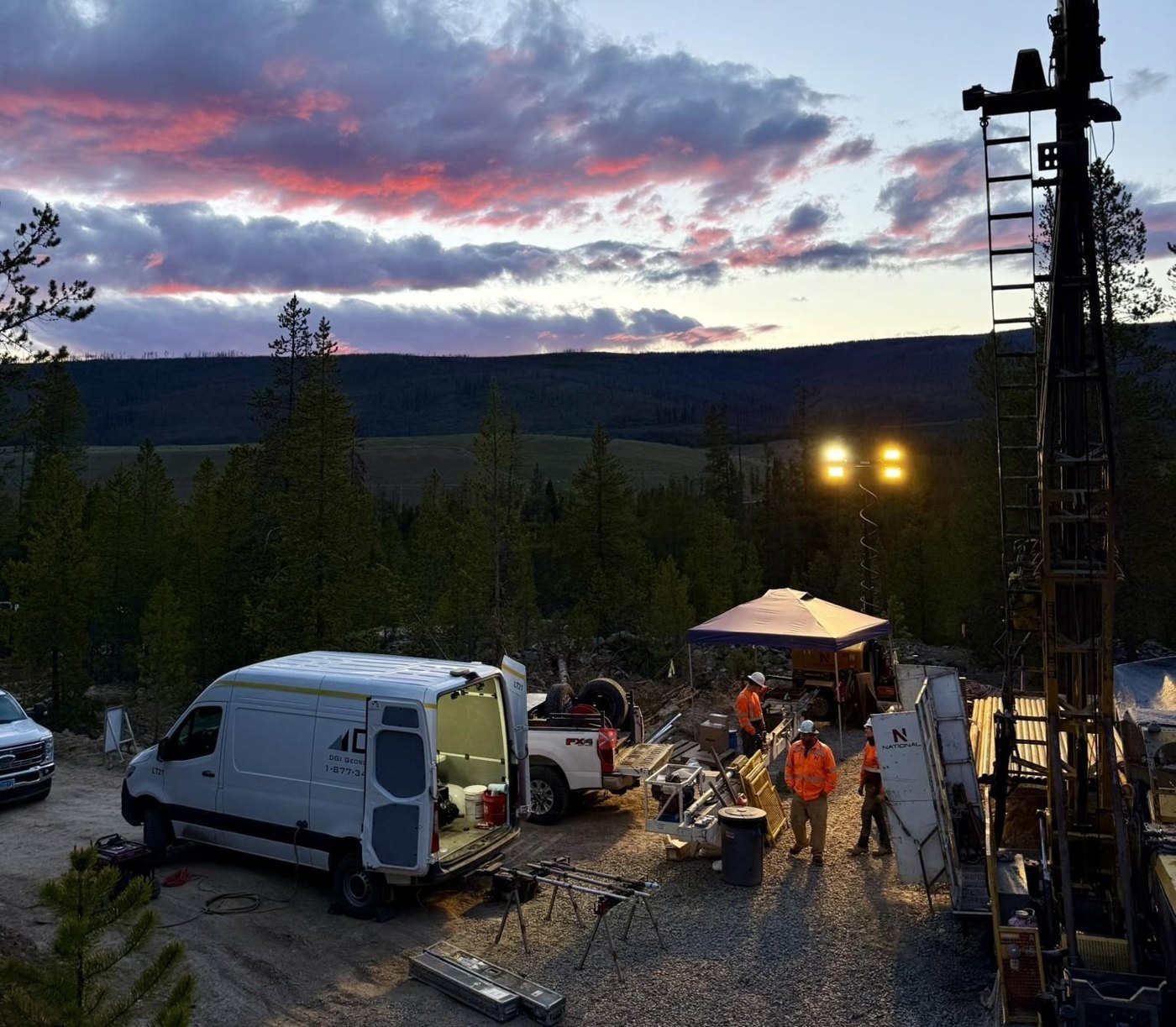
Revival Gold Inc. (RVG) has announced the completion of approximately 10,000 meters of infill reverse circulation (RC) drilling across 100 holes at its Mercur Gold Project in Utah. The company stated that this work is aimed at upgrading Inferred Mineral Resources to Measured and Indicated categories in preparation for a planned Preliminary Feasibility Study (PFS). The release details assay results from 17 specific drill holes, highlighting significant intercepts that support the grade and leachability estimates from the 2025 Preliminary Economic Assessment (PEA).
Among the reported results, hole RM26-180 returned 1.82 g/t Au over 29.0m at 66m downhole, with a true width estimated at 60-95% of the drilled width. Hole RM26-193 intersected 1.32 g/t Au over 45.7m at 17m downhole. Additional intercepts included 0.90 g/t Au over 54.9m at 69m downhole in hole RM26-201, and 0.75 g/t Au over 44.2m at 12m downhole in hole RM26-192. All mineralized intercepts were calculated based on a 0.17 g/t cutoff grade, allowing for up to two intervals of internal dilution. Results for the remaining approximately 70 infill holes are expected to be released in the next couple of months.
Hugh Agro, President & CEO, commented on the progress, stating, "Revival Gold's Mercur project team has made excellent progress with infill drilling this year. Gold grades, cyanide soluble to fire assay ratios, and encountered geology continue to support Revival Gold's expectations for the project coming out of last year's PEA." He added, "Indeed, with an average hole depth of only 100 meters, and indications of open structures east and west and at depth across the deposit, the infill program has increased our enthusiasm for the company's future exploration drilling plans scheduled for later this year and into next."
The total 2026 drilling program targets approximately 18,000 meters. Future plans include approximately 2,500 meters of RC drilling and 1,200 meters of auger drilling to pursue resource expansion, as well as 4,100 meters of geotechnical, hydrological, and metallurgical drilling using RC, core, and auger methods.
Assay samples were prepared at ALS Geochemistry facilities in Elko, Nevada, and Twin Falls, Idaho. Gold assays were performed at ALS Geochemistry in Reno, Nevada, and Vancouver, British Columbia, using Fire Assay and Atomic Absorption Spectroscopy (AAS) on a 30-gram nominal sample weight (Au-AA23). Samples containing greater than 100 ppb Au were also analyzed by cyanide leach with an AAS finish (Au-AA13) to determine AuCN/AuFA ratios for heap leach recoverability. Multi-element geochemical analyses were completed via the ME-MS 41 method. Quality assurance and quality control measures included the use of certified reference materials, duplicates, and blanks.
The technical data was reviewed by John Meyer, P.Eng., Executive Vice President, Engineering and Development, and Everett Brill, RM SME, Exploration Manager.