Blossom Gold Reports Initial Metallurgical Results and Engagement of Metallurgical Advisor for the Rosebud Open-Pit, Heap-Leach Project
Blossom confirms ~73% oxide leach recovery, noting that fresh rock requires roasting for processing.
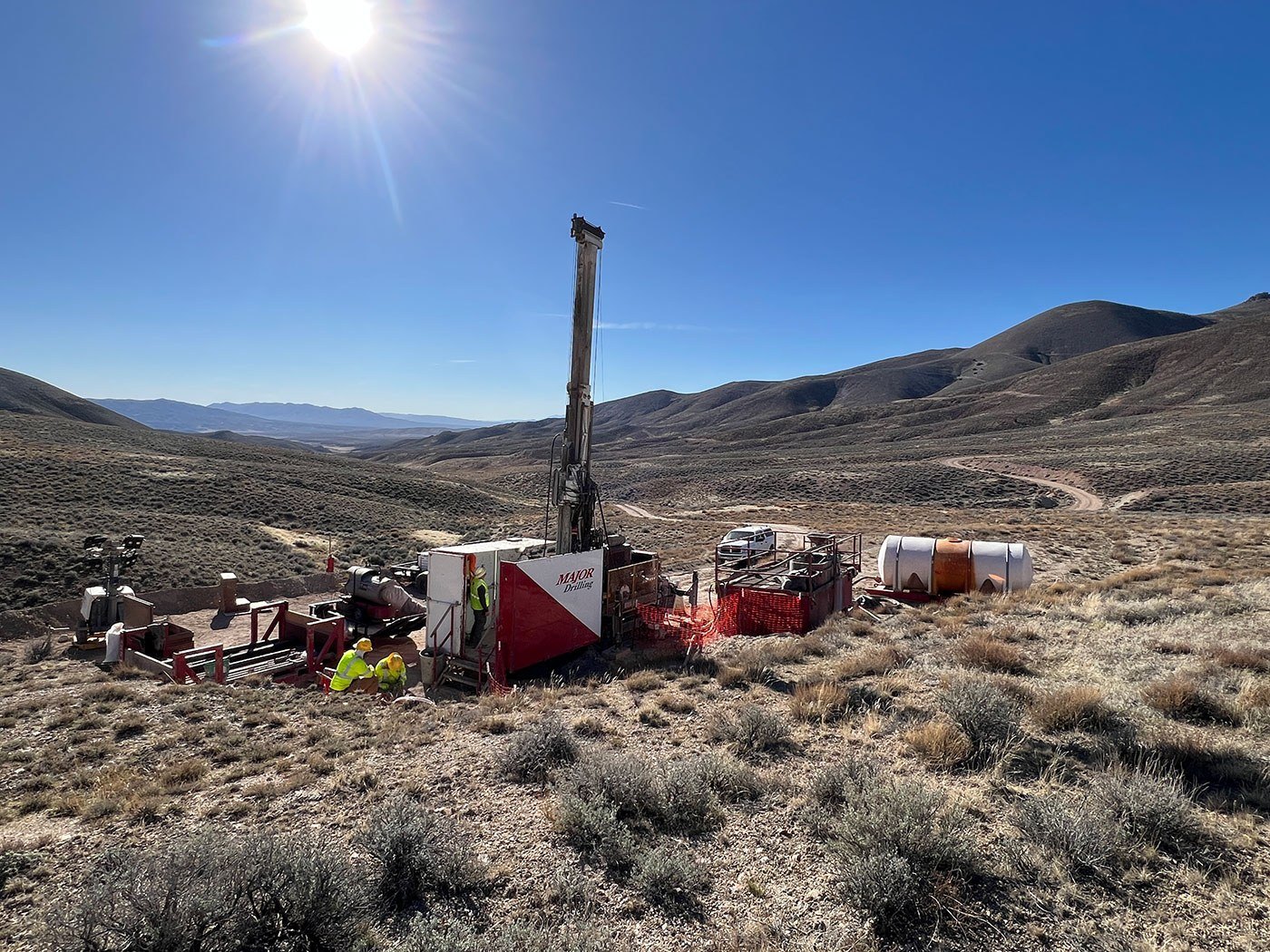
Blossom Gold Inc. announced initial bottle roll and cyanide shake test results for the Rosebud Project in Nevada, conducted by Kappes, Cassiday and Associates (KCA). The tests covered five intervals from three drill holes, revealing significant variability between oxidized and fresh rock types.
Oxidized material demonstrated strong gold recovery averaging ~73% at a 25mm crush, with silver recovery averaging ~63%. In contrast, fresh rock showed poor initial recovery averaging ~36% at a 25mm crush. Cyanide shake tests confirmed poor leaching, particularly in hole BG26-008. Roasting fresh rock at 650°C for 2 hours resulted in >100% estimated gold recovery, indicating sulfide interference is inhibiting direct cyanide leaching.
Preg-robbing tests showed nil organic carbon (<0.01%) and non-preg-robbing material across all samples. Copper concentrations ranged from 5 to 24 mg/kg, with cyanide-soluble copper at 26% to 68%.
The company engaged Jim Wickens, who has over 40 years of experience, as a metallurgical advisor to guide ongoing feasibility studies and metallurgical programming. Additional PQ core from high-grade zones and oxidized targets will be drilled. Results from the next batch of interval composites and initial column leach tests are expected in Q4 2026.
A Colorado School of Mines doctoral student is analyzing mineralogy's impact on heap-leach chemistry, supported by the CASERM program. The Rosebud Project currently hosts an Inferred Mineral Resource of 70.755 million tons grading 0.62g/t Au and 6.49g/t Ag for 1.28 million oz Au and 13.4 million oz Ag.
Blossom Gold Inc. (BGAU) reported metallurgical results that align with expectations for a low-sulfidation epithermal deposit transitioning from oxide to fresh rock. The approximately 73% oxide recovery validates the heap-leach concept for the upper zones, a factor critical to near-term economics.
However, the company noted poor fresh rock recovery of approximately 36%, which necessitates roasting to achieve greater than 100% recovery. This requirement introduces processing complexity and cost, as roasting adds capital and operating expenses that could impact the feasibility study's net present value (NPV) and internal rate of return (IRR).
To address these challenges, Blossom Gold has engaged a seasoned metallurgical advisor to optimize crushing, agglomeration, and roasting parameters. While this is a positive step, it does not immediately de-risk the project. The news is considered incremental and expected, confirming the technical path forward while highlighting the variability that must be managed in upcoming column leach tests and the feasibility study.
Blossom Gold Inc. (TSX: BGAU) is a Nevada-based exploration and development company focused on the Rosebud Project, a low-sulfidation Au-Ag epithermal deposit located approximately 50 miles west of Winnemucca. The project is 100% owned and covers approximately 1,809 acres of Bureau of Land Management (BLM) land.
The company’s mine plan targets an open-pit, heap-leach operation with construction slated for the second half of 2028. Historical underground operations between 1997 and 2000 produced approximately 400,000 ounces of gold and 2.3 million ounces of silver from roughly 1 million tons of material. The current Inferred Mineral Resource stands at 70.8 million tons grading 0.62 grams per tonne of gold and 6.49 grams per tonne of silver, containing 1.28 million ounces of gold and 13.4 million ounces of silver.