Tale of the Tape: An Abitibi Gold Explorer Steps Into the Ring With Established Miners
Wesdome reports declining grades and rising AISC costs, underscoring operational challenges that overshadow the promotional narrative surrounding its recent production updates.
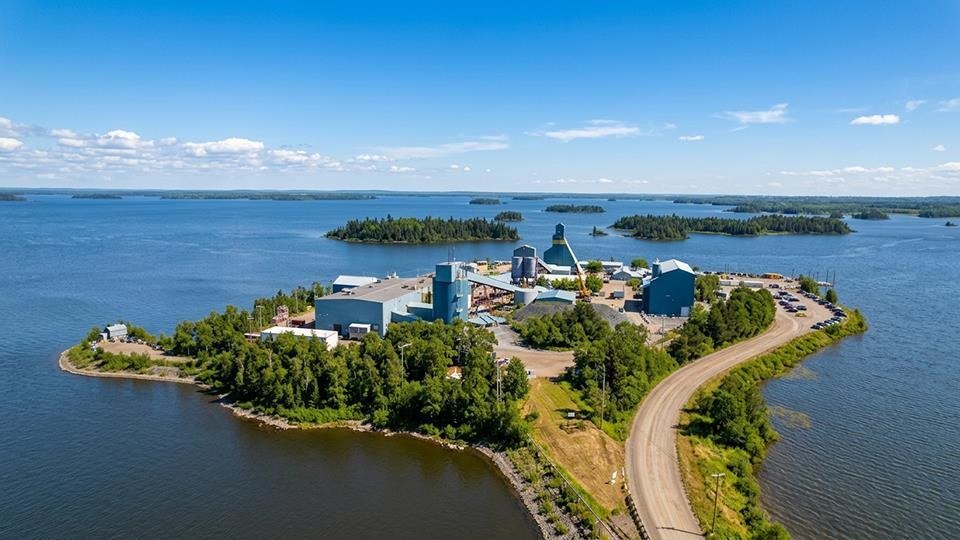
An article dated November 11, 2026, distributed by Canada News Group, features a comparative analysis of gold producers that includes Wesdome Gold Mines Ltd. (WDO). The piece centers on Opawica Explorations Inc. (TSXV: OPW), a Rouyn-Noranda-based explorer with three properties, a 10,000-meter drill tender opened on November 5, 2026, and no defined mineral resource on any of its assets.
Market Equities Limited, the owner of Canada News Group, disclosed an Investor Awareness Agreement with Opawica dated October 26, 2026, covering branding, communications, and consulting services, with expectations of future compensation. The article was reviewed and approved by Opawica Explorations Inc. Wesdome appears in the piece solely as one of four producer comparables, with all cited figures recycled from the company’s November 4, 2026, third-quarter release.
According to the data presented, Wesdome reported consolidated revenue of C$251 million, an increase of 9%, with an average realized price of US$4,279 per ounce. Net income stood at C$89.7 million. Consolidated gold production totaled 41,287 ounces, representing an 18% decline compared to the third quarter of 2025. The company reaffirmed its 2026 production and all-in sustaining cost (AISC) guidance. A quote from CEO Anthea Bath addressed throughput at Eagle River, mining fronts at Kiena, and exploration activities.
The article omits several key details regarding Wesdome’s cost structure and operational performance. While it cites AISC figures for Agnico Eagle (US$1,648/oz) and Eldorado’s Lamaque (US$1,436/oz), it excludes Wesdome’s AISC of US$1,789/oz, which is the highest among the group. Although the company stated it reaffirmed its AISC guidance, the underlying release indicates that AISC is now expected near the top end of the US$1,525–1,700/oz range, with cash costs projected to be up to 10% higher than the original US$1,050–1,150/oz guidance. Additionally, the article does not mention that guidance is expected below the midpoint for a third consecutive quarter.
No mention is made of the decline in head grade at Eagle River, which fell to 10.1 g/t in the third quarter of 2026 from 15.6 g/t in the first quarter of 2025, a factor cited as the driver for the production decline. The piece contains no new Wesdome-specific facts, numbers, dates, or commitments.
Wesdome Gold Mines Ltd. (WDO) was referenced in a recent release as an "established miner" foil for an explorer with no resource, no revenue, and a drill tender as its headline event. The company’s inclusion served a decorative role in the piece, which was described as a paid awareness effort benefiting the explorer.
All Wesdome data points in the release were restatements of the company’s November 4 third-quarter results, which were already eight days old and reflected in the share price at the time of publication. The framing presented a cost-miss quarter as a clean guidance reaffirmation and benchmarked peer average all-in sustaining costs (AISC) while omitting Wesdome’s own US$1,789/oz figure.
The market’s reaction to the third-quarter release itself saw the stock close at C$25.49 on November 3. It jumped 8.9% to C$27.76 on November 4, added 4.3% to C$29.67 by November 9, then slipped 4.6% to C$28.32 on November 10. This price movement was characterized as a relief trade against a de-risked setup rather than a response to the commentary.
Wesdome Gold Mines Ltd. (TSX: WDO, OTCQX: WDOFF) is a Canadian gold producer headquartered in Toronto, operating two 100%-owned underground mines. The company’s assets are supported by eight-year reserve mine plans extending through 2033, encompassing 1.4 moz of 2P reserves. This marks the first time in the company’s history that both mines carry concurrent long-life plans.
The Eagle River Mine is located 50 km west of Wawa, Ontario, on the Mishibishu Greenstone Belt, covering approximately 400 km² of land. The site features a permitted mill capacity of 1,200 tpd, targeting 80%+ utilization, or approximately 1,000 tpd. In the third quarter of 2026, the mine produced more than 10.1 g/t at 79,820 t. Since operations began in 1995, the mine has produced more than 2 moz. For fiscal year 2026, guidance stands at 105,000–115,000 oz. Regional targets include the Mishi, Magnacon, Cameron Lake iron formation, Dorset, 6 Central, 300, 500, 700, 800, and Falcon zones.
The Kiena Mine Complex is situated in Val-d'Or, Québec, within the Abitibi belt, covering approximately 75 km² of land. The facility has a permitted capacity of 2,040 tpd and features a 930 m shaft with 1,250 tpd ore and waste handling. Operating zones include Kiena Deep (A, A1, A2, B, Footwall, Norbenite Footwall), Presqu'île, which is currently ramping, and Dubuisson, along with the emerging Kiena East / Shawkey 10 corridor. Fiscal year 2026 guidance for the complex is 75,000–90,000 oz.
Wesdome’s leadership team includes Anthea Bath as President & CEO, Philip Yee as CFO, Tyler Mitchelson as COO, and Jono Lawrence as SVP Exploration & Resources. The board is chaired by Edward Dowling. The company’s jurisdiction is exclusively Canada, covering Ontario and Québec, which eliminates sovereign risk. This location means the cost base is entirely in Canadian dollars and exposed to Canadian labour and contractor inflation.