Black Mammoth Metals Obtains Drill Permit for Leadore Silver-Lead-REE Property, ID
Black Mammoth Secures Leadore Drill Permit as Market Cap Swells on Exploration Hype
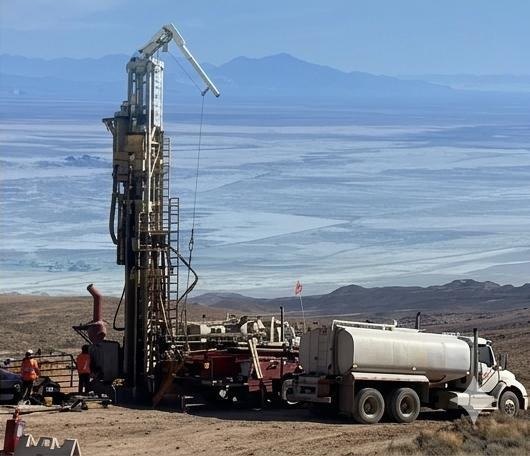
On January 15, 2026, Black Mammoth Metals (BMM) announced it has received final approval from the Bureau of Land Management (BLM) to commence a drilling program at its 100%-owned Leadore Silver-Lead-REE property in Lemhi County, Idaho. The permit covers up to 12 drill sites. The primary objectives are to expand known silver-lead oxide mineralization, test a sulfide target identified via Induced Polarization (IP) surveys, and evaluate the extent of a rare earth element (REE) placer layer. The property is notably royalty-free.
The news is a necessary operational milestone but not a material financial or discovery event. - Enables Primary Catalyst: This permit allows the company to finally validate high-grade surface samples (up to 2,160 g/t Ag and 7.6% TREO) reported in 2025. - Systematic De-risking: Moving from geophysical targets (IP anomalies) to physical testing is the standard progression for explorers. - Valuation Pressure: With a market capitalization exceeding $250 million, the market has already priced in significant success. Routine permitting news is unlikely to drive the stock higher; the market is now waiting for the drill bit to justify the current valuation. - Target Diversity: The "placer REE layer" is a unique and potentially high-value target (26% NdPr ratio), but as it is a placer deposit rather than rock-in-place, its economic continuity remains highly speculative.
Black Mammoth Metals is a multi-jurisdictional explorer focused on gold, silver, and rare earth elements in the Western United States. - Flagship Project: The Leadore Property (Idaho) appears to have superseded the Callaghan Gold District (Nevada) as the primary focus due to the discovery of high-grade REE (7.6% TREO) and silver (2,160 g/t Ag) surface mineralization. - Strategy: The company follows an aggressive acquisition model, holding interests in over 14 projects across Nevada, Idaho, Arizona, and New Mexico. Many projects were acquired via staking (100% ownership) to minimize royalty burdens.