Bravo's Annual Letter to Shareholders
Bravo Caps Watershed Year with Massive Resource Growth and Economic Validation at Luanga, Though Financing Hurdles Loom
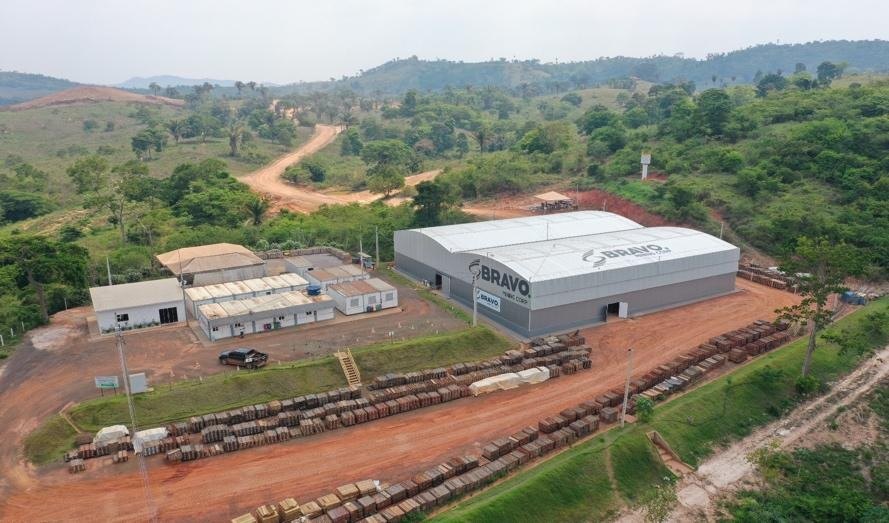
The December 31, 2025, Annual Letter to Shareholders summarizes a year of significant de-risking for the Luanga PGM+Au+Ni Project in Pará, Brazil. Key milestones achieved in 2025 include a major Mineral Resource Estimate (MRE) update, the granting of a Preliminary License (LP), the completion of a Preliminary Economic Assessment (PEA), and the selection of the company as an anchor for the Barcarena Export Processing Zone (ZPE). The CEO describes 2025 as a "watershed moment" and an "inflection point" characterized by disciplined execution and material de-risking.
The 2025 updates represent a material improvement in the project's perceived value and viability: - Resource Scale: The February 2025 MRE update increased Measured and Indicated (M&I) contained Palladium Equivalent (PdEq) by 154% to 10.4 Moz, with an additional 5 Moz Inferred. This establishes Luanga as a globally significant PGM deposit. - Economic Viability: The July 2025 PEA delivered robust economics with a Base Case after-tax NPV8% of $1.25 billion and an IRR of 49%. The "Alternate Case" (Vertical Integration) increases NPV to $1.86 billion, supported by the ZPE anchor status which provides tax incentives. - Permitting Progress: Securing the Preliminary License (LP) in March 2025 is a critical regulatory hurdle cleared, confirming environmental and social feasibility. - Accounting Red Flag: In August 2025, the company was forced to restate 2023 and 2024 financials due to non-cash foreign exchange accounting errors identified following an Ontario Securities Commission (OSC) review. While non-cash, this reflects a past weakness in financial reporting controls.
Bravo Mining Corp. is focused on the 100%-owned Luanga PGM+Au+Ni Project located in the Carajás Mineral Province of Brazil. The project is a large-scale, shallow, open-pit deposit containing palladium, platinum, rhodium, gold, and nickel. The project benefits from existing infrastructure in a pro-mining jurisdiction, including proximity to hydroelectric power and rail.