Koryx Copper Announces Pre-Feasibility Results for the Haib Copper Project, Southern Namibia
Koryx’s Haib PFS shows a US$2.54bn NPV and US$2.06bn build cost against a C$419m market cap.
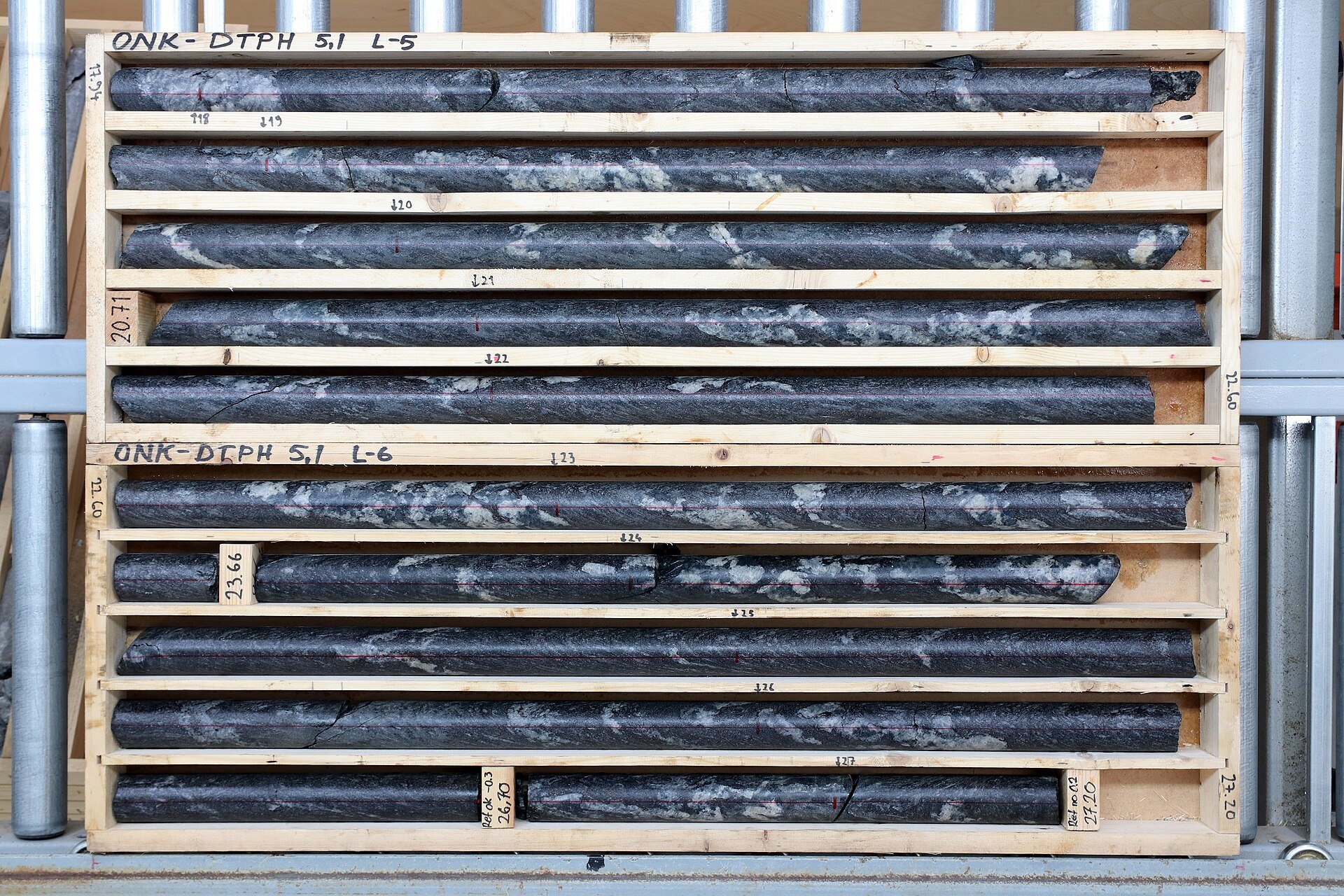
Koryx Copper S.A. (KRY) has released the maiden Pre-Feasibility Study and the first-ever declaration of Mineral Reserves for its 100%-owned Haib porphyry Cu-Mo-Au project. Located in the Karas Region of southern Namibia under EPL 3140, the project covers 36,589 hectares. The study’s base case utilizes metal prices of US$5.00/lb for copper, US$22/lb for molybdenum, and US$3,500/oz for gold.
Under these assumptions, the project demonstrates a post-tax net present value (NPV8%) of US$2,538 million and a pre-tax NPV of US$4,205 million. The post-tax internal rate of return (IRR) is 24.9%, with a pre-tax IRR of 30.6%. The post-tax payback period is projected at 3.9 years, generating a life-of-mine (LOM) post-tax cash flow of US$7,425 million. A sensitivity analysis using a higher copper price deck of US$13,000/t shows an improved post-tax NPV of US$3,875 million, an IRR of 32.2%, and a payback period of 3.5 years.
Upfront capital expenditure is estimated at US$2,059 million, which includes US$133 million in project contingency and US$152 million in capitalized pre-strip costs. Sustaining capital over the LOM is estimated at US$639 million, with US$384 million required in years 1-10. A closure provision of US$183 million is assumed, offset by salvage value.
The study defines Probable Mineral Reserves effective 6 November 2026, based on a 0.15% copper cut-off. These reserves total 1,119 million tonnes (Mt) at 0.27% copper, 58 parts per million (ppm) molybdenum, and 0.02 grams per tonne (g/t) gold, equating to 0.29% copper equivalent (CuEq). The contained resources include 2,995 kilotonnes (kt) of copper, 65 kt of molybdenum, and 689 thousand ounces (koz) of gold. The reserve comprises approximately 1,058 Mt of sulphide material and 61 Mt of oxide and transitional material, to which no molybdenum or gold is attributed. No Proven reserves were declared.
Mineral Resources effective 28 October 2026, also at a 0.15% copper cut-off, include Indicated resources of 1,371 Mt at 0.26% copper, 59 ppm molybdenum, and 0.02 g/t gold, containing 3,572 kt of copper. Inferred resources total 329 Mt at 0.24% copper, containing 781 kt of copper. The headline figure of 4.35 Mt contained copper for Measured, Indicated, and Inferred resources includes the 781 kt Inferred component, which was assigned zero value in the reserve pit and treated as waste.
The mine plan outlines a conventional contractor-operated open pit operation featuring 15-meter benches with 7.5-meter ore flitches. Equipment includes electric rope shovels and 360-tonne trolley-assisted haul trucks. The life-of-mine strip ratio is 0.98:1, rising to 1.10:1 in years 1-10. The 24-year schedule sees mining complete in year 15, with years 16-24 dedicated to processing reclaimed low-grade stockpiles and approximately 60.9 Mt of oxide and transitional material in the final two years.
Processing involves 48 million tonnes per annum (Mtpa) of run-of-mine ore through a three-stage crushing circuit comprising a gyratory crusher, cone crusher, and high-pressure grinding roll (HPGR). Material is ball-milled to 80% passing 150 micrometers. Coarse gangue rejection removes a nominal 25% of ROM mass prior to flotation. A hybrid Jameson/tank cell circuit treats approximately 36 Mtpa. Copper recovery is projected at 89.5% for years 1-10 and 87.3% LOM, producing a 21.8% copper concentrate. Oxide recovery is assumed at 60%.
Production is forecast at 135,000 tonnes per annum (ktpa) of copper in concentrate, with 130,000 tonnes payable, during years 1-10. LOM production averages 109,000 tonnes in concentrate, with 105,000 tonnes payable, totaling 2,607 kt of copper in concentrate over the LOM. By-product production in years 1-10 includes 15,000 ounces per annum (kozpa) of payable gold and 1.22 million pounds per annum (Mlbpa) of payable molybdenum. The headline gross copper equivalent production is quoted at 145 ktpa in years 1-10, while the production table indicates payable copper equivalent of 137 ktpa.
Operating costs are estimated at C1 costs of US$1.72/lb and All-In Sustaining Costs (AISC) of US$2.07/lb for years 1-10. LOM averages are US$2.19/lb for C1 and US$2.52/lb for AISC. Capital intensity is US$14,985 per tonne of annual payable copper equivalent in years 1-10, rising to US$18,584/t LOM.
Fiscal terms include a 3% government royalty and a 1% export levy. The corporate income tax rate is 37.5%, with an LOM effective rate of 32%. Capital expenditure is written off over three years, and the model includes a US$100 million opening assessed loss. Payabilities are set at 96.5% for copper, 50%
Koryx Copper S.A. (KRY) has released its Preliminary Feasibility Study (PFS) for the Haib project, marking the first conversion of inventory to a reserve and a significant shift in operational metrics compared to the September 2025 Preliminary Economic Assessment (PEA). The new plan increases throughput to 48 Mtpa via mill/float processing, eliminating the heap leach circuit that handled 7 Mtpa in the prior study. Consequently, first-10-year copper output rises from 92 ktpa to 135 ktpa, while the life of mine extends from 23 to 24 years. The strip ratio drops from 1.8 to 0.98, and unit costs improve, with C1 falling from US$1.81/lb to US$1.72/lb and AISC moving from US$2.05/lb to US$2.07/lb. Capital intensity decreases from US$16,871/t to US$14,985/t, and post-tax NPV increases from US$1.351bn to US$2.538bn.
Several factors qualify this comparison. The NPV uplift is partially driven by price assumptions; the PEA used US$4.30/lb, while the PFS uses US$5.00/lb, with pit optimization based on US$4.75/lb. Only the US$13,000/t upside case is presented, leaving the downside of the NPV unquantified in the provided material. Capital expenditure rises materially from US$1.559bn to US$2.059bn, a 32% increase. The contingency of US$133m represents only ~6.5% of the pre-contingency US$1,774m subtotal, a level the company flags as thin given the two-year, 40/60 build and the first-of-kind coarse gangue rejection circuit. The company indicates the Definitive Feasibility Study (DFS) will require a full additional year of work.
The reserve is Probable-only and low-grade, averaging 0.27% Cu LOM with a 0.32% Cu ROM head grade in years 1-10. The final nine years process stockpiles at feed grades declining to roughly 0.19% Cu, plus oxide at an assumed 60% recovery with no by-product credit. High-margin production is front-loaded; LOM C1 of US$2.19/lb and AISC of US$2.52/lb are roughly 27% and 22% worse than the first-decade numbers.
The release presents three different production measures: 145 ktpa "gross CuEq", 135 ktpa copper-in-concentrate, and 130 ktpa payable copper. The economically relevant figure for cash flow is 130 ktpa payable copper plus 15 koz Au and 1.22 Mlb Mo.
Management had guided a PFS to Q4 2026 in every release from March 2026 onward. The 8 October 2026 interim update pre-announced the 48 Mtpa throughput, the abandonment of heap leaching, the ~12 Mtpa coarse gangue rejection, and the Jameson cell configuration. The reserve itself, capital cost, operating cost build-up, mine schedule, tax and payability assumptions, and the NPV/IRR were genuinely unknown until today.
The scale relative to the company is a critical factor. A US$2.54bn after-tax NPV on a ~C$419m market capitalization implies a large gap between the study’s valuation and the equity price, driven by the need to fund a US$2.06bn upfront build from a treasury of roughly C$45m (presentation estimate at end-August 2026) and US$57.2m of reported cash at 31 May 2026. The PFS confirms the next twelve months are focused on raising finance, and the 2027 strategic financing review acknowledges the likely need for a partner. No streaming or offtake prepayment is in the model, so the disclosed NPV is gross of whatever funding cost is eventually paid.
Koryx Copper S.A., a Luxembourg-domiciled company listed on the TSXV, NSX, and OTCQX, holds a 100% interest in the Haib porphyry Cu-Mo-Au project in the Karas Region of southern Namibia. The asset is held through Deep South Mining Company (Pty) Ltd and Haib Minerals (Pty) Ltd under EPL 3140, which was renewed to July 2027. The company also controls the Luanshya West and Mpongwe exploration licences in Zambia via its 80%-owned subsidiary, Koryx Copper Zambia Ltd. Management has described these Zambian assets as non-core optionality with a stated willingness to monetize them.
The Haib project is a ~1,880 Ma Paleoproterozoic porphyry system featuring mineralization over ~2 km of strike. Mineralization is hosted in Orange River Group volcanics and Vioolsdrif intrusive rocks, with chalcopyrite-pyrite as the dominant sulphides, alongside minor molybdenite, bornite, and chalcocite. The deposit exhibits potassic alteration over sodic-calcic zones and has almost no supergene blanket, with oxide mineralization rarely extending below 30 m.
Prior operators including Falconbridge, Rio Tinto Zinc, Great Fitzroy, Teck, and King Resources have drilled the site since the 1960s. Koryx has completed 231 holes since 2021. The project is now at the pre-feasibility study and reserve stage, with a planned US$2.06bn build for a 48 Mtpa operation and a 24-year mine life. Construction is scheduled to start in 1Q 2028, with a two-year build period. First production is implied around 2030, with the presentation stating first copper production before 2031.