LABRADOR IRON ORE ROYALTY CORPORATION - RESULTS FOR THE THIRD QUARTER ENDED SEPTEMBER 30, 2026
Labrador Iron Ore’s dividend now outruns cash as concentrate production remains constrained for several years.
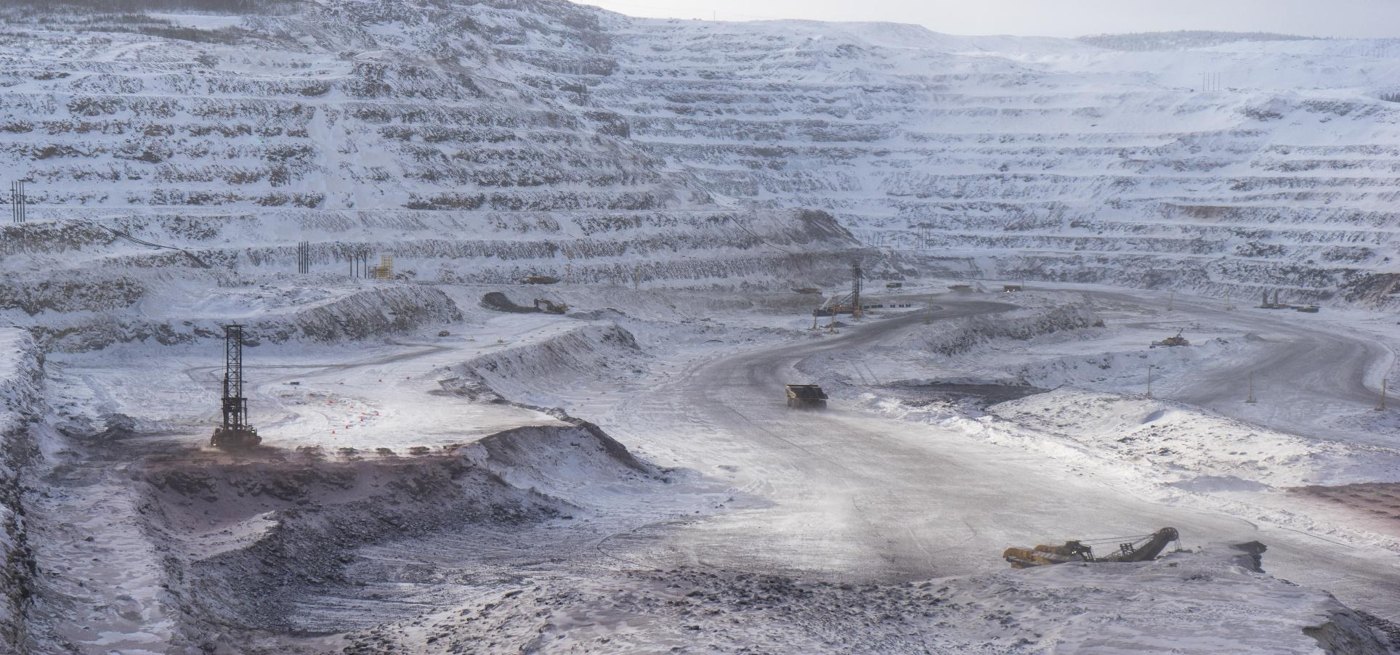
Labrador Iron Ore Royalty Corporation (LIF) reported third-quarter 2026 results showing a decline in profitability as the company, which holds a 7% gross overriding royalty and 10¢/t commission over Rio Tinto's Iron Ore Company of Canada (IOC) along with a 15.1% equity stake, navigated lower volumes and pricing pressures. Royalty revenue fell 7.8% to $40.068 million from $43.454 million in the same period last year, bringing total revenue to $40.569 million compared to $43.986 million. Equity earnings from IOC dropped 55% to $3.852 million from $8.604 million, resulting in net income of $24.517 million, or $0.38 per share, down 19.5% year-over-year but up 123% quarter-over-quarter from $30.445 million, or $0.47 per share.
Cash flow from operations decreased to $20.4 million, or $0.32 per share, from $32.7 million, or $0.51 per share, while adjusted cash flow fell 7.9% to $22.3 million, or $0.35 per share, from $24.2 million, or $0.38 per share. The company declared a dividend of $0.30 per share, down from $0.40 per share a year ago, with payments scheduled for October 28, 2026. For the first nine months, declared dividends totaled $0.90 per share compared to $1.20 per share previously.
Production at IOC’s operations saw mixed results, with concentrate production falling 8% year-over-year to 4.05 million tonnes, though rising 30% quarter-over-quarter. Saleable production decreased 5% to 3.81 million tonnes, also up 30% from the prior quarter. Pellet production rose 3% to 2.46 million tonnes, while coarse fine sand (CFS) production dropped 16% year-over-year to 1.34 million tonnes, despite a 79% quarterly increase. For royalty purposes, IOC sales volume declined 1% to 3.87 million tonnes, with pellet sales up 27% to 2.78 million tonnes and CFS sales falling 37% to 1.09 million tonnes.
Market conditions contributed to the financial headwinds, with the 65% Fe index averaging US$113 per tonne, a 3.4% year-over-year decrease and a 7% quarterly drop. Realized prices averaged approximately US$105 per tonne, down 7.9% from US$114 per tonne. Premiums for blast furnace (BF) pellets rose to US$33 per tonne from US$31 in the second quarter, while direct reduced iron (DR) pellet premiums increased to US$50 per tonne from US$43 in the second quarter and US$37 in the third quarter of 2025. CEO John F. Tuer stated that results were negatively affected by low CFS and pellet sales volumes, alongside lower realized prices driven by reduced iron ore prices and increased shipping costs.
Looking ahead, LIORC indicated that 2026 sales are likely to fall at or below the low end of Rio Tinto’s original guidance of 15–18 million tonnes, compared to 15.7 million tonnes sold in 2025. The company warned that ongoing initiatives are expected to constrain concentrate production for several years, potentially limiting the free cash flow available for IOC dividends. Post-quarter data from October 2026 showed the 65% Fe index at US$106 per tonne, a further 6% decline from the quarterly average, with BF pellet premiums at US$37 per tonne and DR pellet premiums at US$58 per tonne.
LIORC remains debt-free with $15.0 million in cash and $29.4 million in working capital. The company has a $30 million revolving credit facility undrawn through September 18, 2027. This marks the third consecutive year that LIORC has not received a dividend from IOC.
Labrador Iron Ore Royalty Corporation (LIF) reported a significant operational improvement in the third quarter, with concentrate production rising 30% quarter-over-quarter and concentrate sales (CFS) surging 79%. Pellet sales reached 2.78 million tonnes, marking the highest volume in the company’s 2025–2026 history and a 27% year-over-year increase. Pellet production itself hit 2.46 million tonnes, the second-highest quarterly figure on record. Consequently, net income more than doubled sequentially.
Despite the operational gains, the company’s forward-looking guidance signals a prolonged period of financial constraint. The duration language for concentrate production and free cash flow available for IOC dividends has shifted from "near term" to "several years," effectively converting a cyclical air pocket into a multi-year earnings impairment. The fiscal-year outcome is now formally framed "at or below the low end" of a range that was reaffirmed twice in 2026, representing a de facto guidance cut and the first time LIORC has pointed below the floor rather than at it.
Market data embedded in the release further underscores the challenging environment. October prices for 65% Fe ore stood at US$106/t, setting up a weaker Q4 realized price. This weakness was offset only by record pellet premiums, with blast furnace (BF) premiums at $37/t and direct reduced iron (DR) premiums at $58/t.
The financial impact of the production shortfall is quantifiable. Q3 royalty revenue of $40.068 million on 3.87 million tonnes implies roughly $10.35/t of CAD royalty. Each lost million tonnes is worth about $10.4 million of royalty revenue, approximately $8.3 million after the 20% Newfoundland royalty tax, and roughly $0.09 per share after income tax. The roughly 2.3 million tonne shortfall versus the midpoint of the original range is therefore worth about $0.21 per share annually, which is approximately 18% of the $1.20 dividend.
The market did not fully price in this information on November 4. Volume data was released on October 14, and the stock fell from $23.42 on October 2 to $20.72 by October 13, then traded between $19.96 and $21.61 into the print, closing at $19.99 on the day of release. The forward-looking content of this document—the duration language and the below-the-range sales outcome—is the part not yet reflected in the share price. While the sequential recovery is real and the balance sheet remains intact, the release confirms that the cash-generating unit is impaired for longer than previously disclosed while the dividend continues at a level that no longer has a comfortable margin of coverage.
Labrador Iron Ore Royalty Corporation (LIF) operates as a passive royalty and holding company, deriving all revenue from Iron Ore Company of Canada (IOC), an integrated iron ore producer in Labrador and Quebec. IOC is operated by Rio Tinto, which effectively controls the asset. LIF holds three economic interests in the same asset: a 7% gross overriding royalty on all iron ore products produced, sold, and shipped by IOC; a commission of 10 cents per tonne on all iron ore products produced and sold; and a 15.10% equity interest in IOC held directly and through Hollinger-Hanna Limited.
The company’s release states plainly that "the Corporation's revenues are entirely dependent on the operations of IOC" and that "the Corporation does not incur capital expenditures or have any restrictions on dividends." IOC’s physical assets, according to the January 2026 investor presentation, include mining and concentrating operations at Labrador City, a pellet plant, a wholly owned 418 km railway, and port facilities at Sept-Îles. Products include blast furnace pellets, direct reduction pellets, and high-grade (>65% Fe) concentrate for sale.
Production history shows 16.1 Mt in 2024 and 15.9 Mt in 2025. Guidance for 2026 was initially set at 15–18 Mt, with the outcome now indicated at or below 15 Mt. Nameplate capacity is 23 Mt of concentrate and 12.5 Mt of pellets. The mid-term capacity target was cut to ~20 Mt in March 2026 and no longer features in the current disclosure.
The structure presents one asset, one commodity, one operator, one jurisdiction, and no operational control. This concentrates both the upside, driven by a top-decile grade, pellet-heavy product mix levered to CBAM-driven premium demand, and the downside, as every operating decision that matters is made by Rio Tinto for Rio Tinto's reasons.