LABRADOR IRON ORE ROYALTY CORPORATION (TSX:LIF) - RIO TINTO RELEASES IOC PRODUCTION AND SALES INFORMATION
Labrador Iron Ore reported a 30% quarter-on-quarter increase in third-quarter output, although year-to-date production fell 16% and the 15Mt annual guidance remains uncertain.
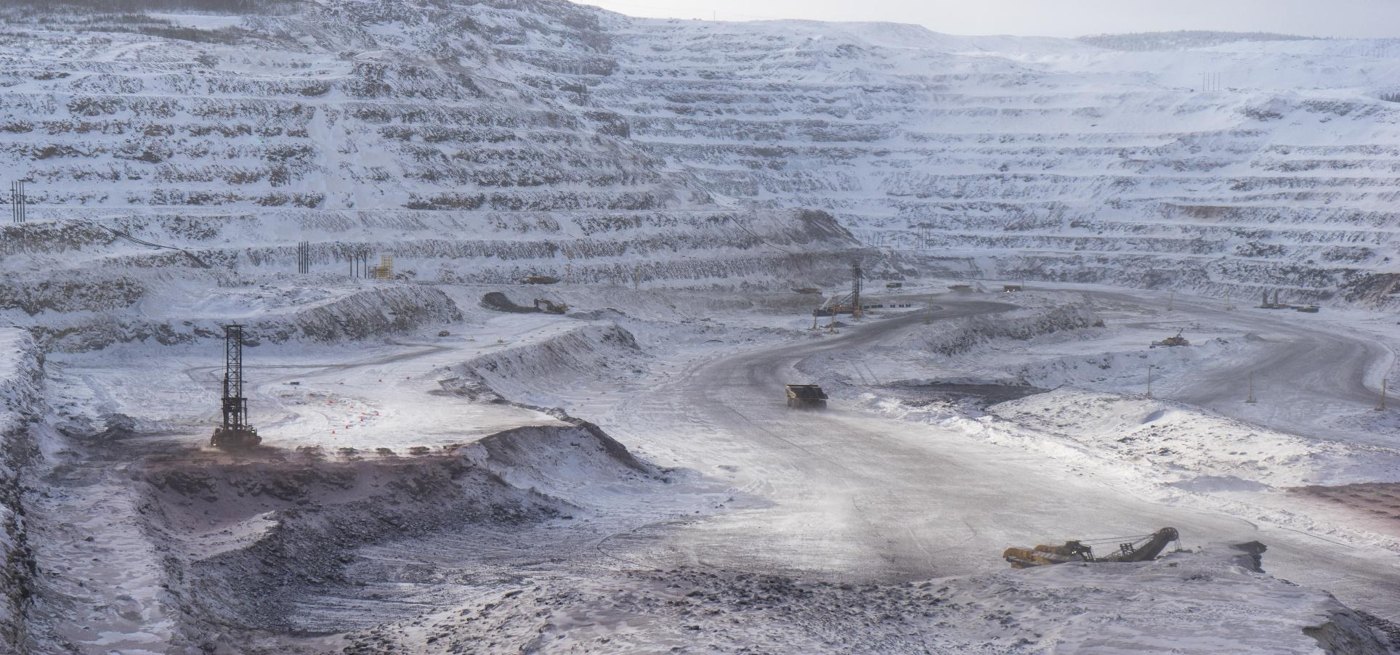
Labrador Iron Ore Royalty Corporation (LIF) released a routine operational update on November 4, 2026, relaying the third-quarter 2026 performance of the Iron Ore Company of Canada (IOC), the asset that underpins the company’s economics. The update provides backward-looking volume information only, with no financial figures, realized pricing, cost data, reserve updates, or guidance changes disclosed.
For the quarter, IOC produced 3.81 million tonnes of saleable iron ore, comprising 2.46 million tonnes of pellets and 1.34 million tonnes of concentrate for sale (CFS). Total iron ore sales reached 3.78 million tonnes, consisting of 2.61 million tonnes of pellets and 1.17 million tonnes of CFS. LIORC cautioned that IOC sales tonnages are calculated slightly differently for Labrador Iron Ore Royalty Corporation’s royalty, meaning royalty-basis tonnage will differ from the headline numbers.
LIORC directs readers to Rio Tinto’s quarterly report for quarter-on-quarter comparisons and commentary. The company’s own full Q3 2026 financial report is scheduled for release after the market close on November 4, 2026.
LIORC’s ownership and royalty structure includes a 15.10% equity interest in IOC, held directly and via Hollinger-Hanna Limited. The company also holds a 7% gross overriding royalty on all iron ore produced, sold, and shipped, plus a 10 cent per tonne commission on all iron ore produced and sold.
Labrador Iron Ore Royalty Corporation’s recent release contained no new financial information, guidance changes, or surprises relative to the trajectory management had already telegraphed. The single genuinely new datapoint is that Q3 2026 production of 3.81 Mt represents a 30.5% sequential rebound from Q2 2026's 2.92 Mt trough, suggesting the "strategic operational reset" involving deferred waste removal, pit health, and haul-truck repair is bearing some fruit.
However, Q3 2026 remains down 4.8% year over year versus Q3 2025's 4.00 Mt, and CFS production remains 15.7% below the prior-year quarter, indicating the recovery is real but incomplete. This release does not change the full-year arithmetic: with 9M 2026 saleable production of roughly 10.17 Mt, closing the 15 Mt low end would require ~4.83 Mt in Q4. This target is higher than any quarter achieved so far in 2026 and above Q4 2025's 3.73 Mt, placing the low end of guidance in genuine doubt consistent with management's own "at or below" language.
Labrador Iron Ore Royalty Corporation (LIF) is a royalty and equity holding company rather than an operator, with its entire economic interest tied to Iron Ore Company of Canada (IOC), an active producing iron ore complex in Labrador and Quebec operated by Rio Tinto. IOC’s assets include a concentrator, a pellet plant, a wholly owned 418 km railway, and port facilities, representing integrated, established infrastructure. The company produces premium iron ore pellets, high-grade concentrate exceeding 65% Fe, and direct-reduction (DR) pellets, which serve as key inputs for DRI-EAF steelmaking.
LIORC’s economics consist of a 15.10% equity stake in IOC, held both directly and via Hollinger-Hanna, a 7% gross overriding royalty on all IOC product produced, sold, and shipped, and a 10 cent per tonne commission. Currently, IOC is mid-way through a multi-year improvement and reset plan aimed at addressing pit health and equipment reliability. Consequently, output has remained below expectations, and nameplate capacity is not expected to be reached in the near term. Additionally, Rio Tinto has restructured IOC’s reporting so that it now sits within Rio Tinto’s broader iron ore operations, alongside Western Australian Iron Ore and Simandou, rather than as a stand-alone segment.