SAGA Metals Completes HQ Drill Program for Planned Metallurgical Pilot Study Associated with PEA / PFS - Level Evaluation at Radar Critical Minerals Project
Saga’s met-core program at the project defers value to the pending mineral resource estimate, with no new assay data or tonnage reported.
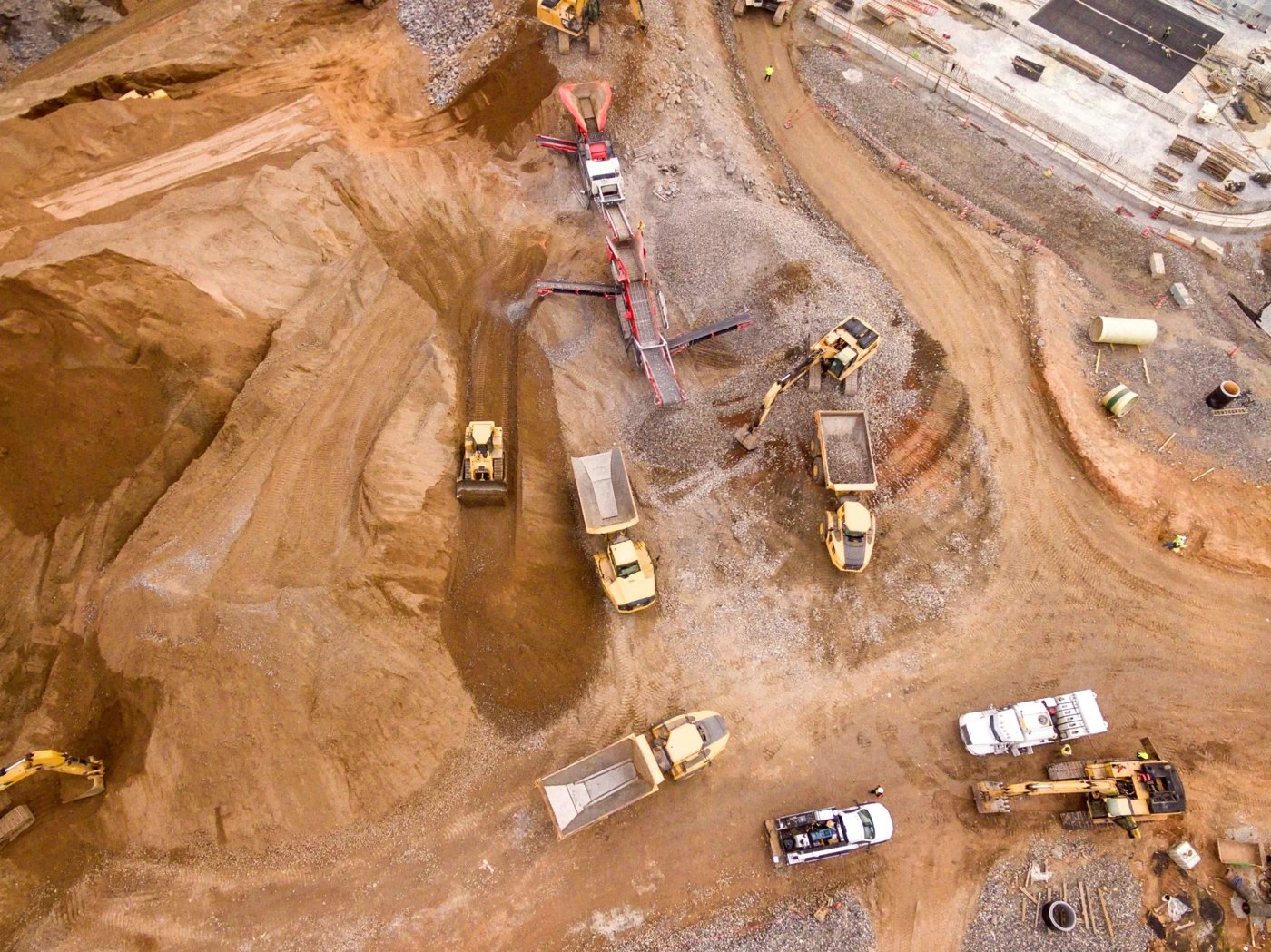
Saga Metals Corp. (SAGA) announced the completion of a four-hole, 1,010 m HQ-diameter (63.5 mm) diamond drilling program at the Trapper North deposit. Conducted in October 2026, the program was designed to recover large-diameter core for metallurgical test work, which will feed a pilot study tied to a Preliminary Economic Assessment (PEA) or Pre-Feasibility Study (PFS)-level evaluation.
The company reported drill-hole geometry and visual geological logging only, with no assay results included in the release. The reported holes include R-0096 on section N10 (azimuth 220°, dip −80°, 341 m), R-0097 on section N09 (azimuth 40°, dip −80°, 161 m), R-0100 on section N10 (azimuth 41°, dip −80°, 296 m), and R-0101 on section N11 (azimuth 218°, dip −70°, 212 m).
Visual logging identified the following downhole core lengths of oxide material: - R-0096: 259.9 m total oxide, comprising 222.5 m semi-massive and 37.4 m intercumulate - R-0097: 125.9 m total oxide, comprising 45.2 m semi-massive and 80.7 m intercumulate - R-0100 and R-0101: Logging is in progress and will be reported with assays
HQ core recovers approximately 1.8 times the core mass per metre compared to NQ core. Three of the holes were collared from existing Mineral Resource Estimate (MRE) pads (R-0086, R-0087, R-0092), while one was collared from a new N10 pad. All core was oriented, and assays are pending at IGS in Québec, where samples will be processed using lithium-borate fusion with an XRF finish.
Metallurgical work is underway, with Stage 2 RCL bench optimisation approximately half-way through the planned timeline. A Phase 2 pilot study, lasting 10 weeks, is subject to SAGA approval following the completion of Phase 1.
Saga Metals Corp. (SAGA) continues its exploration activities at its pre-resource stage assets, with the Radar MRE targeted for Q4 2026 and the Wolverine MRE targeted for 2027. The company currently reports no revenue, no reserves, and no Preliminary Economic Assessment (PEA). The market has already priced in the scale of the 29 km² lopolith, which includes a 22,432 m MRE program, a 100% hit rate, and multi-hundred-metre intercepts that have been public since January 2026.
This release does not alter the perceived scale, grade, or odds of the project. Scale remains unchanged, with four holes drilled inside the already-defined Trapper North footprint from existing collars on 100 m sections. There are no assays included in this release, meaning there is nothing to re-rate. The odds of success are marginally improved only in that a metallurgical sample program is now complete; however, Stage 1 recoveries, Stage 2 scope, and the "approximately half-way" status were all published on 29 September 2026 and remain unchanged.
The primary expectation anchor for Radar is the maiden MRE, not individual drill intercepts. The stock has repriced downward during the drilling campaign, falling from C$0.88 on 28 Jan 2026 to C$0.30 between 21-28 Oct 2026, a 66% drawdown. This decline occurred over a year in which the company reported its best-ever intercept, R-0085's 495.6 m. The market has concluded that long, uniform Fe-Ti-V metres at these grades are not, by themselves, value. Against that revealed expectation, a release with zero assays is neither a positive nor a negative surprise, but rather news flow that keeps the tape alive between catalysts.
At a micro-cap, this activity is routine; at a producer, it would be invisible. Either way, it does not move the equity.
A key factor for investors to consider is the capital allocation context. Prior-period context, specifically Q1-2026 (quarter to 31 Oct 2025), showed C$1,957,247 in cash, an operating cash outflow of C$1,784,733, and SG&A of C$1,031,692 for the quarter. Since then, the company has raised C$10.24M in May 2026 and paid roughly C$1M cash for the Wolverine acquisition, payable within 120 days of the 10 July 2026 close, meaning the payment is due around now. The company has drilled roughly 24,700 m across Radar, Wolverine, and this HQ program in 2026, while running concurrent marketing programs including C$400k (Machai), USD$400k (Spark Newswire), US$245k (PMI), plus C$200k (Capitaliz) and US$250k (i2i) budget increases. The share count has increased from 32.4M in Apr 2025 to 56.3M in Oct 2025, and is now roughly 70M+ post-May-2026. The resource is not yet defined, while the share count has more than doubled.
Saga Metals Corp. (TSXV: SAGA; OTCQX: SAGMF; FSE: 20H) is a Labrador and Quebec-focused critical minerals explorer with no revenue and no mineral reserves.
The company’s portfolio includes the Radar Ti-V-Fe Project near Cartwright, Labrador, which is 100% owned and comprises 690 claims covering approximately 24,175 hectares. This area encloses the roughly 160 km² Dykes River Intrusive Complex, where a 29 km² oxide-bearing lopolith hosts the Trapper, Falcon, and Hawkeye zones. An 85-hole, 22,432-meter mineral resource estimation (MRE) program was completed in August 2026. The company is working with independent estimator GeoGlobal LLC, led by Dr. Abani R. Samal, to target a maiden NI 43-101 MRE for the fourth quarter of 2026. Infrastructure at the site includes paved Route 510, a company-built access trail, the Cartwright deep-water port and airport, and proximity to the Muskrat Falls and Churchill Falls hydroelectric facilities.
In central Labrador, Saga Metals owns the Wolverine Heavy Rare Earth Element (REE) Project, acquired on 10 July 2026 through the Catalyst Rare Metals acquisition. The property covers approximately 294.5 km² and features peralkaline volcanic-hosted, near-surface total rare earth oxide (TREO) mineralisation, with heavy rare earth oxide (HREO) comprising approximately 24-28% of TREO. Historic drilling returned up to 2.03% TREO, and grab samples have tested as high as 21.6% TREO. A maiden diamond drilling program consisting of 22 holes and 3,241 meters was completed in October 2026, with assays pending. A maiden MRE is targeted for 2027.
The company also holds the Double Mer Uranium Project in Labrador, covering 25,600 hectares along an 18 km radiometric trend, with 14 km confirmed by surface samples testing up to 0.428% U3O8. In Quebec’s Eeyou Istchee James Bay region, the Legacy Lithium Project spans approximately 72,000 to 73,866 hectares, where LCT pegmatite indicator minerals have been identified in the early stages.
Saga Metals has divested its North Wind iron ore asset to Orion Iron Ore in exchange for 4 million Orion shares, a board seat, and a 2% gross overriding royalty rate (GORR). The company also acquired the Garneau titanium project from Rio Tinto; the asset is drill-ready but has not yet been drilled.