Buffalo Potash Initiates Brine Injection and Advances Site Development
Buffalo Potash begins brine injection and HLD operations, with sales still targeted for Q1 2027.
Buffalo Potash Corporation (BUFF) released an operational update on October 28, 2026, confirming that it has commenced Phase 3 brine injection and is concurrently advancing Phase 4 site development at the Disley Initial Production Module (IPM). Brine injection marks the first stage of Phase 3, with sustained circulation designed to dissolve potassium chloride (KCl) and develop the mining plane once communication is established between the horizontal injector and producer wells via the clay seam.
Site development is proceeding in two stages, beginning with brine-circulation site preparation followed by surface-processing site development. Engineering for surface-processing equipment is being finalized, and procurement has commenced. The company maintains its target for first production from the IPM in the first quarter of 2027. The IPM is designed for an annual production capacity of 125,000 tonnes per annum (TPA) of soluble-grade potash, with a full build-out of the Disley project contemplated at up to 1,125,000 TPA.
The update reiterates figures from the Preliminary Economic Assessment (PEA), which estimates an after-tax net present value (NPV) of US$1.1 billion at an 8% discount rate, an internal rate of return (IRR) of 30%, and an approximately 12-month payback period from the start of production. The release notes that the production decision is not based on a feasibility study with mineral reserves and that Hydro-Lava Development (HLD) has not operated at commercial scale.
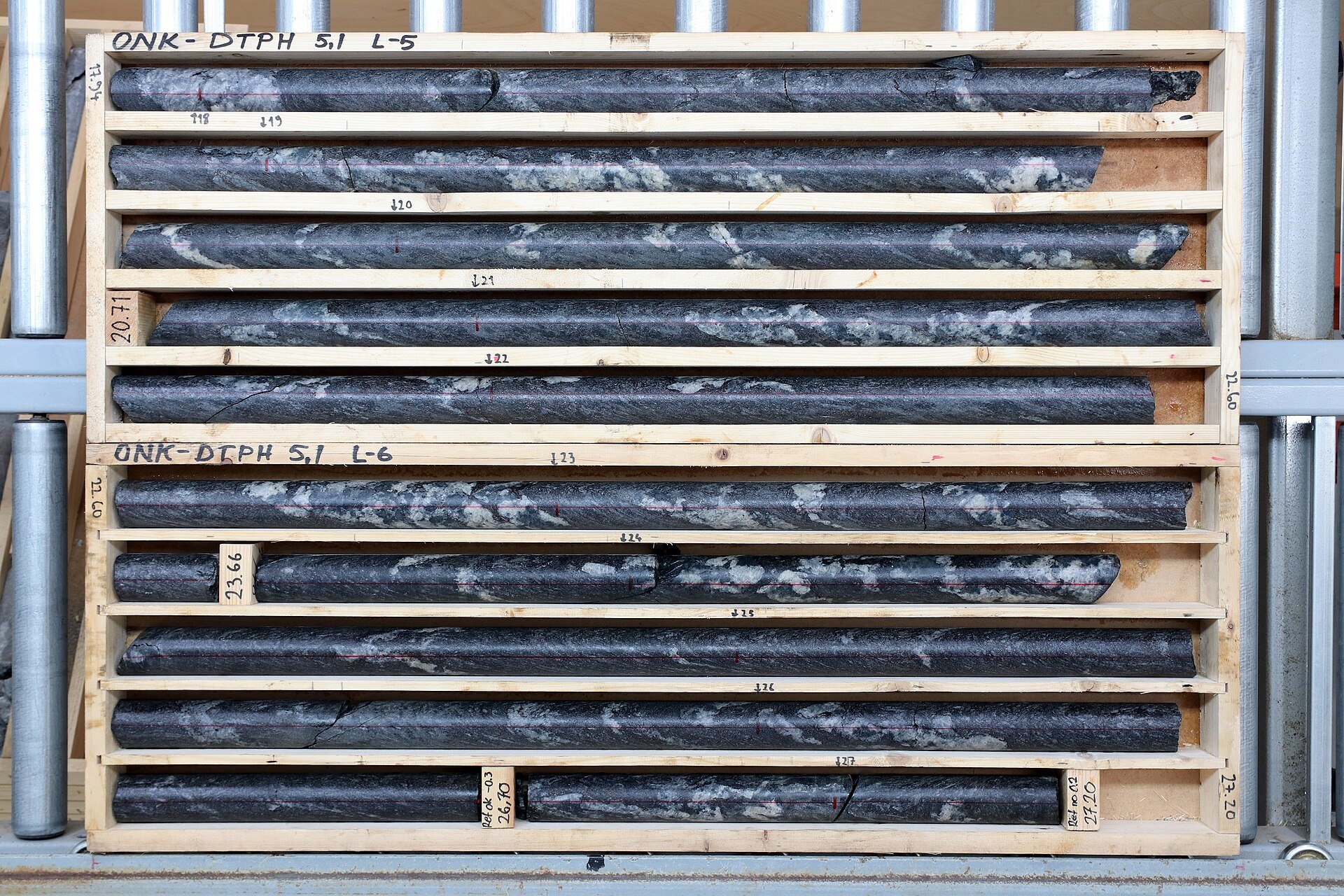
Buffalo Potash has progressed through several key milestones since commencing trading on the TSXV under the ticker BUFF on January 6, 2026, following its reverse takeover and filing statement. The company received two potash test-well licences on January 12, 2026, initiating the confirmation phase. Drilling of the first confirmation hole at Disley began on January 26, 2026. Between February 5 and February 10, 2026, the company completed the 7-10 confirmation hole, which yielded 108 meters of continuous core at greater than 98% recovery, while also launching 3-D seismic surveys and legacy core re-assaying.
Assays from March 10 and March 25, 2026, confirmed high-grade sylvinite intervals, supporting the maiden mineral resource estimate (MRE) and PEA. On April 27, 2026, Buffalo Potash released the maiden MRE and PEA, outlining the IPM plus Disley East and Disley West. The company closed an upsized, oversubscribed C$14.85 million private placement between June 8 and June 29, 2026, with proceeds directed partly toward IPM downhole infrastructure.
Mobilization of the rig and commencement of IPM drilling occurred between July 14 and July 29, 2026, resulting in the source well (15-10) being completed ahead of schedule and under budget. Vertical wells and all three horizontal wells were completed between August 18 and September 25, 2026, with each horizontal well achieving approximately 95% contact with the target clay seam. Ministerial determination that the IPM does not require an environmental impact assessment (EIA) was received on September 17, 2026, followed by final Ministry of the Environment (MOE) approval to construct and operate the IPM on October 16, 2026.
Assay results from wells 15-10 and 2-14, released on October 14, 2026, confirmed high-grade sylvinite at the IPM site. On October 21-22, 2026, the company announced an Altius 1.0% gross overriding royalty on Disley West for C$8.5 million, comprising C$3.4 million on closing and C$5.1 million upon meeting technical conditions related to brine circulation.
Buffalo Potash Corporation (BUFF) has moved from the drilling and construction phase into the first operational stage of its patented HLD method, with first production still targeted for Q1 2027. Site development and procurement are proceeding in parallel, and the company has not reported any schedule slips. This operational step follows the permit approval on October 16 and prior well-completion releases, marking the next phase of brine circulation.
The latest release does not provide new injection rates, pressures, timing for communication, expected brine grades, or surface-equipment delivery dates. Starting injection is distinct from establishing communication, creating a mining plane, achieving designed brine grades or flow rates, or producing saleable potash. The company has not released a new economic study, nor has there been any change to capex or production guidance, new strategic investment, binding offtake agreements, or revenue.
Prior-period context not disclosed in today’s release indicates that the Q1 2026 balance sheet showed C$1.88M in cash and C$17,744 in total debt before the June 2026 C$14.85M gross financing. The MD&A carried a going-concern flag. The Altius royalty adds C$3.4M on closing and C$5.1M only upon meeting technical conditions, meaning liquidity remains dependent on execution and potentially further financing. The Altius transaction represents a validation from a Saskatchewan potash royalty specialist, which is taking its first development-stage potash royalty and previously held a C$3M placement position. However, the latest release does not close the second Altius tranche, which remains tied to brine-circulation conditions.
Buffalo Potash Corporation (TSXV: BUFF, OTCQB: BLPTF, FSE: VU5) is a pre-revenue potash developer based in Saskatchewan that is pursuing modular selective solution mining using its patented Horizontal Line-Drive method. The company’s flagship asset is the 100%-owned Disley Project, located approximately 50 km northwest of Regina. The property covers 10,610 hectares and sits immediately east of the K+S Bethune solution mine and north of the Mosaic Belle Plaine solution mine. Adjacent-property mineralization is not indicative of mineralization at Disley.
The company’s portfolio includes the Disley, Odessa, and Edenwold properties. Disley West carries a 1.0% gross overriding royalty to Altius, while Odessa carries a separate 0.16% royalty acquired by Altius from a private seller. Disley East is subject to an Altius right of first offer. No other royalty is disclosed in the provided materials.
The development plan outlines an initial production rate of 125,000 tonnes per annum (TPA) of soluble-grade potash, followed by expansion to Disley East and Disley West at 500,000 TPA each, for a total capacity of up to 1,125,000 TPA at full build-out. A preliminary economic assessment (PEA) indicates an after-tax net present value (NPV) of US$1.1 billion at an 8% discount rate and an internal rate of return (IRR) of 30%. The project requires an initial capital expenditure (CAPEX) of US$639 million for the full project, with operating expenses (OPEX) estimated at US$55 per tonne. The assessment projects a mine life of more than 50 years based on measured and indicated (M&I) resources. These are PEA-level figures and do not constitute reserves.
The M&I resource is estimated at approximately 1,667 to 1,671.5 million tonnes at roughly 34.8% KCl, alongside a large inferred resource. No mineral reserves have been established. Management includes CEO Steve Halabura, President and COO Quinton Hardage, and Chair Peter Jackson, along with directors possessing experience in potash, finance, and capital markets. The team is presented as having direct Saskatchewan potash experience, though the company remains early-stage and key-person dependent.
No analyst ratings, target prices, or consensus figures are provided in the materials, and analyst coverage cannot be assessed.