Buffalo Potash Completes Final Horizontal Well and Concludes Successful Drilling Program
Buffalo Potash completes five IPM wells, with brine circulation serving as the critical test for its HLD project.
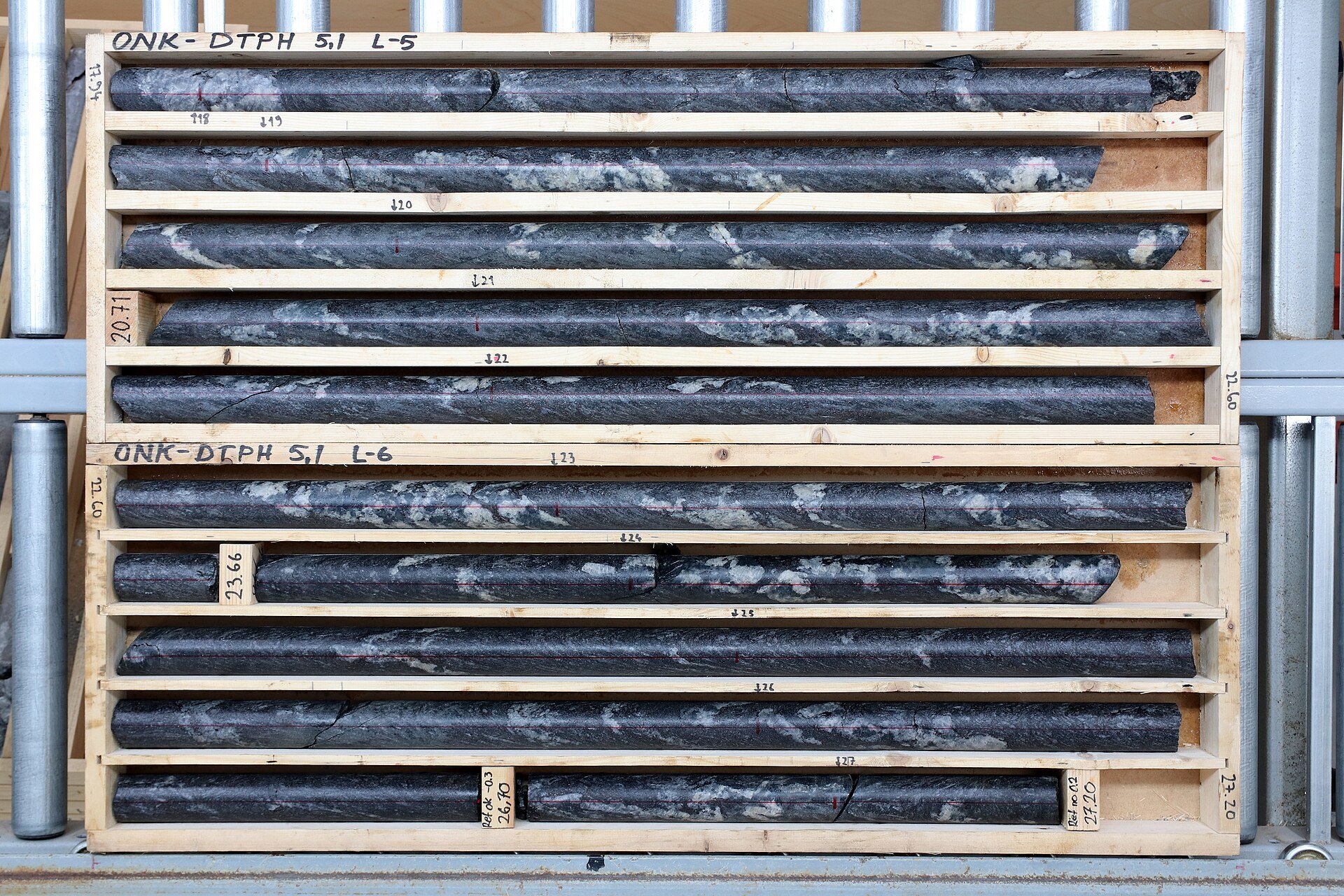
Buffalo Potash Corporation (BUFF) has completed the third and final horizontal well, 1D15-10, also known as the Injector Well, marking the conclusion of the Phase 2 Horizontal Line-Drive drilling program at the Disley Initial Production Module (IPM). This operational milestone brings the total number of drilled wells at the IPM to five, comprising two vertical wells—the 15-10 Source Well and the 2-14 Disposal Well—and three horizontal wells, including producers 5D15-10 and 4D15-10, alongside the newly completed 1D15-10 injector.
Each of the three horizontal wells features a 565-metre lateral that achieved approximately 95% contact with the basal Belle Plaine clay seam. An 11-stage packer system was installed on each well as designed. Both vertical wells were cored with 100% core recovery, and logs have been completed. Core samples from both vertical wells are still undergoing assay analysis, a status unchanged from reports on July 29, 2026, and August 18, 2026. No assay grades from the IPM wells have been released.
The next phase of operations involves completions and equipping to connect the wells, followed by well clean-up and verification of packer communication. This will precede Phase 3 brine circulation, which entails injecting NaCl brine to establish pressure communication, clean out the clay seam, and create the mining plane by increasing flow from the injector to the producers.
Buffalo Potash reiterated its target for first production in the first quarter of 2027 for the 125,000 TPA IPM. The company also maintained its standalone payback estimate of approximately 12 months from the Preliminary Economic Assessment (PEA), dated May 21, 2026, and effective April 15, 2026. The release included a caution that the production decision is not based on a feasibility study with mineral reserves, noting a higher risk of economic and technical failure.
This announcement represents the fourth consecutive operational update in an unbroken, pre-announced sequence that began with rig mobilization on July 14, 2026. Subsequent milestones included the commencement of drilling on July 22, the first vertical well on July 29, the second vertical well and first horizontal spud on August 18, the first horizontal well on August 26, the second horizontal well and third spud on September 8, and the third horizontal well on September 25. The company stated that the project proceeded exactly as planned, with the "~95% clay seam contact" metric serving as a repeat of previously disclosed performance figures.
Buffalo Potash Corporation (BUFF) has confirmed on-plan execution regarding its drilling operations, a development that de-risks the mechanical and placement risks associated with its Horizontal Line-Drive (HLD) geometry. The company reported consistent approximately 95% clay-seam contact across all three laterals on the same horizon, with packers set as designed. This outcome addresses the primary technical hurdle of the drilling phase, though the company’s Chief Operating Officer noted that success is "a sequence of steps, each grounded in established drilling and completion principles."
The five-phase In-Situ Production Method (IPM) schedule remains intact, and Buffalo Potash has not signaled any slippage to its first-production target in Q1 2027. However, the company itself flags that HLD "has not been operated at commercial scale" and that "successful completion of the drilling phase does not guarantee successful performance during brine circulation or commercial production." The unproven elements moving forward include whether the injector and producers communicate hydraulically along the clay seam, whether the dissolution of sylvite proceeds at the modelled rate and selectivity, and whether the resulting brine grades support the Preliminary Economic Assessment’s (PEA) US$55/t operating expenditure and 12-month IPM payback.
Two-month-old assay results from the Source and Disposal wells remain unreported. These cores were taken for geological understanding and to support the Disley West/East feasibility study, rather than for the IPM. While the delay is not alarming on its own, the absence of grade data from the actual IPM wells represents a gap in current disclosure.
Prior-period context highlights the company’s financial position: it is pre-revenue with no property, plant, and equipment yet booked. For the quarter ended March 31, 2026, the company reported an operating cash outflow of C$4.77 million against an ending cash balance of C$1.88 million. A C$14.85 million gross placement in June 2026 was explicitly earmarked largely for downhole infrastructure, not for site development or the surface processing circuit, marking the next capital hurdle.
Market context suggests the stock may have already priced in these developments. The shares closed at C$0.74 on September 16, 2026, and rose to C$0.96 on September 24, 2026, representing a approximately 30% move in seven trading sessions. While part of this run reflects a permitting milestone on September 17, 2026, the practical implication is that a good-but-anticipated drilling completion may already be substantially reflected in the price.
Buffalo Potash Corporation (BUFF) is a pre-revenue, greenfield developer in Saskatchewan pursuing a modular, selective solution-mining strategy based on its patented Horizontal Line-Drive (HLD) technology. The company’s flagship asset is the 100%-owned Disley Project, located approximately 50 km northwest of Regina. The property covers 10,610 hectares of Crown and Freehold mineral rights, situated immediately east of the K+S Bethune solution mine and north of the Mosaic Belle Plaine solution mine. Earlier 2026 releases cited a size of 9,413 hectares, but the figure was revised upward to 10,610 hectares in later releases and the investor presentation; the expansion is not explained in the provided materials. Additional permitted properties disclosed in the investor presentation include Odessa (6,064 ha) and Edenwold (5,835 ha), both within the Regina sub-basin.
The HLD technology utilizes horizontal drilling and multi-stage packer completions to create a rectangular mining plane. Two producer wells flank a central injector, with NaCl brine injected to selectively dissolve sylvite (KCl) while leaving sodium chloride in place. Management claims this approach reduces freshwater use, dramatically cuts the well count versus conventional vertical cavern development, and simplifies surface processing. A 1960s Lumsden pilot demonstrated solution communication across the potash zone using a vertical two-well cavern system, providing a directional precedent rather than proof of the horizontal method.
According to an April 27, 2026 release and presentation, the Disley Project hosts a Measured and Indicated resource of 1,671.5 Mt at 34.8% KCl (approximately 582 Mt contained KCl), plus an Inferred resource of 2,663.2 Mt at 34.96% KCl. No mineral reserves have been established. The IPM wells (15-10, 2-14) and the 7-10 confirmation hole are explicitly stated in the presentation as not included in the resource estimate.
The development plan consists of five phases: source and disposal wells, which are complete; HLD drilling, which is complete as of this release; brine circulation, which is next; site development; and surface processing. The production plan targets IPM at 125,000 TPA of soluble-grade potash, with first production targeted for Q1 2027. Full build-out comprises IPM plus Disley East and Disley West (each 500,000 TPA) to reach 1,125,000 TPA.
A Preliminary Economic Assessment (PEA) dated May 21, 2026, effective April 15, 2026, and prepared by Micon International, outlines after-tax NPV(8) of US$1.1 billion and an after-tax IRR of 30%. Initial CAPEX is estimated at US$639 million (including US$128 million contingency), with sustaining capital of US$483 million. FOB mine OPEX is projected at US$55/t, with CAPEX intensity of US$568/t. Price assumptions include US$394/t for granular MOP and US$374/t for soluble grade, supporting a 50+ year mine life on the M&I resource only. Payback on the standalone IPM is estimated at approximately 12 months from start of production.
Buffalo Potash is led by CEO Steve Halabura (P.Geo) and COO/President Quinton Hardage (P.Eng, PMP), with Board Chair Peter Jackson, a former Mosaic VP of North American potash operations. The investor presentation claims a team with combined 100+ years of potash experience. Both the release and the presentation are company-authored promotional documents, and the PEA is preliminary in nature and includes inferred resources.