ReeXploration Reports Downhole Gamma Results Supporting an Extensive Uranium System at Eureka in Namibia
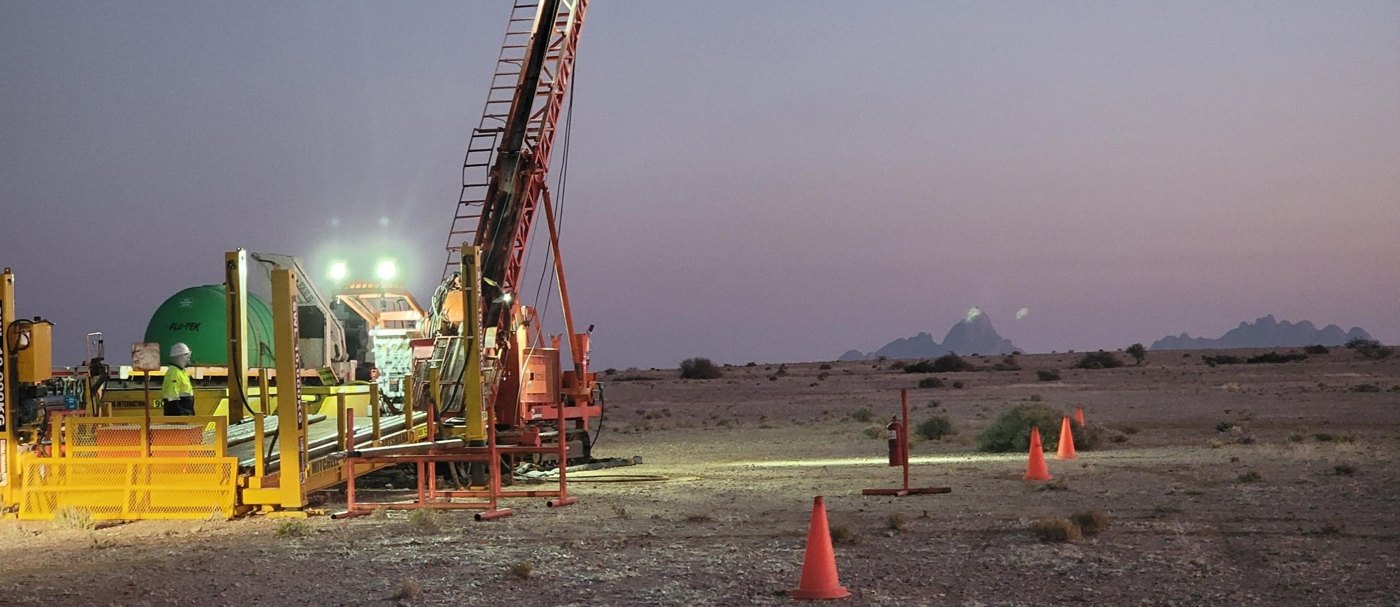
ReeXploration Inc. (REE) has released downhole gamma survey results from its Phase 1 reconnaissance program at the Eureka Project in Namibia. The data represents eU₃O₈, a radiometric estimate rather than chemical assays. The program scope remains unchanged from the April 9, 2026 release, comprising 11 holes totaling 1,729 meters of drilling. This work targets leucogranite within a 6.5 × 3.5 km regional radiometric anomaly.
The best reported composite was SU26-08, which intersected 16.7 meters averaging 79.2 ppm eU₃O₈, with a peak of 333.9 ppm. This interval includes 1.2 meters at 218.2 ppm and 1.0 meter at 182.6 ppm within leucogranite and mica schist. SU26-04 returned 4.9 meters at 139.7 ppm eU₃O₈ (peak 234.5 ppm), including 4.3 meters at 146.3 ppm, along with a separate deeper composite of 15.2 meters at 66.1 ppm. SU26-01 intersected 1.5 meters at 187.3 ppm eU₃O₈ (peak 369.2 ppm), including 1.0 meter at 242.7 ppm at a leucogranite–calc-silicate contact.
Other notable intercepts include SU26-09 with 6.5 meters at 91.0 ppm in calcrete/calc-silicate; SU26-06 with 3.0 meters at 71.4 ppm, including 0.6 meters at 143.3 ppm in gypcrete; and SU26-10 with 2.4 meters at 99.9 ppm. SU26-11 logged only 0.2 meters at 51.8 ppm. The company applied a cutoff of 50 ppm eU₃O₈ with internal dilution gaps up to 1.0 meter and no minimum interval length. True widths were not determined.
Logging was limited by blockages in SU26-02 (approximately 58 meters), SU26-09 (approximately 40 meters), and SU26-11 (approximately 22 meters). The company stated that deeper radioactive intervals previously reported in SU26-11 lie below the logged section and "cannot be assessed."
Next steps include a high-resolution ground magnetic survey followed by Phase 2 drilling southeast of the Eureka Dome. The company is also working to recover historical calcrete data.
ReeXploration Inc. (REE) is a grassroots, pre-resource micro-cap explorer with a market capitalization of approximately C$4 million. The company’s current baseline involves the absence of a defined resource, confirmed true width, and metallurgical data.
The recent announcement provides the first quantitative values in parts per million of eU₃O₈ for Phase 1 drill holes and explicitly frames two targets: bedrock leucogranite and shallow calcrete. This information corroborates geological reporting previously released on April 9, 2026, but does not identify a new zone, new depth, or a step-change in scale.
The highest prior assay-per-foot (cps) values were reported in the April 9, 2026 release. The stock is currently trading near its 52-week low at C$0.03, down from C$0.25 in October 2025. The market has not yet priced in this drilling activity. For the results to be considered positive, they would need to be materially stronger in grade and width than anything previously demonstrated. The current grades are low, and the previously highlighted SU26-11 interval could not be assessed.
These results represent an intermediate logging step between cps numbers and assays that carry more weight. The market has already discounted a long sequence of weak news and is likely to treat this update as confirming but unspectacular.
ReeXploration Inc. (TSXV: REE; FSE: K2I0), formerly E-Tech Resources, changed its name on October 28, 2025. The Canadian explorer focuses exclusively on the Eureka Project in central Namibia's Erongo district, known as "Alaskite Alley."
The company holds an existing NI 43-101 inferred resource for rare earth elements (REE) reported by SRK Consulting with an effective date of August 2, 2021. The resource consists of 310,000 tonnes at 4.8% total rare earth oxides (TREO), including 0.7% neodymium and praseodymium (Nd+Pr). This represents a small, tonne-limited resource. Bench metallurgy results from monazite carbonatite show approximately 60% TREO concentrate and 65% recovery.
Uranium presents an additional potential on the same ground, supported by a 6.5 × 3.5 km radiometric anomaly, a Phase 1 drill program, and recent gamma results.
Infrastructure access includes a location 2 km from the Trans-Kalahari Highway, with road, power, and Walvis Bay port access in a stable jurisdiction.
Financial data from the prior period shows a FY2026 net loss of C$790,140, compared to C$418,977 in the prior year. The loss was driven by an approximately C$234,000 increase in marketing and promotion expenses and C$130,607 in share-based compensation. Cash stood at C$805,583 at the end of FY2026, resulting in a working capital deficiency of approximately C$185,930 and an explicit going-concern disclosure. Financing cash flow included C$1.84 million from late-2025 placements.
Promotional and marketing contracts totaling approximately C$108,000 (US$45,000) were disclosed during the October 2025 rebranding.