Perpetua Resources Provides Construction & Exploration Update
Perpetua advances construction and expands drilling at its project, though no new assay results were reported in this update.
Perpetua Resources Corp. (PPTA) issued a construction and exploration progress update on September 28, 2026, detailing advancements in infrastructure and drilling activities at its project. The release contains no new assay results, intervals, grades, or widths.
Construction efforts on the Burntlog Route pioneer road are advancing, with cutting, shaping, and hauling fill operations underway. Permanent worker housing civil works were completed in late August, and foundation installation has begun, utilizing treated-wood foundations for the kitchen, dining, and recreation areas, and Triodetic metal foundations for the dormitories and arctic corridor.
Regarding power infrastructure, substations and transformers have been ordered. Poles and ancillary equipment have been procured and delivered to laydown yards at Donnelly and Cascade, Idaho, in coordination with Idaho Power Co.
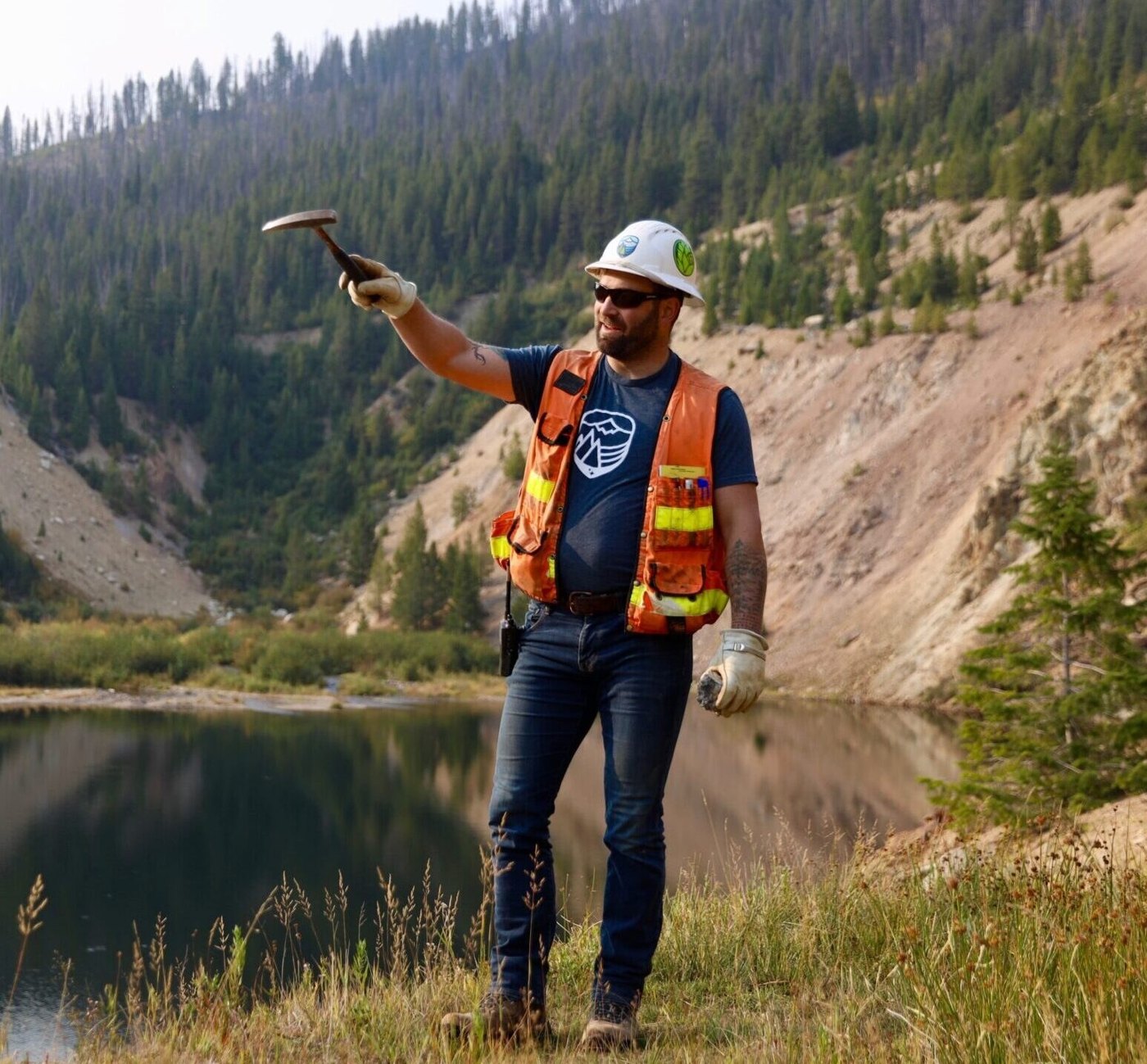
Exploration activities have expanded beyond the previously defined 10,000-meter program, which was surpassed in August. Drilling is scheduled to continue into the fall with four rigs before a winter ramp-down. On-site core cutting and preparation facilities have been upgraded, and assaying of completed holes has begun.
Target-by-target status is reported in meters drilled:
- Clark Tunnel Fault Zone (CTFZ): Five holes totaling 1,900 meters were completed by the end of August; scheelite (tungsten) continues to be observed in core via black-light fluorescence.
- Fiddle: Eight holes totaling 2,400 meters were completed, with two additional holes in progress for step-out testing of lateral and depth extensions.
- Scout: Fifteen holes totaling 2,300 meters were completed of 21 planned for the season. The area was previously drilled in 2013, and an exploration decline to access the trend was approved in the Record of Decision.
- Hangar Flats is named as an active target, with no drilling figures provided in this release.
The company noted that any future development of exploration areas not approved for mining in the current plan of operations will require additional environmental review and permitting. Perpetua Resources Corp. expects to report additional assay results from the exploration program as they become available.
Perpetua Resources Corp. (PPTA) released a programme-status update that contains no new assay data, meaning no measurable changes to the deposit’s resource, reserve, mine life, grade, or tonnage can be drawn from the announcement. The release does not introduce new information regarding construction progress on the Burntlog Route, worker housing, or powerline procurement, as these developments were previously signalled in updates on June 1, May 30, Aug 24/31, and Sept 28. The market has been repeatedly informed that early works and critical-path construction are underway.
Perpetua is a fully permitted, pre-FID developer holding a 4.8 moz gold reserve, 149 Mlb antimony reserve, $574.2M in cash (based on the Q2 2026 filing context), and a $2.9B EXIM loan approved on May 21, 2026. At this stage, drilling only impacts the equity if it grows reserves or extends mine life; a programme-status update cannot achieve either. The primary value driver in this release is the FID/EXIM close rather than the drilling activity. The drilling content serves as a lead indicator that may become relevant in Q4 2026 when assays arrive.
Perpetua Resources Corp. (Nasdaq/TSX: PPTA) is advancing the Stibnite Gold Project in Valley County, central Idaho, a brownfield site with over 100 years of mining history. The company’s reserves and resources include 4.8 million ounces of gold, described as the largest independent U.S. gold reserve, alongside 1.5 million ounces in measured and indicated resources and 1.6 million ounces in inferred resources. The project also holds a 149 million-pound antimony reserve, noted as the only identified domestic U.S. antimony reserve.
The mine plan involves three open pits—Yellow Pine, Hangar Flats, and West End—plus the reprocessing of 10.5 million tonnes of historical tailings. Processing will utilize crushing, SAG and ball milling, high and low antimony flotation, oxide and transitional pressure oxidation, gold leaching, and electrowinning.
According to a Technical Report Summary dated December 31, 2025, the base case assumes a gold price of $3,250 per ounce. Under these conditions, initial capital is estimated at $2,576 million, with an after-tax NPV5% of $3,457 million and an after-tax IRR of 23.5%. Early-years production (years 1-4) averages 463,000 ounces of gold annually, with an all-in sustaining cost net of by-products of $498 per ounce. At a gold price of $4,500 per ounce, the after-tax NPV5% rises to $6.1 billion and the IRR reaches 32.3%.
As of the second quarter of 2026, the balance sheet shows $574.2 million in unrestricted cash and $60.9 million in restricted funds, with no debt. The company reported a net loss of $97.5 million for Q2 2026 and $146.2 million for the six-month period, driven by increased exploration and pre-development spending.
Financing includes a $2.9 billion senior secured EXIM loan approved on May 21, 2026, comprising a $2.4 billion upfront facility plus capitalized interest and fees. Closing is subject to definitive documentation, with repayments scheduled to begin in 2030.
The project has received over $87 million from the U.S. Department of War/Army since 2022. An antimony pilot plant with Idaho National Laboratory and the U.S. Army was commissioned in July 2026. Strategic shareholders include Agnico Eagle (6.4%) and JPMorgan (2.6%), while Paulson & Co. holds approximately 25.9%. The capital structure consists of 125.1 million shares outstanding, 1.1 million share units, and 4.8 million warrants priced between $31.46 and $47.59, resulting in approximately 131.2 million fully diluted shares.