SAGA Metals Completes Phase 2 of Major Drill Program at the Radar Project in Labrador-Confirms Extensive Oxide Mineralization in All Drill Locations at Trapper North and South Zones & Provides Corporate Update
SAGA Metals Confirms Radar Drilling Progress, But Key Assays Remain Pending Amidst Heavy Marketing Spend
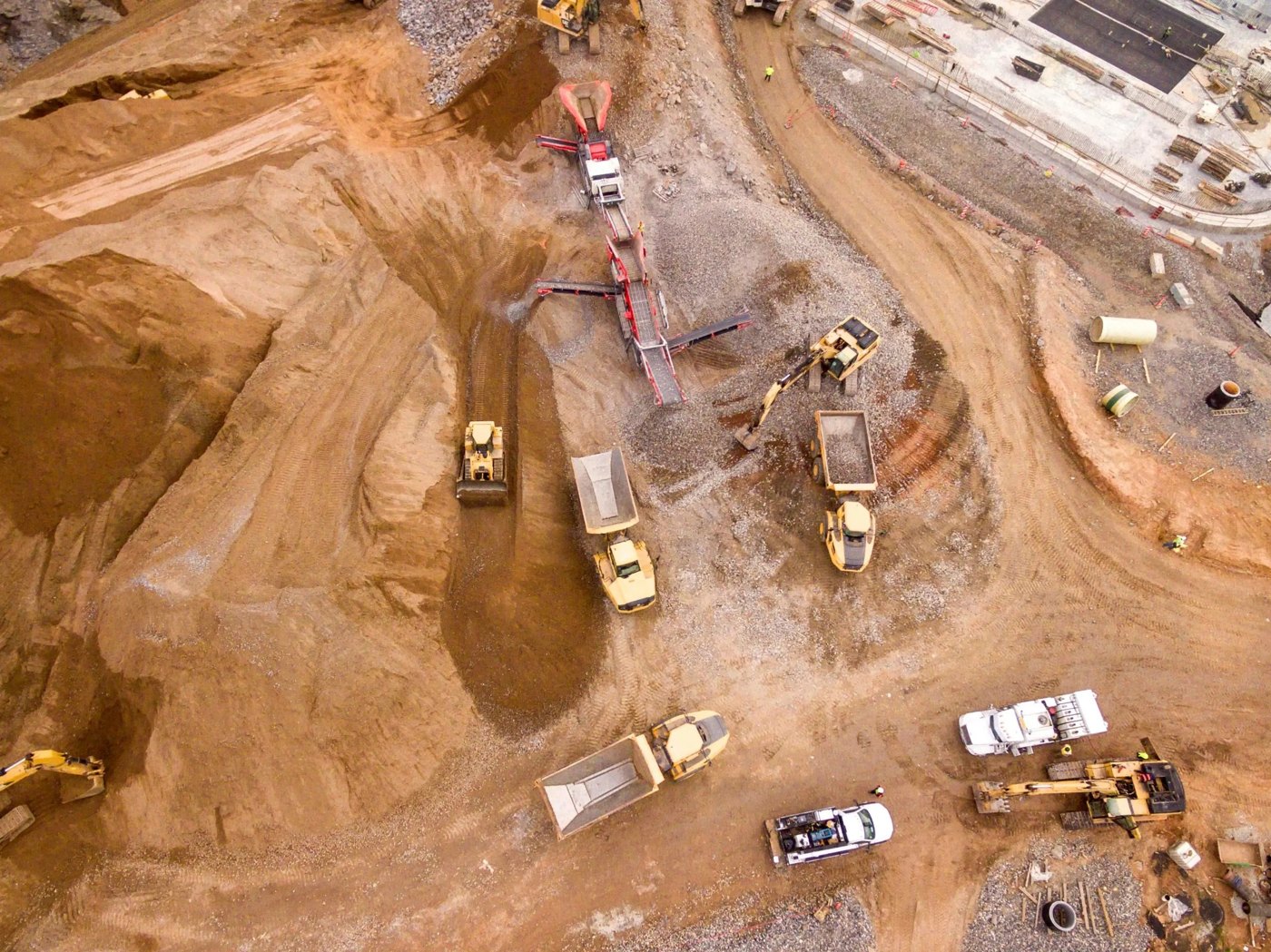
SAGA Metals Corp. announced the completion of Phases 1 and 2 of its mineral resource estimate drill program at the Radar Project in Labrador. This involved drilling 2,050 meters across 8 holes in the Trapper North and South zones. The company reported encountering extensive oxide mineralization in all drill locations, validating its 2025 ground magnetic survey. This validation has opened up 3 km of strike for future definition drilling across widths of up to 400 m, and confirmed the continuity of a 16 km oxide trend from the Hawkeye to the Trapper North zones. The mineralization is identified as vanadiferous titanomagnetite (VTM). While core logging is complete, assay results for some holes are still pending.
Concurrently, SAGA Metals provided a corporate update, mentioning the successful finalization of the largest capital raise in its history (referring to the recently closed C$6.0 million LIFE offering) which positions the company to advance this critical drill program. The company also increased its marketing services agreement with i2i Marketing Group by an additional US$250,000, extending the service period until the end of January 2026 or until the budget is exhausted.
This news release is a positive, but routine, operational update. The completion of Phases 1 and 2 of the drilling program is a continuation of the company's stated plan and was largely anticipated by previous announcements, particularly the December 10th and December 3rd news releases which already indicated the completion of significant drilling and the commencement of Phase 2. The confirmation of "extensive oxide mineralization" across all drill locations and the validation of the magnetic survey reinforce the geological model and the potential scale of the Radar project. This is fundamentally positive for the project's long-term outlook.
However, the absence of new, quantitative assay results in this release significantly limits its immediate material impact. Investors are still awaiting the critical data that will quantify the grades and economic viability of the observed mineralization. The stock price has seen a substantial decline since its late November highs, suggesting that investors are looking for concrete assay data rather than further qualitative confirmations of mineralization. The reference to the C$6.0 million capital raise is a reiteration of previously disclosed information (December 5th) and, while vital for the company's funding, does not represent a new catalyst in this specific announcement. The additional US$250,000 allocation to marketing, in line with prior substantial marketing expenditures, is an administrative item that contributes to the company's cash burn without directly advancing the mineral resource.
In summary, while the operational progress is good, it largely confirms previous expectations. Without new, hard assay numbers, this news is unlikely to provoke a significant re-rating of the stock.
SAGA Metals Corp. (TSXV: SAGA) is a Vancouver, Canada-based mineral exploration company primarily focused on critical mineral discovery within high-potential jurisdictions in Canada. The company boasts a diversified portfolio, but its flagship project is the Radar Titanium-Vanadium-Iron (Ti-V-Fe) Project located in Labrador, Canada.
Radar Project Overview: * Location & Ownership: 100% owned, encompassing 24,175 hectares (expanded from 17,250 ha) and situated just 10 km from Cartwright, Labrador. * Infrastructure: Benefits from excellent existing infrastructure, including road access, a deep-water port, an airstrip, and nearby hydroelectric power. * Geology: The project covers the entire Dykes River intrusive complex, a Mesoproterozoic layered mafic intrusion spanning approximately 160 sq km. This geological setting is compared to globally significant VTM deposits like China's Panzhihua, Norway's Tellnes, and Quebec's Lac Tio. The mineralization consists of extensive vanadiferous titanomagnetite (VTM) layering, with an inferred strike length exceeding 20 km. * Development & Exploration History (since late 2024): * Early 2025 (Hawkeye Zone): Completed a maiden drill program of 2,209 meters in 7 holes. Confirmed VTM mineralization to vertical depths of up to 300 meters, with intercepts averaging 20-40% titanomagnetite and localized massive layers exceeding 60%. Notable assay results include 20.2 meters grading 31.35% Fe, 6.32% TiO2, and 0.435% V2O5. * Summer 2025 (Trapper Zone): Commenced a field program focusing on infrastructure upgrades (4 km access trail to Trapper zone) and ground-based geophysical surveys. Trenching confirmed semi-massive to massive VTM outcrops (504 sq m), and magnetic surveys identified strong anomalies (up to 115,498 nT) across the Trapper North and South zones. * Late 2025 (Trapper Zone - MRE Program): Mobilized for a major 15,000-meter drill program aimed at a maiden Mineral Resource Estimate in 2026. Phases 1 and 2, totaling 2,050 meters in 8 holes, have been completed by December 2025, confirming extensive oxide mineralization across a 3 km strike in the Trapper zone and validating the 16 km oxide trend from Hawkeye to Trapper North. Assays from these recent holes are pending.
Other Key Projects: * Double Mer Uranium Project (Labrador, Canada): 100% owned, 25,600 hectares. Drill-ready and permitted for a maiden drill program (1,500-2,500m) at the Luivik zone, targeting an 18 km radiometric trend with high-grade surface samples (up to 0.428% U3O8). Petrographic analysis confirmed uraninite. * Legacy Lithium Project (James Bay, Quebec): 34,243 hectares. Under an option to joint venture agreement with Rio Tinto Exploration Canada (RTEC), a major strategic partner. RTEC can earn up to 75% interest through significant exploration expenditures ($9.57M for 51%, additional $34.18M for 75%). * Amirault Lithium Project (James Bay, Quebec): 100% owned, 31,347.76 hectares, contiguous to Legacy. Planned mapping, sampling, and prospecting program for Q2-Q3 2025. * North Wind Iron Ore Project (Labrador, Canada): 100% owned, 6,375 hectares. Located in the prolific Labrador Trough. Historical resource estimate (2013) and 2024 field program confirmed high-grade iron ore potential (up to 84.57% Fe2O3).