Drill Results
Reexploration talks Eureka field program results
REE · Price
Executive Summary
- Reexploration Inc. has released results from a uranium field program at its Eureka project in Namibia, confirming the scale and technical validity of a large-scale uranium target.
- The company identifies the target as potentially representing a large, under-cover "Rossing-style" uranium system, supported by strong correlations between airborne and ground radiometric signatures and soil geochemistry.
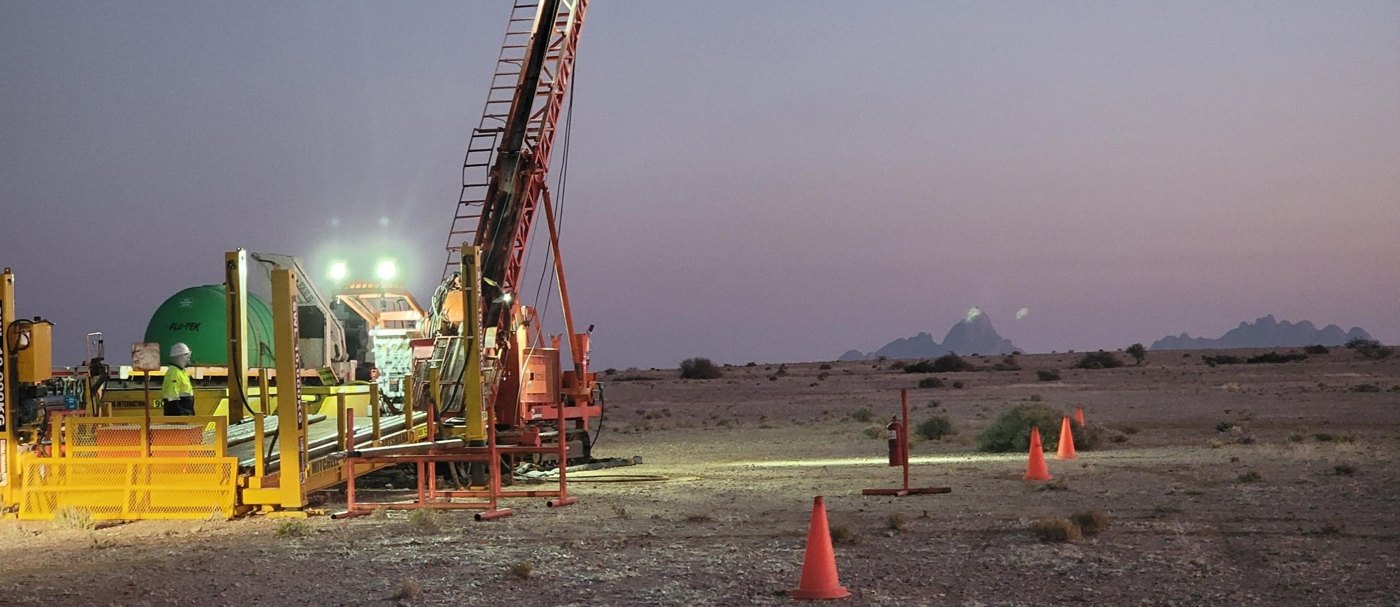
- A diamond drilling program is planned for early 2026 to test the target, with approximately 10 holes averaging 200 meters in length, subject to financing and contractor selection.
Key Details
- Project Location: Eureka project, central Namibia, within a structural corridor hosting major uranium deposits such as Rossing, Husab, Etango, Omaholo, and Norasa.
- Radiometric Survey Results:
- Completed 102 line kilometers of ground spectrometer survey across four grids.
- Identified areas of very high total gamma readings, with values up to 2,255 counts per second.
- High radioactivity corresponds with gypcretes/calcretes overlying leucogranites; low radioactivity corresponds with massive calc-silicate exposure and drainage sediments.
- Secondary uranium (carnotite) found in overburden (sand/sheetwash) as well as in situ leucogranite and schist.
- Soil Geochemistry Results:
- Collected 1,040 soil samples at 100-by-100-metre spacing.
- Uranium-rich soils mapped with values up to 114 parts per million (ppm) uranium via portable X-ray fluorescence (pXRF).
- High uranium in soils evident where secondary uranium (carnotite) was found in gypcretes/calcretes along drainages.
- Rock Sampling:
- Grab samples yielded values up to 853 ppm U (pXRF), providing encouraging indicators of a uranium-bearing system below cover.
- Drill Targets:
- Six initial drill target areas identified based on coincident:
- Airborne uranium radiometric anomalies.
- High total gamma (>500 counts per second) from ground spectrometer.
- Uranium in soils (>10 ppm pXRF).
- Zones of interpreted leucogranites in contact with reactive calc-silicate rocks.
- Six initial drill target areas identified based on coincident:
- Upcoming Drilling Program:
- Planned for early 2026, subject to financing and final contractor selection.
- Inaugural diamond drilling program aims for 2,000 metres total.
- Approximately 10 holes averaging 200 metres in length.
- Program design involves heel-to-toe drill fences across priority target areas to test for primary uranium mineralization within leucogranites beneath the weathering profile.
- Technical Methodology:
- Field analysis used a calibrated SciAps X-555 pXRF analyzer for semi-quantitative uranium concentration indications.
- Gamma-ray measurements taken with an RS-125 hand-held spectrometer (qualitative nature).
- Select samples to be verified through uranium assay at an accredited laboratory.
- Qualified Person: Tolene Kruger, BSc (honours), MSc, registered professional natural scientist (SACNASP) and qualified person under NI 43-101.
Notable Quotes
- "This field program has materially advanced our understanding of the uranium target at Eureka. The strong alignment between airborne radiometrics, ground radiometrics, geology and soil geochemistry provides exactly the type of multilayered confirmation you want to see before drilling." — Christopher Drysdale, Interim CEO
- "Namibia is one of the world's most important uranium jurisdictions, and Eureka lies in the same structural corridor that hosts Rossing, Husab, Etango, Omaholo and Norasa. The scale of this anomaly and the quality of the early technical indicators point to a meaningful discovery opportunity." — Christopher Drysdale, Interim CEO
More from ReeXploration Inc.
Apr 09, 2026 · 06:31