Bunker Hill-Backed Frontier Minerals Consortium Named Successful Bidder by Government of Kenya for Mrima Hill Rare Earth and Niobium Project
Bunker Hill wins a tender in Kenya, securing free rare-earth optionality despite the licence not yet being issued.
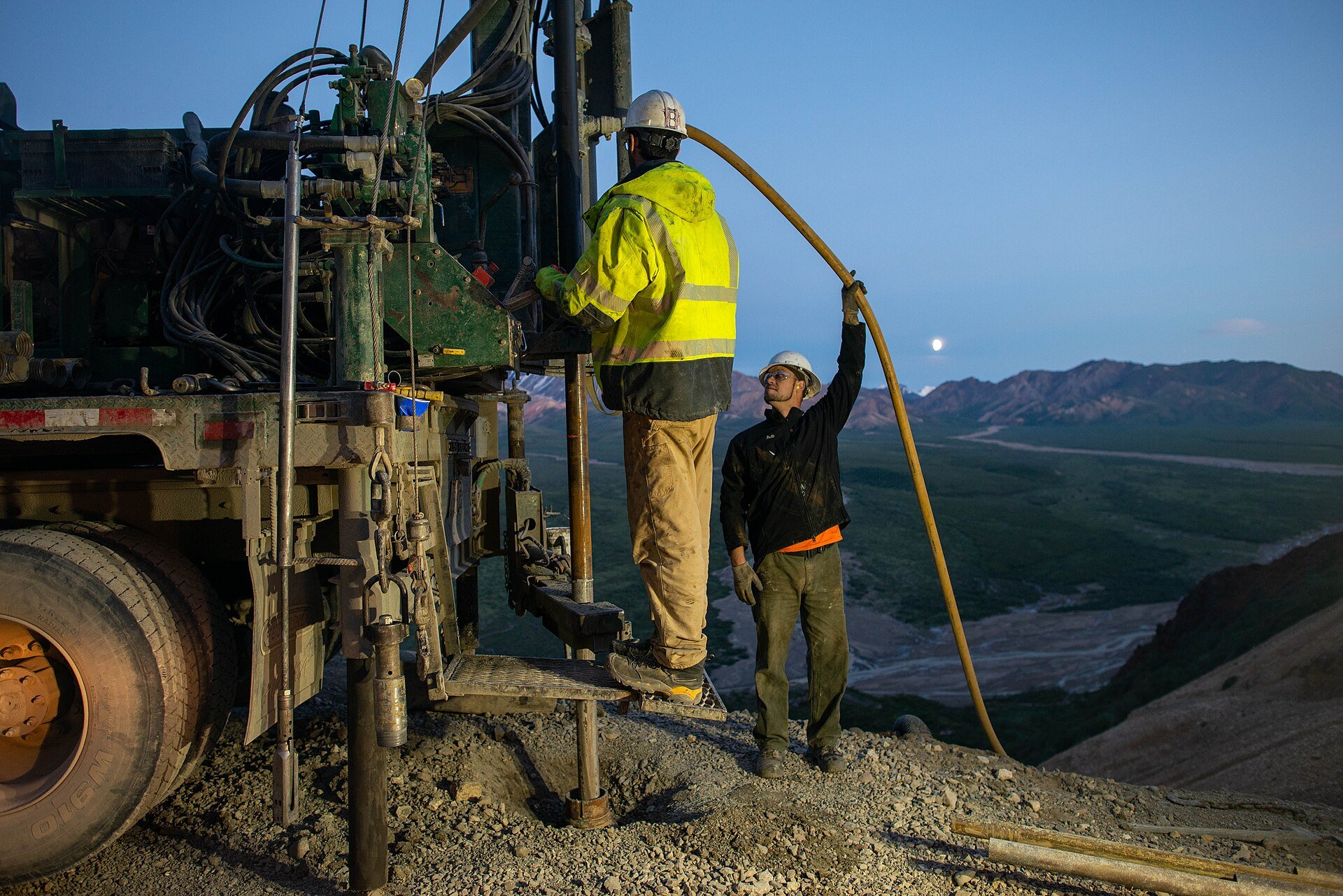
Bunker Hill Mining Corp. (BNKR) announced on November 20, 2026, that the Government of Kenya’s Ministry of Mining, Blue Economy and Maritime Affairs has named Frontier Minerals LLC as the successful bidder in an international tender. The award grants the consortium, led by Bunker Hill alongside ReElement Technologies and American Resources Corporation (NASDAQ: AREC), the exclusive right to negotiate a prospecting licence for the Mrima Hill rare earth and niobium project in Kwale County, Kenya. Cabinet Secretary announced the outcome on November 19, 2026, with the company scheduling a call or webcast for November 23, 2026.
The Ministry’s award does not constitute a licence. Before any prospecting can begin, Frontier must secure community and landowner consents under Kenya's Mining Act, submit an application through the Online Mining Cadastre, and have the application reviewed by the Mineral Rights Board. The Cabinet Secretary grants the licence based on the Board's recommendation.
Under the agreement, Bunker Hill will hold an equity interest in Frontier LLC, though the quantum, terms, consideration, and valuation are subject to definitive agreements and have not been disclosed. The company will serve as the mining and processing partner, leading exploration, resource definition, mine planning, metallurgical test work, process development, and the management of the feasibility study. Bunker Hill also holds a positioning right to be contracted by Frontier to build and operate the mine, contingent upon a positive feasibility study, the issuance of a Mining Licence, and financing.
The company anticipates no material cash outlay in the near term or through the completion of the feasibility study, expecting to hold a right, but not an obligation, to fund development. Execution will be managed by a dedicated Mrima Hill team, ring-fenced from the Idaho operating team. Oversight is provided by Sam Ash (mining engineering), Richard Williams (Steering Committee adviser), and Bradley Barnett (Steering Committee and Managing Member of Frontier).
Historical estimates from a 2013 NI 43-101 report by Pacific Wildcat Resources (effective July 25, 2013) indicate 48.7 Mt Indicated at 4.40% TREO and 110.7 Mt Inferred at 3.61% TREO at a 1.0% cut-off. Niobium estimates include 47.8 Mt Indicated at 0.66% Nb2O5 and 94.4 Mt Inferred at 0.73% Nb2O5 at a 0.2% cut-off. Contained resources total 2.15 Mt TREO Indicated and 4.00 Mt TREO Inferred, alongside 699 Mlb and 1,525 Mlb Nb2O5, respectively.
Higher-grade domains within these estimates include 11.2 Mt at 6.93% TREO (Indicated) and 15.6 Mt at 7.12% TREO (Inferred) at a 5.8% cut-off. Historical drilling returned 105 m at 6.97% TREO from surface, including 35 m at 8.50% TREO. Mineralization remains open at depth beyond 100 m and to the south. Approximately 21% of the historical Indicated TREO consists of Nd/Dy/Eu/Tb/Y oxides. The deposit is a laterite-capped carbonatite located 60 km by road from the Port of Mombasa.
A qualified person has not completed sufficient work to classify these historical figures as current mineral resources. Bunker Hill does not have access to the drill database, assay certificates, or core, and is not treating the estimates as current resources.
If a licence is issued, a 36-month work program will commence. Phase 1 involves twin and confirmation drilling to target a current NI 43-101 resource within the first year. Phase 2 includes expansion drilling, metallurgical test work with a planned pilot facility in Kenya, a refining technology trade-off study, an ESHIA including a radiological baseline, and a feasibility study. The company targets a development decision within three years of licence issue.
Frontier is preparing a proposal to the U.S. Department of State's U.S.-Africa Strategic Investment Program. The release states that no award has been made, terms are unknown, and there is no assurance that funding will be approved.
Bunker Hill Mining Corp. (BNKR) has entered a consortium agreement to explore the Mrima Hill rare earths and niobium project in Kenya, marking a significant expansion of the company’s strategic narrative beyond its primary Idaho silver operations. The announcement represents genuinely new information, with no prior references to Kenya, Mrima Hill, or the specific partners involved—ReElement and American Resources—in news flow from December 12, 2025, through November 6, 2026. The project was selected through a competitive international tender run by the Kenyan government, a process that senior U.S. State Department officials have publicly backed, providing external validation distinct from standard company-issued press releases.
The agreement grants Bunker Hill a right to negotiate rather than an immediate asset, with value contingent upon the issuance of a prospecting licence. This process involves navigating community consents, the cadastre, the Mineral Rights Board, and the Cabinet Secretary, with no disclosed timeline for licence issuance. While the move offers a capital-light option on a Tier-1-scale occurrence, Bunker Hill’s economic interest remains unquantified. The company has not disclosed its percentage of ownership in Frontier, any carried interest, fee structures for exploration or feasibility study work, or terms for the build-and-operate contract. Consequently, the market faces a "definitive agreements" overhang until these specifics are resolved.
The resource data associated with the project consists of 13-year-old historical estimates that the company itself advises should not be relied upon. The existing figure of 2.15 million tonnes of contained total rare earth oxide (TREO) in the Indicated category will not be utilized in any future model until the PAW database and core samples are obtained, re-assayed, and re-modelled. There is a recognized risk that these historical estimates may not be fully confirmed. Furthermore, the company has explicitly flagged elevated jurisdiction and permitting risks, including the site’s forest-reserve protected status, cultural significance to the Digo community, and thorium and radiological conditions.
This strategic pivot comes against a backdrop of unresolved near-term financial challenges. A Q3-2026 filing revealed zero revenue for the nine months ended September 30, 2026, a working capital deficit of $137.3 million, $3.05 million in cash, and a going concern flag. Today’s release does not address the Idaho ramp-up, commercial production status, liquidity, the Teck Insolvency Event, or the Silver Loan refinancing. The omission shifts the narrative toward a distant, unquantified opportunity while the near-term solvency question remains open.
Bunker Hill’s execution credibility in Idaho is established, with plant completion reaching 85-88% in Q1-2026, first concentrate produced on June 29, 2026, first concentrate shipped to Trail on July 31, 2026, and the first stope blast occurring on August 17, 2026. However, the definition of "commercial production" has changed twice: initially set at 90 days at greater than 65% of 1,800 tonnes per day in June 2026, and revised in early October 2026 to 60 days at greater than 65% of nameplate capacity plus at least 70% zinc, lead, and silver recoveries. The end-2026 commercial production target has also softened, with the Q3 MD&A allowing for "end of 2026 or early 2027." Additionally, the Cate-8 exploration target grew from 337,000 tonnes at 6.17 oz/t AgEq in July 2026 to 522,000 tonnes at 5.34 oz/t AgEq in August 2026, representing a 34% increase in contained ounces but a 13% decline in grade.
The announcement coincides with a period of stock volatility. Bunker Hill’s shares fell from C$2.95 on November 9, 2026, to C$2.04 on November 18, 2026, a window that included the closure of the Silver47 merger on November 6 and the availability of the Q3 going-concern filing. No causal attribution is possible from the data provided, and no post-release price is available for the November 20 news, leaving the market’s verdict unmeasured. While the Kenya project creates a plausible U.S. government funding channel for future development, it does not alter Bunker Hill’s near-term cash flow, debt structure, or going concern status.
Bunker Hill Mining Corp. (ticker BNKR), formerly Bunker Hill Silver Corp., describes itself as a U.S.-focused mining company building a modern, long-life operation at the Bunker Hill Mine in northern Idaho's Silver Valley. The company complements this core asset with a pipeline of high-grade silver projects across North America acquired through its merger with Silver47. The Silver47 acquisition closed on 2026-11-06 via a court-approved plan of arrangement under the Business Corporations Act (British Columbia). Silver47 holders received 0.1724 Bunker Hill shares per share, resulting in the issuance of 36,325,517 new shares. The post-closing share count stands at 83,667,856, with ownership split approximately 57% among legacy Bunker Hill shareholders and 43% among former Silver47 holders. Convertible securities are exercisable into up to 13,901,231 additional Bunker Hill shares.
The merger gives a pro forma basic market capitalisation of US$158M at the time of closing, while an August announcement release cited US$326M at announcement pricing. The difference reflects a share price collapse rather than a change in share count.
The company’s flagship asset is the historic Bunker Hill Mine in Kellogg/Wardner, Idaho. Closed in 1981, the mine previously produced over 165 moz of silver and more than 4.5 Mt of base metals. It is being restarted as a 1,800 tpd underground operation using transverse long-hole stoping in a primary-secondary configuration with paste backfill from a newly commissioned tailings filter press and paste plant. This design allows the operation to function without a surface tailings facility. Concentrate is trucked roughly 210 km to Teck's Trail Smelter, where zinc and lead/silver concentrates are produced by differential flotation. The land package comprises approximately 6,283.7 acres following the Ranger-Page/Blackhawk consolidation, which closed on 2025-12-12 for ~US$2.4M paid in 23,333,334 shares.
According to a 2022 technical report effective 2022-08-29, the Bunker Hill Mine resources are as follows:
- Measured: 2.374 Mt at 1.01 oz/t Ag, 2.46% Pb, 5.37% Zn
- Indicated: 4.662 Mt at 1.00 oz/t Ag, 2.37% Pb, 5.48% Zn
- Total Measured and Indicated: 7.036 Mt
- Inferred: 6.943 Mt at 1.52 oz/t Ag, 2.87% Pb, 4.96% Zn
The Probable reserve is 3.200 Mt at 1.12 oz/t Ag, 2.59% Pb, 5.81% Zn, containing 3,587 koz Ag.
A Preliminary Feasibility Study (PFS) base case for a 1,800 tpd operation outlines a 5-year mine life producing 652–665 ktpa, including 63.3 Mlb Zn, 29.3 Mlb Pb, and 604 koz Ag annually. Operating expenses are estimated at US$67/t, with a by-product cash cost of US$0.50/lb Zn payable and an All-In Sustaining Cost (AISC) of US$0.77/lb Zn payable.
A second scenario, Bunker 2.0, proposes a 2,500 tpd operation with a 13-year life. This scenario projects 910 ktpa production, including 84 Mlb Zn, 40 Mlb Pb, and 920 koz Ag annually. OPEX is estimated at US$62/t, with a cash cost of US$0.36/lb and an AISC of US$0.60/lb. Incremental capital expenditure is approximately US$60M. A US EXIM Bank letter of intent for US$150M is referenced in the presentation, though it is noted as a letter of intent rather than a commitment.
As of the last operations release on 2026-10-28, mining UTZ on 5-Level and part of Cate-8 on 8-Level is underway. Plant throughput is averaging >1,100 tpd excluding downtime, with lead and zinc recoveries averaging >70%. The site has recorded 569 days without a reportable injury. Commercial production is targeted by end-Q4 2026, with a resource/reserve update and 2027 guidance both due by end-2026.
The company also holds a pipeline of assets acquired with Silver47, which are company-stated and not independently verified. These include:
- Red Mountain, Alaska: Inferred 236 moz AgEq at 334 g/t AgEq per the November release; 168.6 moz at 336 g/t in the August release.
- Hughes, Nevada: Indicated 10.3 moz AgEq; Inferred 32.9 moz plus 2.74 moz in tailings.
- Mogollon, New Mexico: Inferred 32.1 moz AgEq.
The aggregate company-stated inventory includes 80 moz AgEq measured and indicated, and 308 moz AgEq inferred across four assets. These figures are carried from the merger releases, and no NI 43-101 documents are provided.
Bunker Hill is also involved in the Mrima Hill project, a laterite-capped carbonatite complex located ~60 km from Mombasa, 10 km from the coast, and adjacent to the Mombasa-Lunga Lunga highway. The project relies on 2013 historical estimates only and does not represent current resources. The deposit is open at depth and to the south, with heavy rare earth enrichment claimed relative to typical carbonatites. Bunker Hill serves as the mining and processing partner in the Frontier LLC consortium alongside ReElement, which provides chromatography