First Atlantic's Awaruite Concentrate Achieves 98% Nickel and 82% Cobalt Extraction in 20 Minutes Using New Cerium Refining Technology, Outperforming U.S. Tamarack Nickel Sulfide Concentrate in Peer-Reviewed Columbia University Research Funded by the U.S.
First Atlantic’s 98% nickel leach validates a smelter-free processing route at the laboratory scale.
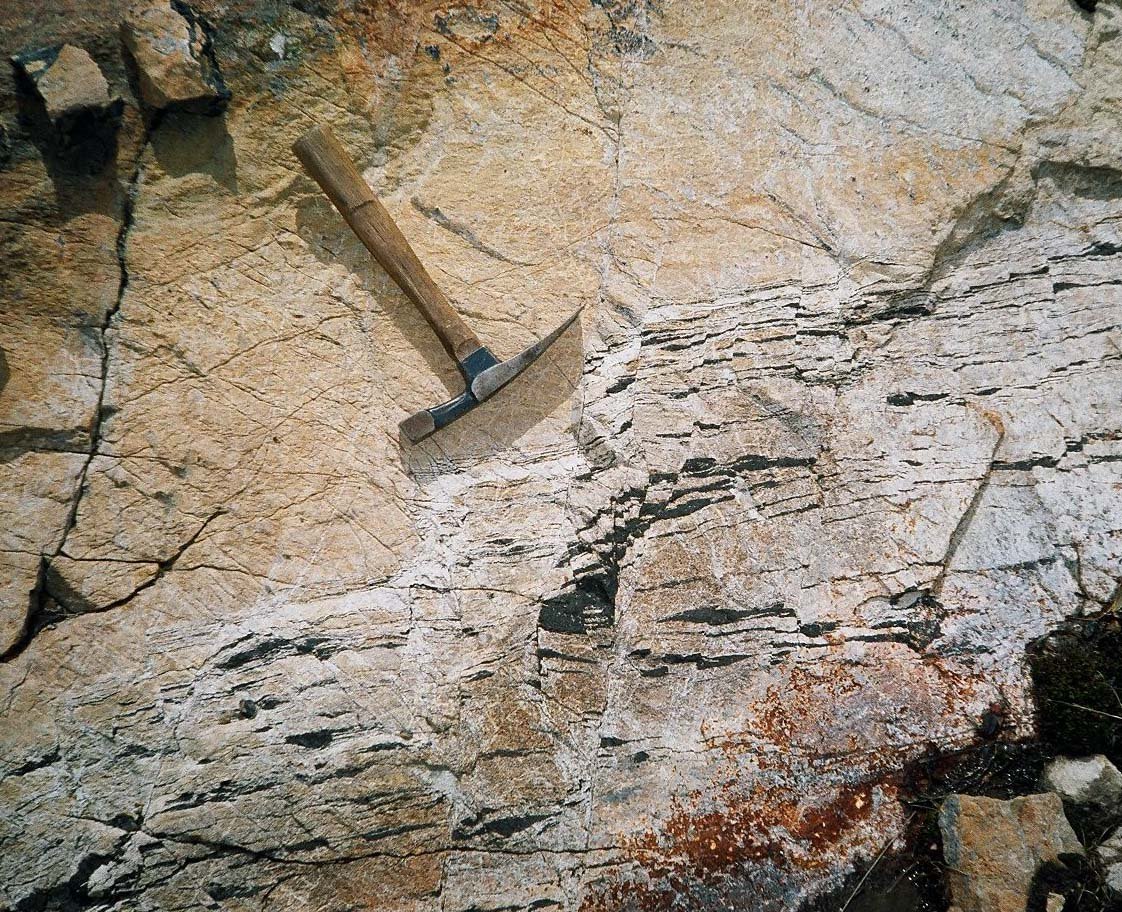
First Atlantic Nickel & Cobalt Corp. (FAN) announced the results of peer-reviewed research conducted by Columbia University and published in ACS Sustainable Resource Management (Donovan et al., 2026). The study demonstrated the leaching of nickel and cobalt from a Pipestone XL awaruite concentrate using cerium(IV) salt solutions. The process achieved 97.5% and 98.1% nickel extraction in 20 minutes, with approximately 90% of the nickel recovered within the first five minutes. Cobalt extraction reached 82% in the same timeframe.
The leaching conditions operated at room temperature and atmospheric pressure, requiring no smelting or sulfuric acid pretreatment. The process utilizes a closed-loop design where cerium is regenerated electrochemically from Ce(III) to Ce(IV) for reuse. The reported consumption rate was approximately 3 mol of Ce(IV) per mol of nickel.
The research compared the awaruite concentrate against nickel sulfide concentrates from Talon Metals' Tamarack project in Minnesota. The Tamarack samples achieved between 59% and 82.5% nickel extraction after 60 minutes. The best Tamarack result, 84% extraction, required a hot sulfuric acid pretreatment. Additionally, the Tamarack samples consumed between 3.7 times and more than 16 times more cerium than the awaruite concentrate.
Tests on a pre-flotation magnetic-only concentrate, grading 1.3% nickel and 55% iron, returned 77% nickel extraction in 20 minutes with only 5.6% of iron dissolved. This suggests that magnetite removal may not be necessary and that beneficiation could be optimized for recovery rather than concentrate purity. Control tests using ferric leaching extracted 38% of nickel in 20 minutes, while acid alone extracted 8%.
The tested concentrate was 97.96% awaruite, grading 63% nickel and 1.64% cobalt. It was produced by magnetic separation and flotation at SGS Canada, consistent with the concentrate reported by the company on June 24, 2026, which averaged 67.4% nickel, up to 71.9% nickel, and 1.76% cobalt.
The research was funded by the U.S. Department of Energy’s ARPA-E MINER program. The program was formerly run by Dr. Douglas Wicks, who is now a First Atlantic Strategic Advisor. Columbia University is described as the Company's "Research Partner" on a DIBC application under RPP-CM-26-01, titled "Domestic Processing Capabilities of Critical Minerals."
The disclosure notes that these are batch tests at laboratory scale. Continuous operation, repeated cerium regeneration on awaruite leach solutions, cerium losses, and the recovery of nickel and cobalt from solution have not been demonstrated. The concentrate came from a single composite sample from the RPM Zone. The Company does not own or control the cerium process.
Supporting market context indicates that cerium oxide averaged US$1.71/kg in 2025, according to the USGS, with approximately 167,000 tonnes produced versus approximately 60,000 tonnes in demand. Cerium is not on China's export control lists. As of 2022, China refined 68% of the world's nickel, according to Brookings. Indonesia accounts for approximately 65% of global nickel supply, and its HPAL plants use approximately 10 tonnes of sulfur per tonne of nickel. Sulfur delivered to Indonesia spiked from approximately US$563/t toward approximately US$1,300/t after February 28, 2026. China announced a near-total sulfuric acid export ban on April 10, 2026.
First Atlantic Nickel & Cobalt Corp. (FAN) released the first third-party, peer-reviewed, quantified evidence on its downstream refining process, addressing a previously undemonstrated step in its production chain. While the company has repeatedly demonstrated large awaruite tonnage over a 30 km trend and smelter-free concentration to a ~60–67% Ni alloy concentrate via ONSHORE MAX, the final stage of refining to Class 1 nickel or nickel sulfate without smelting or acid had been asserted but not evidenced until now.
The study provides specific metrics for the refining unit operation, reporting 98% nickel extraction in 20 minutes at ambient conditions, 82% cobalt recovery, and a ratio of ~3 mol cerium per mol nickel, with closed-loop regeneration. The research included a direct, controlled comparison against Talon Metals’ Tamarack sulfides, processed in the same laboratory under identical conditions. First Atlantic’s material yielded 66% more nickel in one-third the time, with up to 16 times less cerium and no acid pretreatment. This comparison against a third party’s concentrate represents the strongest technical evidence the company has published to date.
Pre-flotation results showed 77% nickel recovery from a 1.3% nickel, 55% iron magnetic concentrate, with only 5.6% iron dissolved. This suggests a potential flowsheet simplification from magnetic separation to leach, eliminating flotation, which could reduce capital and operating costs. The release coincides with a policy environment where non-sulfuric, non-smelting refining is increasingly valuable due to anticipated sulfuric acid disruptions in 2026, Chinese dominance of refining, and a live DIBC solicitation on domestic processing.
The data does not add to the company’s resource tonnage, alter existing economics, or de-risk uncertainties regarding whole-rock head grade, recovery, or mine development. The 98% figure represents leach extraction from an already-concentrated feed, not whole-rock recovery. The disclosed processing chain involves magnetic separation at ~8.2%–10.5% mass pull with ~68.6% nickel recovery (from hole AN-25-10), followed by flotation recovering ~65%–66% of nickel from that feed (as of June 24, 2026), and finally the 98% leach extraction. Calculations based on these figures indicate roughly 44%–45% of in-situ nickel reaches solution, compared to the 85%–90% typical of operating sulfide circuits.
The technology is owned by Columbia University. No license, exclusivity, or commercial terms have been disclosed, meaning the company’s competitive position relies on a research relationship and a DIBC application rather than an owned asset. The disclosure section notes that four factors critical for scale-up—continuous operation, cerium regeneration on real leach solutions, cerium losses, and nickel/cobalt recovery from solution—remain undemonstrated.
First Atlantic Nickel & Cobalt Corp. (TSXV: FAN, OTCQB: FANCF, Frankfurt/Tradegate: P210), formerly known as First Atlantic Nickel Corp. until its name change on April 29, 2026, is a pre-revenue critical minerals explorer. The company’s flagship asset is the 100%-owned Pipestone XL project, which covers the entire 30-kilometre Pipestone Ophiolite Complex in central Newfoundland and Labrador. The property features five awaruite zones along the trend: RPM, Alloy Max, Super Gulp, Atlantic Lake, and Chrome Pond.
The RPM zone is the most advanced, with drilling outlining magnetically recoverable awaruite over more than 1.2 km of strike and more than 800 m of width from 14 holes, all of which intersected visible awaruite. The best downhole total recovery (DTR) result was 0.15% nickel over 228 m at 68.62% magnetic recovery and 10.48% mass pull from hole AN-25-10 in December 2025. The Alloy Max zone, located approximately 5–7 km north of RPM, is a second large-scale zone with a target area of roughly 4 km strike by up to 1.5 km width. Its drill-tested footprint now measures approximately 2.4 km strike, with reported DTR grades for holes XL-26-15/16/17 ranging from 0.07% to 0.11% nickel over 405–504 m, including high-grade magnetic concentrate intervals of 1.76%–2.18% nickel.
The mineral of interest is awaruite (Ni₃Fe), a naturally magnetic, sulphur-free nickel-iron-cobalt alloy. An electron microprobe average at RPM conducted by SGS Canada on May 21, 2026, showed 77.62% nickel and 1.69% cobalt, with peaks of 86.68% nickel and 6.05% cobalt. Chromite was confirmed at 60.2% Cr₂O₃, and brucite at 5.49%. Processing tests using ONSHORE MAX (magnetic separation plus flotation) produced an alloy concentrate averaging 67.4% nickel, up to 71.9% nickel and 1.76% cobalt, as of June 24, 2026, compared to 10%–15% nickel for a typical sulphide concentrate. The Pipestone XL project benefits from year-round road access, nearby high-voltage transmission, and Bay d'Espoir hydroelectric power, and is located approximately 200 km from Vale’s Long Harbour nickel processing plant and Gander International Airport.
The company holds other assets including the Ophiolite-X project in western Newfoundland’s Bay of Islands Ophiolite Complex. Acquired in December 2025 for 4,710,000 shares, Ophiolite-X comprises 18 licences and 500 claims covering approximately 12,500 hectares. It targets geologic hydrogen, carbon capture, awaruite, chromite, copper, and PGEs. The property is subject to NSR royalties of 2.5% on 26 claims and 2.0% on 474 claims, each partly buyable for $1 million pre-production to reduce the rate to 1.5% or 1.0%, leaving a 1.0% NSR.
The North Arm project, located in the Bay of Islands, covers 52.25 km² across 209 claims. It was acquired for 1,000,000 shares at a deemed price of $0.55 plus $51,250 in cash. The property is free of royalties or options, with closing subject to TSX-V acceptance by January 31, 2027. Additionally, the company holds the Lucky Mike copper-silver-tungsten project in British Columbia, which is optioned to Core Critical Metals. CCMC can earn up to an 80% interest by spending $16 million and paying $650,000, while First Atlantic retains a 20% carried interest to feasibility, converting to a 3% NSR if diluted below 10%. The property carries an existing 2% NSR, buyable for $1 million within five years of production.
Pipestone XL is described as royalty-free and wholly owned. No mineral resource or reserve has been defined on any project, and no economic study has been completed.