First Atlantic Establishes Second Large-Scale Zone at Alloy Max North Discovery: Assay and DTR Results Confirm Magnetically Recoverable Awaruite (Ni-Fe-Co Alloy) in Three Drill Holes Over 405 to 504 Meters, Across 1.3 km of Strike, Up to 7 km North of the
Alloy Max assays: 1.3 km of scale, but 0.07-0.09% DTR Ni trails RPM
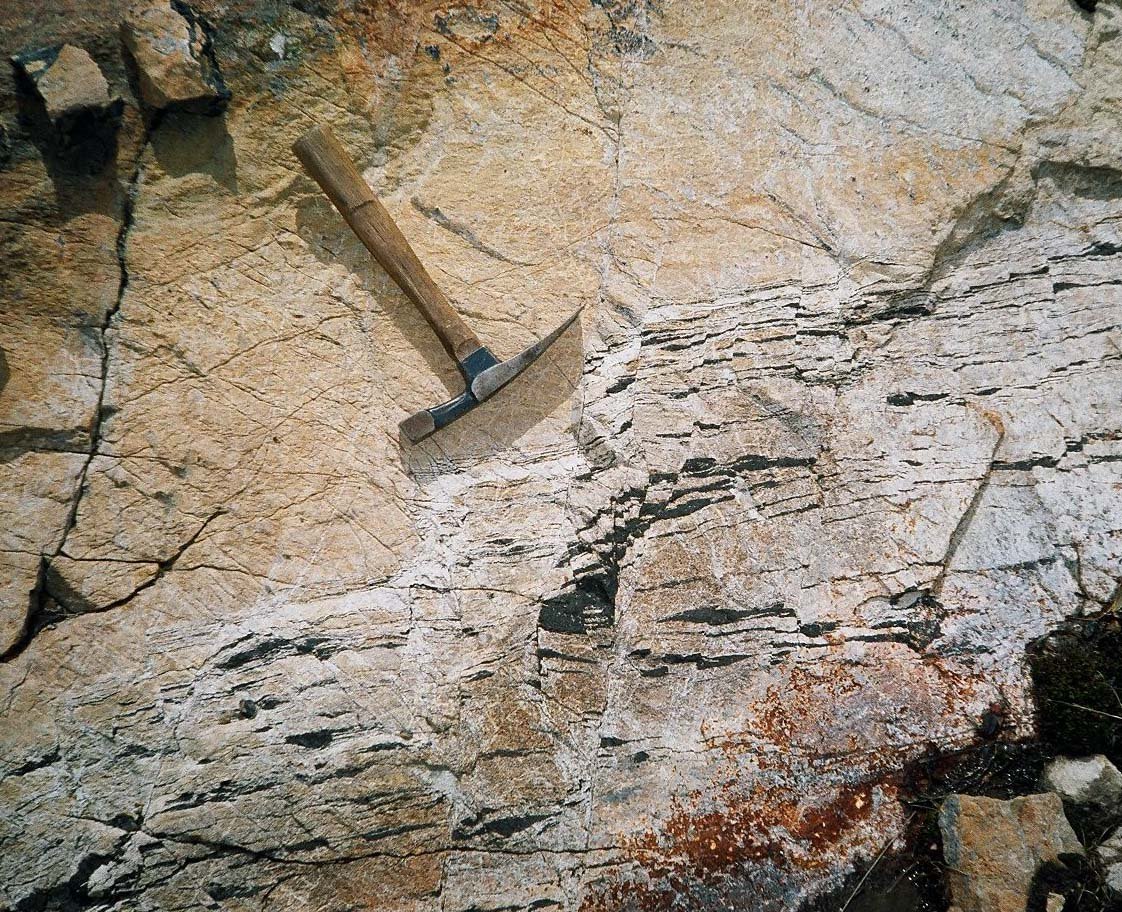
The release reports the first assay and Davis Tube Recovery (DTR) metallurgical results for the first three holes (XL-26-15, XL-26-16, XL-26-17) at the Alloy Max North zone of the Pipestone XL awaruite project, plus the closing of the North Arm property acquisition.
Reported intervals, as stated: - XL-26-17 (easternmost/northernmost): 0.09% DTR Ni over 436.7 m (13.3–450 m); including 0.11% over 306 m (126–432 m); including 0.12% over 249 m (147–396 m); including 0.14% over 147 m (204–351 m) with 1.76% Ni in magnetic concentrate and 59.83% Ni recovery; including 0.15% over 87 m (249–336 m). - XL-26-16 (deepest hole to date, 525 m): 0.08% DTR Ni over 504 m (21–525 m); including 0.11% over the final 147 m (378–525 m); including 0.12% over 87 m (438–525 m); a 69 m interval (180–249 m) at 0.12% DTR Ni with 2.18% Ni in magnetic concentrate. - XL-26-15 (first hole in the area): 0.07% DTR Ni over 405 m (9–414 m); best sub-intervals 0.09–0.10% over 27–96 m. - Whole-rock total nickel across the full intervals: 0.22–0.24%. Magnetic concentrate over full intervals: 0.98–1.49% Ni, 1.81–2.09% Cr, 0.05–0.07% Co. - Mineralization starts 9–21 m from surface; all three holes average above the 0.06% DTR Ni cut-off used in the Baptiste (FPX Nickel) PFS. - Strike: ~1.3 km confirmed by assay between XL-26-16 and XL-26-17; ~2.4 km total across Alloy Max including the Alloy Max South discovery hole XL-26-18. XL-26-18 was stopped at ~40 m in faulted ground; XL-26-19 is designed to test beneath the fault. - Ancillary: North Arm Project acquisition closed (209 claims, ~52.25 km²) for 1,000,000 shares at a deemed $0.55 plus $51,250 reimbursement; access road advancing into ~16 km of undrilled ground; ~$13.4 million raised since September 2026 without warrants.
Purpose of the holes: discovery/step-out at a new zone. The expectation anchor applies.
Anchor: the best previously reported assayed DTR nickel on the project is the RPM Zone — 0.15% over 228 m (AN-25-10, December 2, 2025), 0.13% over 402 m (AN-25-11, January 27, 2026), 0.13% over 383.1 m (AN-24-02). Against Alloy Max North's 0.07–0.09% full-hole, the delta is a ~25–35% grade shortfall at comparable width, with a better-than-RPM higher-grade core (0.14% over 147 m) and materially lower full-hole recovery.
Embedded vs not: the stock tripled off the RPM anchor (C$0.17 on November 28, 2025 low to C$0.58 today, peaking at C$1.28), so the RPM-grade anchor is embedded at the company level. Critically, however, the Alloy Max story itself was never paid for: the stock did not re-rate on any of the three prior Alloy Max visual releases (June 15: C$0.86; July 16: C$0.65; October 13: C$0.65 and fell the next day), and it has more than halved from the June 5 high. So while the market has paid for RPM, it has not paid for Alloy Max grade — which lowers the bar this release had to clear.
Delta assessment: this release genuinely offsets the grade shortfall with a new zone carrying assays across a large footprint — 1.3 km of strike, three holes of 405–504 m from surface, open at depth, ~2.4 km across Alloy Max with the South hole, and a doubling of the interpreted prospective footprint via the intermediate-magnetic-intensity thesis. Total nickel is on-model for the deposit type. What it does not do is demonstrate RPM-grade rock, resource-grade continuity at 1.3 km spacing, or acceptable recoverable-metal fractions from Alloy Max material.
Against the equity: at roughly C$100 million with no resource, this is incremental confirmation of district scale, not a re-rating event. Company stage (pre-resource explorer) means the bar is scale, and scale grew — but the grade and recovery numbers temper it.
First Atlantic Nickel & Cobalt Corp. (TSXV: FAN; OTCQB: FANCF; FSE: P210) is a pre-revenue critical-minerals explorer based in Newfoundland and Labrador, with no defined mineral resources or reserves and a going-concern dependency on equity financing.
- Pipestone XL (wholly owned): covers the entire 30 km Pipestone Ophiolite Complex in central Newfoundland. Five awaruite zones identified — RPM (most advanced: >1.2 km strike, >800 m width, 13 holes all mineralized), Alloy Max (~4 km long, up to 1.5 km wide; now ~2.4 km of drilled strike including the Alloy Max South discovery hole), Super Gulp, Atlantic Lake, Chrome Pond. Year-round road access, nearby hydroelectric transmission, ~200 km from Vale's Long Harbour plant and Gander airport.
- Ophiolite-X Project (acquired December 2025 for 4,710,000 shares): 18 licences, 500 claims, ~125 km² in the Bay of Islands ophiolite complex; prospective for geologic hydrogen, carbon capture, awaruite, chromite, cobalt, copper and PGEs; not systematically tested.
- North Arm Project (closed per this release): 209 claims, ~52.25 km² in the same complex, 25 km north of Ophiolite-X; prospective for hydrogen, awaruite, chromium, copper and PGEs; consideration 1,000,000 shares at a deemed C$0.55 plus C$51,250.
- Lucky Mike (British Columbia, optioned out): copper-silver-tungsten skarn/porphyry, 37 claims (~7,675 ha) ~20 km SE of Highland Valley; Core Critical Metals can earn up to 80% with C$16 million of expenditures and C$650,000 of cash/share payments; First Atlantic retains a 20% carried interest to feasibility plus a royalty position.
- Processing thesis: ONSHORE MAX™ magnetic separation plus flotation on RPM material produced an alloy concentrate averaging 67.4% Ni (up to 71.9% Ni, 1.76% Co) in four bench tests — a smelter-free, sulphur-free route that is genuinely differentiated versus sulphide nickel.
- Other: LOI for a 50/50 engineered mineral hydrogen JV with VEMA Hydrogen; member of the U.S. Defense Industrial Base Consortium; formerly First Atlantic Nickel Corp. (renamed April 2026).