First Atlantic Nickel & Cobalt Drills First Discovery Hole at Alloy Max South Zone with Drill Hole XL-26-18: Best Near-Surface Visible Awaruite to Date at Alloy Max, Ending in Open Mineralization; XL-26-17 Extends Alloy Max North; Drilling Now Spans 2.4 k
First Atlantic’s fourth Alloy Max visual-only hole extends a new zone by 2.4 km of strike without providing assay results.
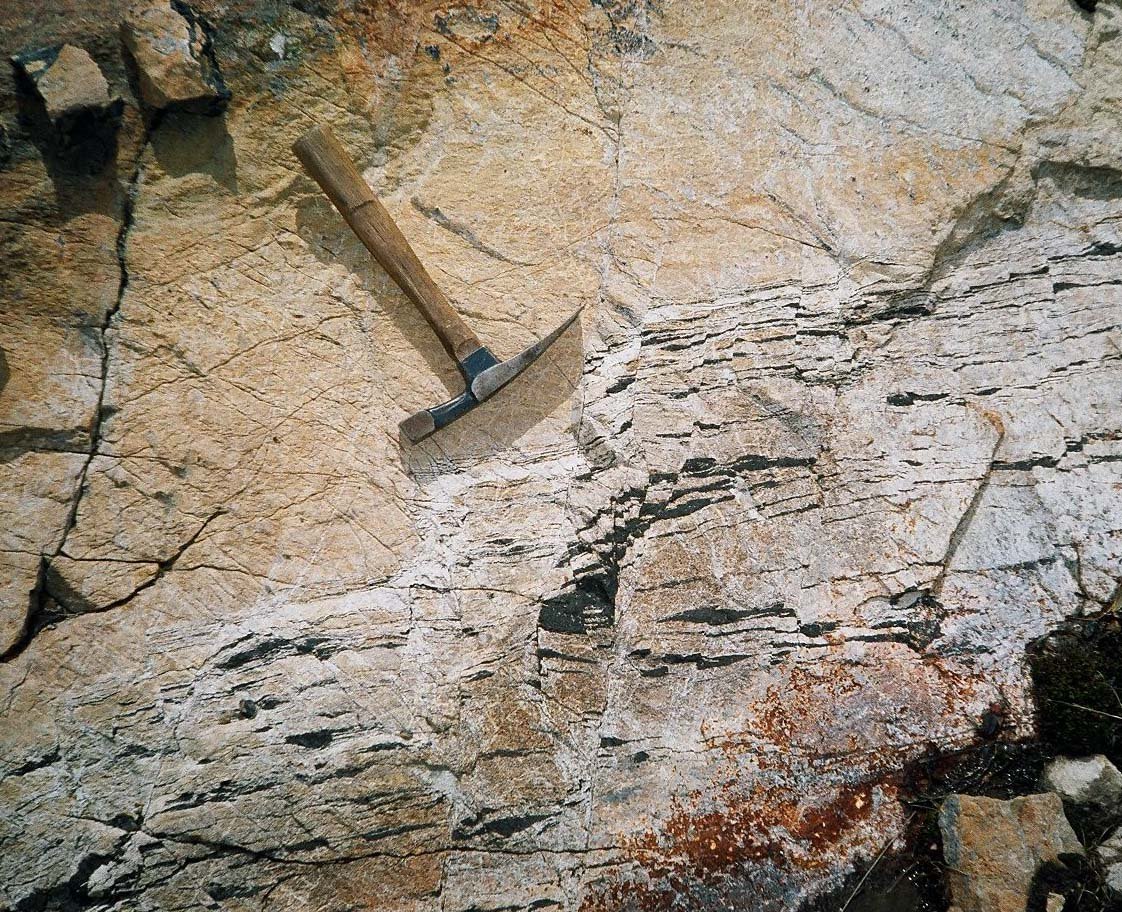
First Atlantic Nickel & Cobalt Corp. (FAN) has announced that discovery hole XL-26-18 has opened a new zone dubbed "Alloy Max South." This was the first hole ever drilled in that specific location, collared approximately 2.4 km southwest along strike from XL-26-17 and drilled east at a -60° angle. The hole intersected abundant, large-grain, visibly disseminated awaruite within approximately 35 m of the surface. Grain sizes, measured from photomicrographs, reached up to 331 microns at 15 m, 273 microns at 27 m, and 348 microns at 32 m downhole.
XL-26-18 terminated at approximately 40 m in broken and faulted rock where the drill lacked the power to advance further. The company stated that the hole ended in visible awaruite, indicating that the mineralization is open at depth. Meanwhile, XL-26-17 is described as a step-out to the north and east and represents the furthest hole drilled north at Alloy Max North. In this hole, grain size increased downhole to up to 129 microns at 186 m and up to 549 microns at 351 m, marking the largest grain measured to date at Alloy Max.
The current footprint of Alloy Max holes now spans approximately 2.4 km along strike, from XL-26-17 to XL-26-18, and more than 1 km of width, from XL-26-15 to XL-26-17. This compares to more than 1.2 km of strike and more than 800 m of width previously drilled at RPM. The Alloy Max target is stated as approximately 4 km strike by up to approximately 1.5 km width.
There are no assays reported for XL-26-17 or XL-26-18. There is no reported nickel grade, DTR nickel, cut-off grade, true width, sample lab, or QA/QC program for these holes. Every mineralized observation in the release is visual or photographic.
Regarding financing, approximately $13.4 million was raised in no-warrant financings since September 2026. A larger, more powerful drill is being assessed, and the access road was upgraded over the summer. The Qualified Person is CEO and director Adrian Smith, P.Geo.
First Atlantic Nickel & Cobalt Corp. (FAN) has reported a new drill intercept at its Alloy Max target, marking the first hole drilled 2.4 km along strike to encounter visual awaruite near the surface. This finding expands the known mineralized footprint at Alloy Max beyond the original ~4 km x 1.5 km area initially staked. The target envelope was previously disclosed between March and July 2026, meaning this drilling confirms mineralization within a known area rather than defining a new dimension.
The company remains a grassroots, pre-resource explorer with no NI 43-101 resource or Preliminary Economic Assessment (PEA). While the discovery of a new zone is typically significant at this stage, the current release provides neither quantity nor grade data. The Alloy Max discovery, identified in hole XL-26-15 on June 15, 2026, which showed 414 m of visual mineralization, previously helped drive the stock from approximately $0.20 in December 2025 to a peak of $1.28 on June 5, 2026. The stock has since retraced to $0.66.
The new release does not offer improved grade or width compared to previous results. Hole XL-26-18 represents a ~40 m truncated interval, a significant reduction from the 414 m and 525 m intervals seen in predecessor holes. While the spatial extension is a positive factor, the lack of grade and reduced width results in a delta that is effectively flat to negative in terms of substance. The pattern of long visual intervals without assay results, followed by stock declines, suggests the market views this news flow as incrementally priced and lacking substantive economic impact. This exploration progress does not alter the resource scale, grade, or economics of the project.
First Atlantic Nickel & Cobalt Corp. (TSXV: FAN; OTCQB: FANCF; FSE: P210) is a pre-resource critical-minerals explorer based in Newfoundland and Labrador. Its flagship project is Pipestone XL, a 100%-owned asset spanning the 30 km Pipestone Ophiolite Complex. This project hosts awaruite zones, including the most advanced RPM zone, as well as Alloy Max, Super Gulp, Atlantic Lake, and Chrome Pond.
The company’s second asset is Ophiolite-X, acquired in December 2025. This property covers approximately 12,500 hectares in the Bay of Islands Ophiolite Complex and focuses on multi-commodity potential including awaruite, chromite, cobalt, copper, and PGEs, alongside geologic-hydrogen and carbon-capture concepts. A third asset, the Lucky Mike copper-silver-tungsten project in British Columbia, has been optioned to Core Critical Metals. The deal involves a $16 million two-stage earn-in for up to 80%, with First Atlantic retaining a 20% carried interest to feasibility. The project is currently being reviewed by a special committee.
No mineral resources or reserves have been established at Pipestone XL. While a June 2025 presentation cited a figure of 10.03 billion lbs Ni / 0.21% M&I, this data is considered legacy and inconsistent with current disclosure standards.
The company’s awaruite thesis centers on a sulphur-free, approximately 77% nickel native alloy. The material is magnetically concentrated via the ONSHORE MAX process, with bench-scale concentrate averaging 67.4% Ni, up to 71.9% Ni, and 1.76% Co. This approach is pitched as enabling a smelter-free North American nickel-cobalt supply chain. First Atlantic is a member of the U.S. Defense Industrial Base Consortium. Additionally, the company has signed a non-binding letter of intent with VEMA Hydrogen for a proposed 50/50 Engineered Mineral Hydrogen joint venture.