Nuvau Intersects 76.23 g/t Au over 0.5 Metres
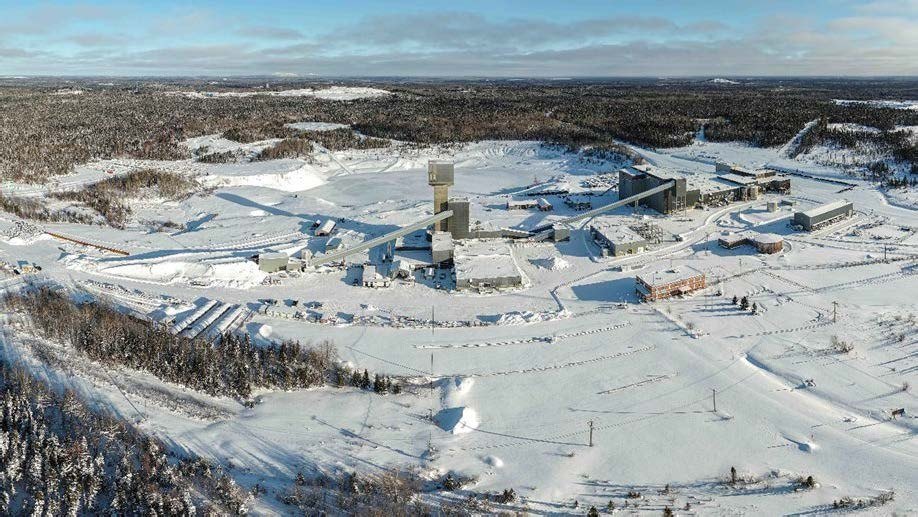
Nuvau Minerals Inc. (NMC) has reported drill results from three additional holes—TH-26-07, TH-26-09, and TH-26-10—at its Thundermine target in the Matagami Mining District, Québec. The results reinforce the emerging model of an orogenic gold system hosted in felsic intrusive rocks, highlighting high-grade quartz-tourmaline veins within a broader lower-grade alteration halo. Significant intercepts include 76.23 g/t Au over 0.5 m in hole TH-26-07 and 22.57 g/t Au over 0.5 m in hole TH-26-10.
Hole TH-26-07 intersected 76.23 g/t Au over 0.5 m (from 335.30 m to 335.80 m) in the wall rock, confirming mineralization beyond the main tonalite body. The hole also returned a composite interval of 66.3 m @ 0.26 g/t Au (from 74.75 m to 141.00 m), which included high-grade sub-intervals of 6.55 g/t Au over 0.6 m (120.20–120.80 m), 2.83 g/t Au over 0.5 m (85.50–86.00 m), and 2.64 g/t Au over 0.5 m (103.30–103.80 m). This hole extends the tested area 50 metres southeast of previously reported intervals and encountered over 60 metres of altered and mineralized tonalite.
Hole TH-26-09 returned a composite interval of 73.2 m @ 0.43 g/t Au (from 439.50 m to 512.70 m). This interval includes 439.5–443.5 m @ 1.9 g/t Au and 452.4–461.0 m @ 1.8 g/t Au. High-grade sub-intervals within the composite include 13.97 g/t Au over 0.5 m (452.40–452.90 m), 5.23 g/t Au over 1.5 m (453.50–455.00 m), and 6.75 g/t Au over 1.1 m (511.60–512.70 m). As one of the deepest holes, it encountered extensive alteration and veining over 73 metres downhole.
Hole TH-26-10 returned a composite interval of 179.6 m @ 0.19 g/t Au (from 279.00 m to 458.60 m), including 334.3–348.2 m @ 1.2 g/t Au. High-grade sub-intervals include 22.57 g/t Au over 0.5 m (347.70–348.15 m), 12.55 g/t Au over 0.5 m (307.60–308.10 m), 9.79 g/t Au over 0.5 m (397.50–398.00 m), and 8.62 g/t Au over 0.5 m (334.25–334.75 m). This hole also encountered extensive alteration and veining over 180 metres downhole.
Assays have been received for holes TH-26-05, TH-26-06, TH-26-07, TH-26-08, TH-26-09, TH-26-10, and TH-26-11. Assays are pending for holes TH-26-12, TH-26-13, and TH-26-14. Visible gold was observed in holes TH-26-05, TH-26-07, TH-26-08, TH-26-09, TH-26-10, TH-26-11, TH-26-12, TH-26-13, and TH-26-14.
The mineralization is hosted in an altered tonalitic intrusive characterized by pervasive sericite-silica alteration, disseminated sulphides, and quartz-carbonate-tourmaline veins. The tested footprint extends approximately 300 metres along trend and over 400 metres vertically. The system remains open to the southeast and at depth, with geological similarities noted to felsic intrusive-hosted orogenic gold systems of the Bourlamaque Batholith, such as the Sigma-Lamaque deposits.
Nuvau Minerals has completed a high-resolution helicopter-borne magnetic survey covering 3,381 line-km over 79.5 km² and a 375-station soil sampling campaign. These surveys cover a second area of interest approximately 10 km east of Thundermine. A winter drilling campaign is planned to test extensions toward the southeast and at depth, targeting structural convergence.
Samples were analyzed at MSALABS in Val-d'Or, Québec, an independent ISO/IEC 17025-accredited laboratory. Gold assays were completed using PhotonAssay™ technology on a nominal 500 g aliquot. The QA/QC program includes certified reference materials, blanks, and duplicate samples representing approximately 11% of submitted samples. The Qualified Person for the technical information in this release is Bastien Fresia, P. Geo. (Qc), Director of Technical Services. Reported intervals are core lengths; true widths are unknown.
"These latest results continue to reinforce our confidence in the emerging gold system at Thundermine... What is particularly encouraging is that successive drillholes continue to demonstrate the presence of mineralization vertically and laterally, strengthening our geological understanding of this orogenic gold system hosted in felsic intrusive rocks," said Christina McCarthy, CEO.