PMET Resources Delivers Enhanced CV5 Lithium-Tantalum Feasibility Study
PMET’s CV5 FS adds tantalum and cuts LOM opex by 19%, yielding an NPV of CA$5.1B on a higher price deck.
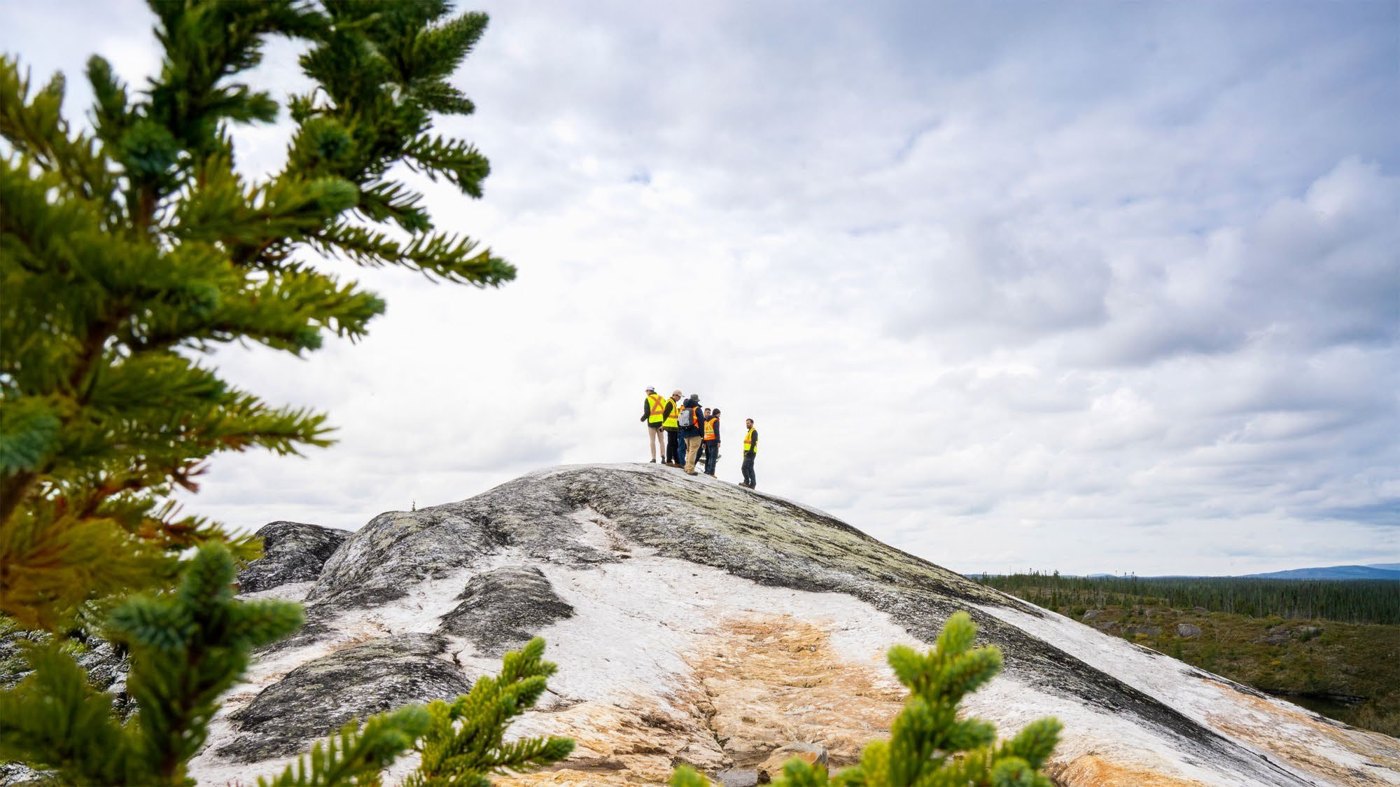
PMET Resources Inc. (PMET) has released the Updated Feasibility Study for the CV5 Pegmatite at Shaakichiuwaanaan in Quebec, expanding the project’s scope to include both lithium and tantalum. The company has guided to a completion date of Q4 2026 for this study since its February 2026 financing, delivering the report on schedule. The update declares a maiden Probable tantalum reserve, establishing a combined Probable Reserve of 83.0 Mt at 1.27% Li2O and 148 ppm Ta2O5, containing 2.61 Mt LCE and 12.3 kt Ta2O5. This represents a tonnage decrease of approximately 1.5% and a marginal grade increase compared to the prior lithium-only reserve declared in October 2025, which stood at 84.3 Mt at 1.26% Li2O.
The mine plan has shifted to an underground-first approach for Phase 1, processing 2.2 Mtpa through a single-stage DMS circuit. This phase targets the high-grade Nova Zone from the outset, producing up to approximately 560,000 tpa of SC5.5 concentrate in the first three years. Phase 2 adds 2.9 Mtpa via an open pit with a 3.5:1 strip ratio, bringing total throughput to 5.1 Mtpa and nominal concentrate production to approximately 800,000 tpa. The life of mine is projected at 19 years, processing 83.0 Mt at 1.27% Li2O with lithium and tantalum recoveries of 69.7% and 44.6%, respectively. Total LOM output is estimated at 13.4 Mt of SC5.5 concentrate and 27.4 kt of tantalite concentrate at 20% Ta2O5, equating to approximately 635,000 lb Ta2O5 per year.
LOM total cash costs are estimated at CA$594/t (US$433/t) and AISC at CA$657/t (US$480/t), figures stated as 19% and 18% below the 2025 FS values of CA$729/t and CA$800/t. Both cost metrics are net of a CA$148/t tantalum credit. Capital expenditure for Phase 1 is CA$1,391M gross, or CA$1,080M net of anticipated pre-production credit and tax credits. Table 3 in the release shows Phase 1 initial capital net of pre-production credit at CA$1,260.4M, a 1% increase from the CA$1,247.7M in the 2025 study. Phase 2 capital is CA$672.4M (CA$595M net of tax credits, a 7% increase). Total development capital is approximately CA$2,063M (CA$1,675M net), with the study including an 11% contingency.
Economic metrics at a spodumene price of US$1,788/t SC5.5 and US$120/lb Ta2O5 yield an after-tax NPV8% of approximately CA$5.10B (US$3.72B), an after-tax IRR of 40.4%, and a payback period of 2.7 years. A second case at a near-broker consensus price of approximately US$1,400/t SC5.5 results in an after-tax NPV8% of approximately CA$3.29B. The long-term spodumene assumption rose 46% from US$1,221/t in the 2025 FS to US$1,788/t, while the FX rate moved from 1.34 to 1.37 CA$/US$. Holding the 2025 lithium price and FX constant, the after-tax NPV8% rises by CA$0.7B to CA$2.3B, driven by CA$519M from tantalum and CA$180M from the mine plan, with the after-tax IRR increasing from 18.1% to 24.6%.
The plan falls within the existing ESIA scope for up to 5.1 Mtpa, filed on 31 March 2026, meaning no re-permitting is triggered by the changes. The timeline targets a final investment decision in late 2027, plant commissioning from the latter part of 2029, and commercial production by the end of Q1 2030. Commercially, PowerCo (Volkswagen) has provided a binding offtake term sheet for 100,000 tpa of SC5.5 over 10 years, conditional on commissioning by 30 June 2031. Volkswagen holds a right to participate as a cornerstone investor at FID. Non-binding letters of interest have been received from Société Générale as a potential Mandated Lead Arranger, as well as from EDC and KfW IPEX-Bank. Estimated Canadian and Québec tax credits and savings total approximately CA$456M.
Looking ahead, PMET plans to release a PEA on an integrated CV5 + CV13 lithium-caesium-tantalum scenario this quarter. An NI 43-101 technical report is to be filed within 45 days, and an underground bulk sample program is continuing.
PMET Resources Inc. (PMET) has updated its financial model to include a quantified tantalum circuit, adding a maiden tantalum reserve of 12.3 kt Ta2O5. The company assumes a 44.6% recovery rate, projecting a life-of-mine (LOM) tantalite concentrate production of 27.4 kt at 20% Ta2O5. On a like-for-like basis, this addition contributes CA$519M to the after-tax NPV8%, accounting for roughly three-quarters of the total like-for-like uplift.
Mining plan improvements further enhance the project’s economics by pulling the high-grade Nova Zone forward. This sequencing reduces open-pit pre-stripping and seasonality exposure in the early years. These changes add a further CA$180M to the like-for-like NPV8%.
Initial capital expenditure, calculated on a comparable line net of pre-production credit, rose only 1% to CA$1,260.4M from CA$1,247.7M, despite the addition of tantalum scope. This figure sits within an 11% contingency. The project timeline remains disciplined, with a final investment decision (FID) targeted for late 2027 and commercial production scheduled for the end of Q1 2030. These dates are consistent with prior guidance, which indicated commercial production in 2030 and full-scale operations by 2032.
The headline after-tax NPV8% increased from CA$1.594B to CA$5.10B, a rise of 220%. This jump is primarily driven by a 46% increase in the lithium price assumption. The release quantifies the residual like-for-like uplift at CA$2.3B, rather than the full CA$5.1B. Data points in the release indicate an after-tax NPV8% of CA$5.10B at a US$1,788/t price and CA$3.29B at approximately US$1,400/t. This implies roughly CA$467M of after-tax NPV8% per US$100/t of SC5.5 price. The base case price sits US$388/t above the "near broker consensus" figure cited by the company, meaning approximately CA$1.8B, or 35%, of the headline NPV rests on a price deck above consensus. The prior feasibility study used a price of US$1,221/t.
Regarding cost metrics, the tantalum credit is valued at CA$148/t. The reported cash-cost reduction is CA$135.6/t, moving from CA$729.1/t to CA$593.5/t. Gross of the credit, cash cost is approximately CA$742/t, compared to approximately CA$729/t previously, indicating underlying unit costs rose by approximately 1.8%. Similarly, the all-in sustaining cost (AISC) is calculated as CA$657.1/t plus the CA$148/t credit, totaling approximately CA$805/t gross, versus CA$799.8/t previously. The reported 19% or 18% cost improvement is attributed entirely to this co-product accounting credit. This credit depends on three variables: a 44.6% tantalum recovery at scale, a US$120/lb tantalite price, and a 20% Ta2O5 concentrate specification. No binding tantalum offtake has been disclosed.
Presentation inconsistencies exist within the release. Phase 1 capex is presented as CA$1,080M net of pre-production credit and tax credits in the highlights, but as CA$1,260.4M net of pre-production credit only in Table 3. The difference represents approximately CA$180M of assumed refundable CTM-ITC/TCRR. The actual cash requirement before credits is CA$1,391M, which is 29% above the headline figure. Reserve tonnage declined from 84.3 Mt to 83.0 Mt, and mine life is listed as 19 years in Table 2, compared to "approximately 20" in the prose and the 2025 feasibility study. The first-three-years production profile of approximately 560 ktpa requires roughly 2.0% Li2O feed at 2.2 Mtpa. The investor presentation lists the fully diluted Nova Zone at approximately 12.1 Mt at 2.0% Li2O, providing about 5.5 years of Phase 1 feed.
Funding requirements remain a key focus. Total development capital is estimated at approximately CA$2,063M (CA$1,675M net), against C$174.2M of cash at 31 March 2026. The feasibility study quantifies this gap but does not close it. EDC, KfW, and Société Générale have provided non-binding letters of interest; no credit approval or mandated term sheet exists.
Permitting status includes an Environmental and Social Impact Assessment (ESIA) submitted on 31 March 2026. The presentation indicates an 18–24 month review period, implying authorization around late 2027 or 2028, against an FID target of late 2027. Provincial COMEX/COMEV review and the application for a approximately 50,000 t bulk sample remain outstanding. Social license efforts include a non-binding letter of intent (LOI) from Chisasibi, which expressly states it does not constitute consent, approval, or endorsement. No Impact Benefit Agreement (IBA) has been signed.
The release was published at 16:47 on 10 November, after market close. The stock closed at C$3.22 that day, a price set before the news. The stock had already declined 58% from its May high and was 4% below the prior session’s close.
PMET Resources Inc. is a development-stage critical minerals company whose sole material asset is the 100%-owned Shaakichiuwaanaan Project in the Eeyou Istchee James Bay region of Quebec. The property is located approximately 220 km east of Radisson, 13 km south of the Trans-Taiga Road at KM-270, and roughly 50 km southwest of the La Grande-4 hydroelectric complex. It sits on Category III land within the traditional territory of the Cree Nations of Chisasibi and Mistissini.
The project’s flagship asset is the CV5 LCT pegmatite. The principal dyke is modelled continuously over approximately 5.0 km of strike, ranging from less than 10 m to more than 125 m in true width, and remains open along strike and at depth. It hosts the high-grade Nova Zone, which has been traced over approximately 1.5 km with multiple intersections of 2–25 m at greater than 5% Li2O within a wider greater than 2% Li2O envelope. The principal lithium mineral is spodumene, and the principal tantalum mineral is tantalite, with columbite also present.
The consolidated resource also covers CV13, which hosts the world's largest pollucite-hosted caesium resource along with rubidium, and CV4, a possible eastern extension of CV5. Gallium is reported in the resource table but is not included in any reserve or study.
Development activity began with the first drill hole in November 2021. On 20 October 2025, the company released a maiden CV5 reserve and lithium-only feasibility study reporting 84.3 Mt at 1.26% Li2O, with an after-tax NPV8% of approximately C$1.59B. The Environmental and Social Impact Assessment (ESIA) was filed on 31 March 2026. A consolidated MRE-5 was released on 3 November 2026, reporting 113.9 Mt indicated at 1.43% Li2O, with caesium contained metal increasing by 55% to 110,600 t Cs2O. An updated lithium-tantalum feasibility study was released on 10 November 2026.
The processing plan utilizes a DMS-only flowsheet to produce a coarse SC5.5 concentrate at 5.5% Li2O and less than 2.0% Fe2O3. This simple physical route with low reagent intensity forms the basis for the low opex claim. A separate downstream concept study produced 99.8% battery-grade lithium carbonate at bench scale using Primero's ALi® atmospheric leach. Additionally, an MOU with Mitsui and Microwave Chemical evaluates electric microwave calcination. Neither of these downstream concepts is included in the feasibility study.
Logistics and power infrastructure includes year-round road access via the Trans-Taiga, a letter of intent with the City of Matagami for truck-to-rail transshipment, and a Hydro-Québec 120 kV connection application currently under assessment. The project also benefits from C$1.2M of federal First and Last Mile funding for approximately 20 km of access road.
No analyst ratings, target prices, ranges, or consensus figures were provided in the materials, meaning coverage cannot be characterized.