International Tower Hill Files 2026 Third Quarter Financial Results, Provides Corporate Update
International Tower Hill’s Livengood Phase 1 plan removes POX to cut capex, targeting 1.5 g/t gold over 20 m widths.
International Tower Hill Mines Ltd. (ITH) released its quarterly filing and corporate update on Thursday, marking the first substantive operational report under the new CEO and President team installed on July 27, 2026. The company filed unaudited financial statements, a Management’s Discussion and Analysis (MD&A), and a Form 10-Q for the three- and nine-month periods ended September 30, 2026. As of the third quarter of 2026, the company reported cash and short-term investments of over $106 million, stating these funds are sufficient to complete the planned Feasibility Study and advance permitting over the coming years.
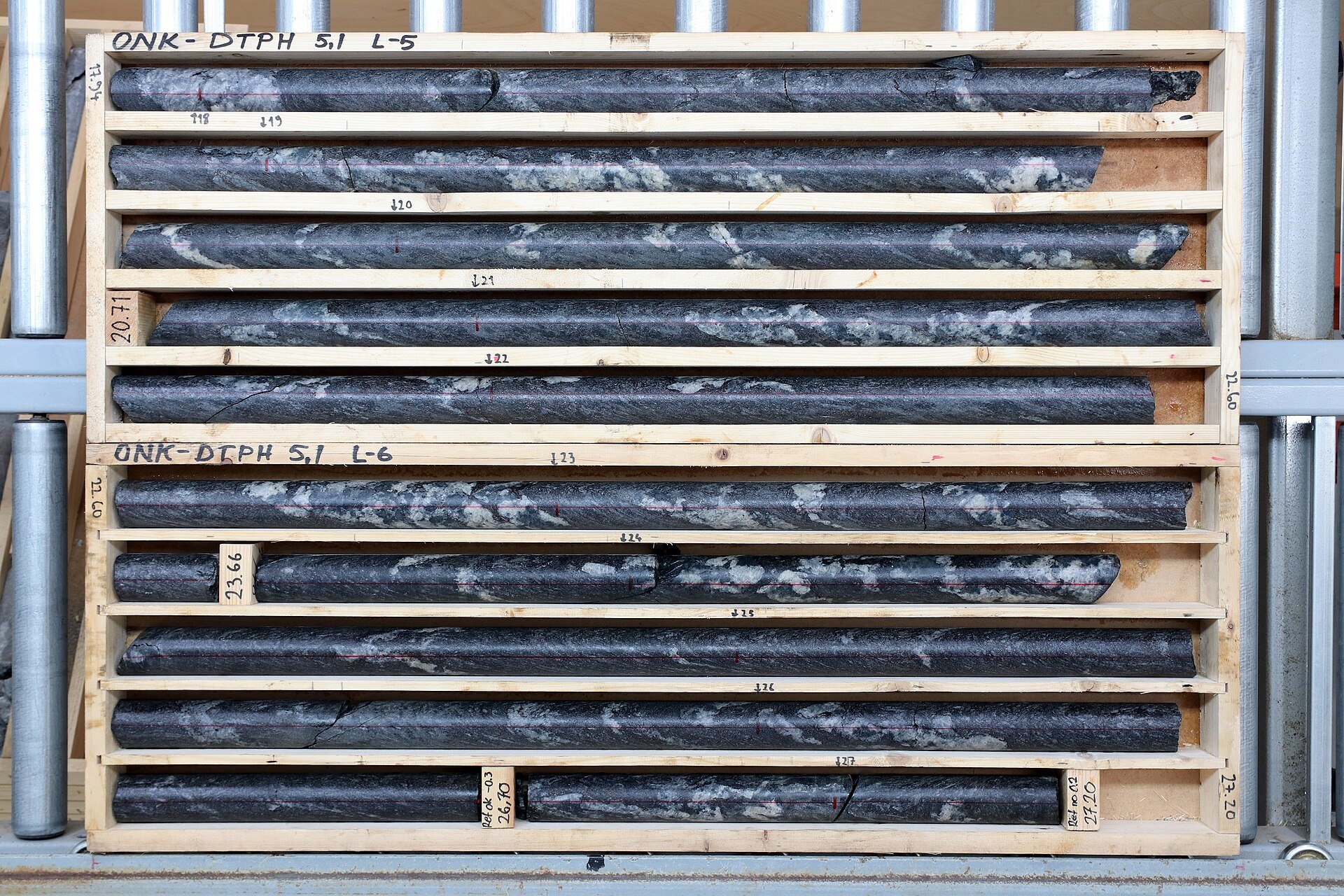
Phase 1 of the Feasibility Study is progressing as planned across four workstreams: metallurgical core drilling, review of existing technical data, project scale analysis, and an execution plan and budget for the full study. The 2026 PQ core campaign is now complete, with approximately 6,000 metres of core obtained with Alloy Drilling. This core underpins metallurgical test work now scheduled to be initiated in Q1 2027. Additionally, a data gap analysis of historical hydrogeological and geotechnical data is complete, citing approximately 18 years of environmental baseline work. Geotechnical drilling is planned for Q1 2027, with the camp winterized until spring.
Project scale analysis indicates the potential for larger throughput scenarios relative to the 2023 Pre-Feasibility Study, driven by the higher gold price environment. No throughput number, capex number, or net present value (NPV) was provided. A mineral resource update is in progress, reflecting the higher gold price environment relative to the current estimate effective August 20, 2021. Phase 2 of the Study is expected to be initiated by Q1 2027, concurrent with the conclusion of the execution plan and budget.
The company has changed its flowsheet direction for Phase 2, which will focus on alternatives that maximize gold recovery without pressure oxidation or other capital-intensive processing technologies. This shift aims to minimize upfront capital expenditure and execution risk through a phased approach. This marks a departure from the May 13, 2026 release, which framed trade-off work around evaluating pressure oxidation (POX) to lift recoveries versus the existing gravity/CIL route. The November release steers Phase 2 away from POX, a move framed as capex and execution-risk discipline.
The 2026 PQ core campaign over-delivered against the plan described in the May investor presentation, which outlined a ~3,000 metre program commenced in July 2026. The campaign finished at roughly 6,000 metres of PQ core.
An investor webinar is scheduled for Thursday, November 12, 2026, at 2:00 PM ET with the CEO and President/COO. The release provided no Q3 cash-flow detail, burn rate, updated study economics, revised recovery assumptions, or permitting timetable.
Prior-period context from the filed financials covers Q1 2026, Q2 2026, and FY2025. For the three months ended June 30, 2026, the company reported a net loss of US$3.38 million, cash of US$60.44 million, and total current assets of US$112.57 million. Total liabilities were US$2.44 million, total equity was US$165.51 million, and book value per share was US$0.63. For the first half of 2026, the company reported a net loss of US$1.11 million, flattered by a US$4.82 million foreign exchange gain and US$2.12 million of interest income. Mineral property expenditure was US$5.61 million, and share-based compensation was US$0.87 million. Operating cash flow was negative US$0.26 million for H1 2026 because project spend is capitalized into mineral properties rather than expensed. Total assets rose to US$167.9 million, implying roughly US$55 million of capitalized mineral property.
Management budgeted the 2026 work program at US$20–25 million and stated liquidity was sufficient through the end of 2026, while flagging significant uncertainty about financing beyond that horizon. Cash progression shows working capital of US$115.0 million in Q1 2026, US$110.1 million in Q2 2026, and over US$106 million in cash plus short-term investments in Q3 2026. This indicates a controlled burn of roughly US$4–5 million per quarter against the annual program, with spend back-end loaded into Q4 metallurgical work and into 2027.
International Tower Hill Mines Ltd. (ITH) released a corporate update highlighting confirmed funding and operational progress, though the company remains in a pre-revenue development phase. The release confirmed that a January 2026 capital raise of US$114.8 million gross, which was upsized and included a US$3.3 million top-up from Paulson, has been preserved. This funding provides certainty for a US$20–25 million annual program and supports the completion of a study and advanced permitting over the coming years.
Execution against the May 13 plan is underway, with all five named consultants active. Phase 1 is described as on plan, and the drill program has not only completed but roughly doubled the ~3,000 metres outlined in the initial presentation. The company also flagged potential for larger throughput scenarios relative to the 2023 Pre-Feasibility Study’s 65,000 tpd capacity. This directionally meaningful optionality applies to the asset’s 13.6 moz M&I and 9.0 moz P&P resources, where a larger pit at a low 1.2:1 strip ratio offers NPV leverage at current gold prices, though no supporting numbers were provided. Additionally, a resource update is in train; the current estimate is dated August 20, 2021, and priced at US$1,650/oz for M&I and US$1,680/oz for reserves.
The update also noted a shift in the recovery strategy. In May, the company stated it would evaluate POX to improve recoveries beyond the 57–83% rocktype range and 22% for massive stibnite. The November release indicates Phase 2 will pursue alternatives that maximize recovery without POX or other capital-intensive technology. This decision, driven by the US$1.93 billion PFS capex, lowers the ceiling on potential margin expansion.
Timeline milestones have shifted, with metallurgical test work and Phase 2 now initiated in Q1 2027, and geotechnical drilling scheduled for spring 2027. No field work is planned for the winter. A Feasibility Study starting Phase 2 in Q1 2027 is not expected to be completed in 2027, and permitting has not formally commenced. The release deferred economics updates and further scale analysis to a November 12 webinar, noting that the current thesis relies on resources and economics that are five and three years old, respectively.
International Tower Hill Mines Ltd. (TSX: ITH, NYSE American: THM) is a pre-revenue gold developer holding a 100% interest in the Livengood Gold Project in Alaska. The project is located on the paved Elliott Highway, 70 miles north of Fairbanks and roughly 50 miles from grid power. The land package covers 75 square miles, with the defined resource covering approximately one square mile and exploration potential existing at depth and to the southwest. The company describes the project as one of the largest undeveloped gold projects in the United States.
According to the 2023 Technical Report Summary, which is SK-1300 compliant and presented in the company’s investor materials, the resource and reserve base includes the following:
- Measured & Indicated: 13.6 moz at 0.60 g/t Au, 705 Mt, at a US$1,650/oz gold price and variable cut-off.
- Proven & Probable: 9.0 moz at 0.65 g/t Au, 430 Mt, at US$1,680/oz and variable cut-off.
- Database: 776 drill holes, 711,984 feet.
- Strip ratio: 1.2:1, the lowest among comparable independent gold-only North American projects per the company.
- Metallurgical recovery (tonnage-weighted): 83.3% (RT4), 79.8% (RT5), 73.5% (RT6), 66.4% (RT7), 58.7% (RT8), 57.1% (RT9), and 22% for massive stibnite. Lowest processed grades range 0.26–0.42 g/t by rocktype.
- By-product potential: antimony, carried by stibnite, with deportment work done at AMTEL showing good liberation at p80 250 microns; further work at SGS Lakefield. Vein composites reported include 4.19 g/t Au / 2.75% Sb, 3.72 / 2.31, 3.31 / 1.41, 3.21 / 1.05.
The 2023 Pre-Feasibility Study economics, representing the current published base case at US$1,680/oz, outline the following parameters:
- Initial capex ~US$1.93 billion; LOM AISC ~US$1,171/oz.
- Throughput 65,000 tpd; mine life 21 years; LOM production 6.4 moz; average first-five-year production 388,600 oz/yr.
- The company states the project shows positive NPV below US$2,250/oz, with margin expansion and improved financing profile at materially higher gold prices.
The project is in advanced development and pre-permitting stages. Phase 1 of the Feasibility Study is funded and underway with BBA Consultants USA LLP as lead integrator, alongside Hatch Ltd., Newfields Mining Design and Technical Services LLC, Resource Development Associates Inc., and JDS Energy and Mining Inc. Phase 2 is targeted to begin in Q1 2027. Formal permitting has not been initiated.
The provided materials do not disclose any royalty, streaming, or net smelter return burden on Livengood. On the information supplied, the project cannot be characterized as either royalty-free or royalty-bearing; that must be confirmed from the technical report or MD&A.