Apollo Silver Delivers Positive PEA for Calico
Apollo’s preliminary economic assessment for the project yields a us$737m net present value at us$55/oz, despite ounces falling and capital expenditure reaching five times the market capitalisation.
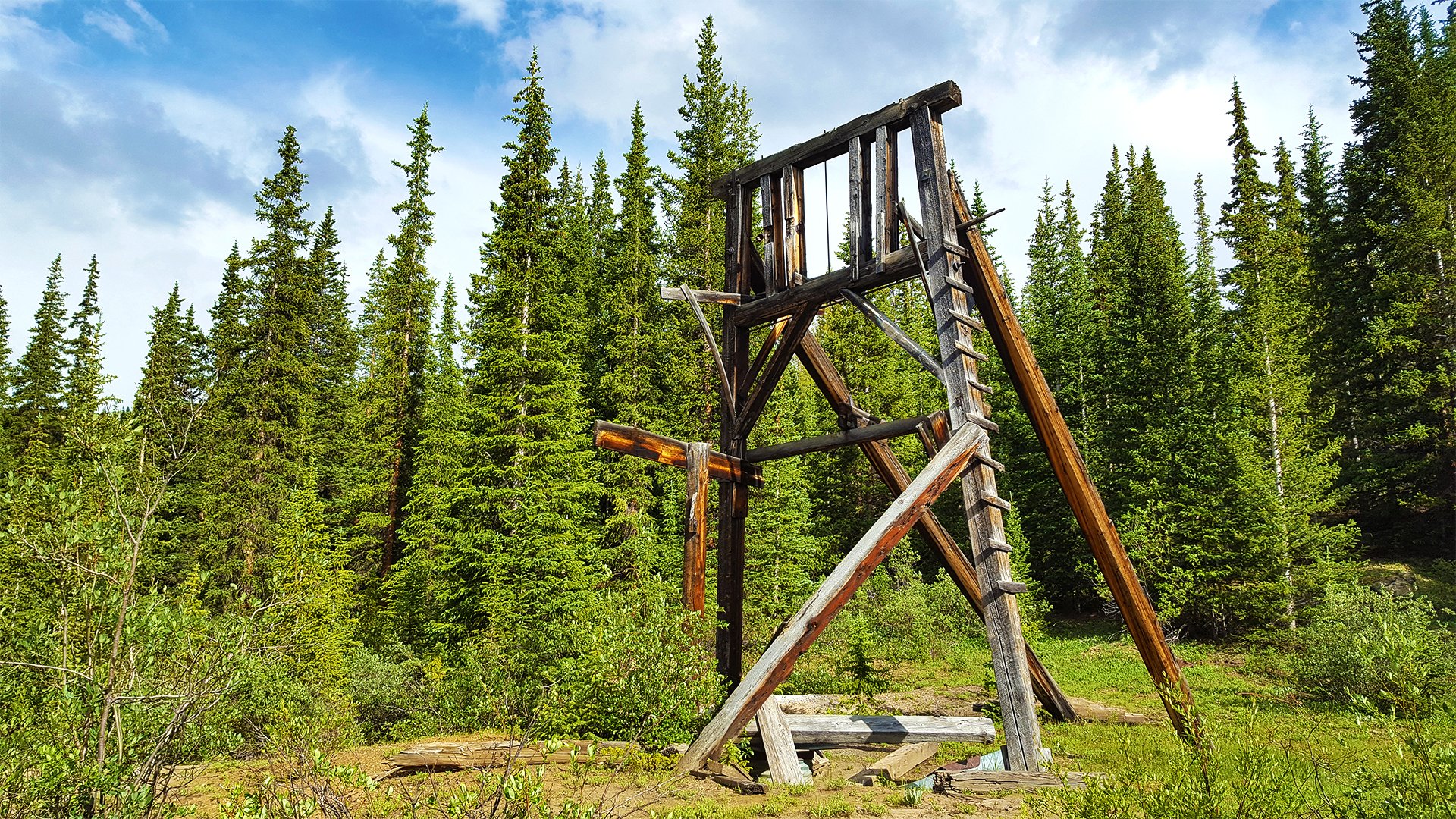
Apollo Silver Corp. (APGO) has released the first economic study for its flagship Calico silver project in San Bernardino County, California. The preliminary economic assessment (PEA), prepared by SLR Consulting, focuses exclusively on the Waterloo deposit.
The mine plan outlines a contract open-pit operation processing 8,000 tonnes per day through a conventional crushing, SAG, ball, and fine-grind circuit, followed by cyanide leaching and Merrill-Crowe recovery to produce doré on site. The facility is designed for a 15-year life with a 24-month construction period, utilizing dry-stack filtered tailings.
Key physical parameters include 41.98 million tonnes of milled ore and 20.52 million tonnes of waste, resulting in a strip ratio of 0.49:1. The average diluted head grade is 84.78 g/t Ag, rising to 100.8 g/t Ag in years one through ten. The study assumes a 65% lifetime silver recovery, yielding approximately 74.4 million ounces of silver, or roughly 5 million ounces annually. Three percent of the mill feed consists of Inferred material.
Operating costs are estimated at US$24.96/oz payable cash cost and US$26.07/oz payable all-in sustaining cost (AISC). Unit operating costs stand at US$38.48 per tonne milled, with site general and administrative expenses of US$15.5 million annually.
Initial capital expenditure is projected at US$632.9 million, including a 25% contingency; the base cost before contingency is US$506.3 million. Additional capital requirements include US$28.2 million for sustaining capital, US$16.6 million for pit backfill, and US$37.5 million for closure, bringing the total capital to US$715.2 million. The PEA accuracy is stated as -30%/+50%.
At a base case silver price of US$55/oz, the project yields an after-tax net present value (NPV5%) of US$737.3 million, an after-tax internal rate of return (IRR) of 25%, and an after-tax payback period of 3.0 years. Pre-tax figures show an NPV5% of US$924.9 million and an IRR of 29%.
Sensitivity analysis indicates that at US$45/oz, the after-tax NPV5% drops to US$347.9 million with an IRR of 16% and a 3.9-year payback. At US$65/oz, the after-tax NPV5% rises to US$1,112.7 million with an IRR of 32%. A 10% reduction in metal price reduces the after-tax NPV by 29%.
Taxes and royalties are calculated using a simplified combined Federal/State rate of 27.98% with seven-year MACRS depreciation. The mine plan carries a 2% net smelter return (NSR) burden, consistent with the December 2025 Athena closing, where Athena claims carry a 1% NSR capped at a 2% total burden per claim.
An updated mineral resource estimate (MRE), effective October 1, 2026, reports the Waterloo deposit with Measured and Indicated resources of 42.2 million tonnes at 85.1 g/t Ag for 115.6 million ounces, of which 88.2 million ounces (approximately 76%) are Measured. Waterloo Inferred resources total 1.1 million tonnes at 65.4 g/t Ag for 2.3 million ounces. The Langtry deposit holds Inferred resources of 23.0 million tonnes at 66.3 g/t Ag for 49.1 million ounces. Total Inferred resources amount to 51.4-51.5 million ounces, with minor variations due to rounding between the text and Table 3. A separate Waterloo gold Inferred resource is listed at 0.53 million tonnes at 0.80 g/t Au for 0.014 million ounces. Cut-offs are set at 34 g/t Ag for Waterloo, 35 g/t Ag for Langtry, and 0.51 g/t Au. The MRE utilizes a silver price of US$50/oz.
Compared to the June 30, 2025 estimate, Waterloo Measured and Indicated tonnage decreased by 23% while grade increased by 20%, with contained silver falling from 125 million ounces to 115.6 million ounces. Waterloo Inferred contained silver rose from 0.51 million ounces to 2.3 million ounces. Langtry contained silver decreased from 57 million ounces to 49.1 million ounces with a 9% grade reduction, and contained gold fell from 0.13 million ounces to 0.014 million ounces. Barite and zinc are no longer reported in the resource estimate. The release states the drill database remains unchanged, with no new drilling or sampling completed at Calico since the June 30, 2025 estimate.
The project is located on private land with county-recognized vested surface rights. Permitting is principally governed by CEQA and SMARA, with San Bernardino County as the lead agency. NEPA compliance may be required if a federal permit or funding is involved. Environmental baseline studies are planned for 2027. Water will be secured through acquisition or lease in the adjudicated Mojave Basin, and power interconnection has not yet been confirmed. No construction or operating permits have been obtained.
Next steps include metallurgical variability and optimization test work, geotechnical and metallurgical drilling, securing water rights and power, and conducting baseline studies, followed by a prefeasibility study. The NI 43-101 report is due on SEDAR+ by December 13, 2026.
Upside potential cited outside the current plan includes Langtry’s 49.1 million ounce Inferred resource and the Waterloo gold domain.
Apollo Silver Corp. (APGO) released its first economic study for the Calico project on October 29, 2026, providing the market with its first dollar-value assessment of the asset. The Preliminary Economic Assessment (PEA), authored by SLR Consulting, reports an after-tax net present value (NPV) of US$737.3 million and an internal rate of return (IRR) of 25% at a 5% discount rate. These figures stand in contrast to the company’s market capitalization of approximately C$121 million. On a per-share basis, the study implies approximately US$11.67 of PEA-level NPV across 63.2 million shares, pre-dilution.
The study outlines a capital-efficient profile on paper, with an NPV-to-initial capital expenditure ratio of 1.17x and an NPV-to-total capital expenditure ratio of 1.03x. The project projects a three-year after-tax payback period from first production. The operation remains viable at lower metal prices; at US$45/oz silver, the mine generates US$658.7 million in after-tax life-of-mine cash flow. At this price point, the operating margin remains positive, with revenue of roughly US$79.7/t against operating expenses and royalties of US$38.48/t.
Apollo Silver highlighted several de-risking factors in the release, including a Measured-dominant resource that accounts for 76% of contained Measured and Indicated silver. The company noted an improved strip ratio in the 2026 resource shell of 0.6:1, down from 0.8:1 in the 2025 model, alongside a shallower pit design at both deposits. The project sits on private land with vested surface rights and utilizes a flowsheet that avoids a conventional tailings dam. The resulting doré is produced in the United States, a jurisdiction where silver is listed as a critical mineral.
The PEA was pre-announced in earlier disclosures. A March 18, 2026 release named SLR as the author and described the study as underway, while a May 11, 2026 release guided completion to the third quarter of 2026. The October 29 delivery was approximately one month later than the previous guidance. The technical approach, involving the Waterloo open pit, an 8,000 tonnes per day processing rate, cyanidation, and doré production, had been previously flagged. Elements such as the 2% net smelter return (NSR), private-land tenure, and critical minerals framing have appeared repeatedly since November 2025.
The resource base disclosed in the PEA is smaller than previous estimates. Measured and Indicated contained silver fell from 125 million ounces to 115.6 million ounces, a decrease of 7.5%. This reduction was driven by a 23% drop in tonnage offset by a 20% increase in grade. At the Langtry deposit, contained silver declined from 57 million ounces to 49.1 million ounces, a 14% decrease. Total contained silver across both categories moved from roughly 183 million ounces to about 167 million ounces. The previous framing of "125 moz M&I plus 58 moz Inferred" used in March 2026 and November 2025 is no longer used.
The gold component of the resource has significantly diminished. Inferred contained gold fell from 0.13 million ounces to 0.014 million ounces, and gold tonnage dropped from 17 million tonnes to 0.53 million tonnes, despite the grade rising from 0.25 g/t to 0.80 g/t. A May 11, 2026 release had highlighted assays up to 4.85 g/t Au and a 1,000-meter program intended to expand the gold resource. Following the re-modelling, the gold domain is considered a rounding error relative to silver and sits outside the current mine plan.
Barite and zinc are no longer reported in the Mineral Resource Estimate (MRE). The February 2026 Defense Industrial Base Consortium (DIBC) rationale had explicitly cited barite and zinc as critical minerals alongside silver. The PEA operates on a silver-only revenue model, and the MRE no longer reports either by-product, removing numerical support for much of the strategic-materials narrative.
The study utilizes higher price assumptions than previous models. The 2025 MRE used a US$28/oz silver price, while the 2026 MRE uses US$50/oz. The PEA base case uses US$55/oz. At a US$45/oz price, the after-tax NPV drops to US$348 million, with a 16% IRR. The study applies a 5% discount rate, which is lower than the rate typically used by analysts for assets at this stage that are single-asset, unpermitted, unfunded, and lack reserves.
Metallurgical recovery is identified as a key sensitivity. The 65% recovery rate is based on McClelland testwork on five samples from 2023. The release notes that recovery ranges from 40-61% at a 45-micron grind versus 64-80% at finer grinds, and that the 65% figure depends on the fine-grinding stage. The company acknowledged that the result is "supported by a limited number of samples."
Drilling activity has not advanced since the previous reporting period. A December 11, 2025 program promised 4,500 meters of HQ drilling from mid-Q1 through Q2 2026, plus 1,000 meters of NQ at Burcham from Q1-Q2 2026. A May 11, 2026 release slipped this to Q3 2026 due to permitting and summer heat. The current release states that no new drilling or sampling has entered the database since June 30, 2025. This marks the second consecutive schedule miss on the work program.
The initial capital expenditure of US$632.9 million is approximately five to six times the company’s market capitalization and about ten times its C$56.4 million treasury. Including water rights, owner’s working capital,
Apollo Silver Corp. (TSXV: APGO, OTCQB: APGOF, Frankfurt: 6ZF) is a Vancouver-based, pre-revenue silver developer holding two primary assets: the wholly owned Calico silver project in California and an option on the Cinco de Mayo carbonate replacement deposit in Chihuahua, Mexico. The company currently has no production, revenue, or mineral reserves, relying solely on mineral resources.
The Calico project is located in the historic Calico Silver Mining District in the Mojave Desert of San Bernardino County, California, approximately 15 km northeast of Barstow and accessible year-round from Interstate 15. The company holds 8,361 acres across three adjoining properties: Waterloo (1,645 acres), Langtry (1,166 acres), and Mule (5,550 acres). A March 18, 2026 release described 525 mineral claims totaling 8,419 acres, while the Preliminary Economic Assessment (PEA) cites 8,361 acres; the materials note this minor discrepancy without resolving it. A key permitting advantage for the project is that the majority of the Waterloo and Langtry resources sit on private land with county-recognized vested rights to surface mining, distinguishing it from federal-land peers.
As of October 1, 2026, the Calico project hosts a Mineral Resource of 115.6 million ounces of silver at 85.1 g/t, including 88.2 million ounces of Measured and Indicated material, and 51.4–51.5 million ounces of Inferred silver at 66.3 g/t. A separate Inferred gold resource of 0.014 million ounces is reported for Waterloo. The project is in the PEA stage, with a Preliminary Feasibility Study, metallurgical variability testing, geotechnical work, water rights, power interconnection, and permitting still ahead. Environmental baseline studies are planned for 2027. The project carries a 2% Net Smelter Return (NSR) burden; the Athena claims, acquired in December 2025, carry a 1% NSR granted to Athena Minerals, capped so that the total royalty on any claim does not exceed 2%. Barite (2.7 million tonnes indicated at 7.4%, 0.65 million tonnes inferred at 3.9%) and zinc (354 million pounds indicated, 258 million pounds inferred) were reported in the 2025 Mineral Resource Estimate but are excluded from the 2026 MRE and the PEA, which generates revenue from silver only.
Apollo Silver also holds an option on the Cinco de Mayo deposit in Chihuahua, Mexico, covering approximately 25,000 hectares of carbonate replacement targets in the Buenaventura municipality. A historical 2012 estimate by Roscoe Postle, which is not current and has not been verified by a Qualified Person for current purposes, reported an Upper Manto Inferred resource of 12.45 million tonnes at 132 g/t silver, 2.86% lead, 6.47% zinc, and 0.24 g/t gold, for 52.7 million ounces of silver, 785 million pounds of lead, and 1,777 million pounds of zinc. In the Pegaso zone, historical hole CM-12-431 returned 61.60 meters from 927 meters downhole at 349 g/t silver equivalent (89 g/t silver, 0.78 g/t gold, 0.13% copper, 2.1% lead, 7.3% zinc), outside the bounds of the 2012 estimate.
Exploration and development at Cinco de Mayo have been subject to a moratorium since 2012. Access requires the Ejido Benito Juárez assembly to lift the moratorium and accept a long-term access agreement. Two attempts to convene the assembly—on September 20, 2026, and an adjourned first call—failed due to lack of quorum. The matter was pushed to October 2026 and remains unresolved. The option carries a 20,000-meter drilling commitment within five years from September 2024, which cannot be fulfilled while the moratorium stands. The company’s presentation also references a historical Pozo Seco molybdenum-gold deposit (29.1 million tonnes indicated at 0.147% molybdenum, 23.4 million tonnes inferred at 0.103% molybdenum), but this deposit has not appeared in reviewed news releases and is not part of the current narrative.