Kinross reports 2026 third-quarter results
Kinross reports third-quarter free cash flow down 59% year over year, confirming cost creep after previously cutting guidance.
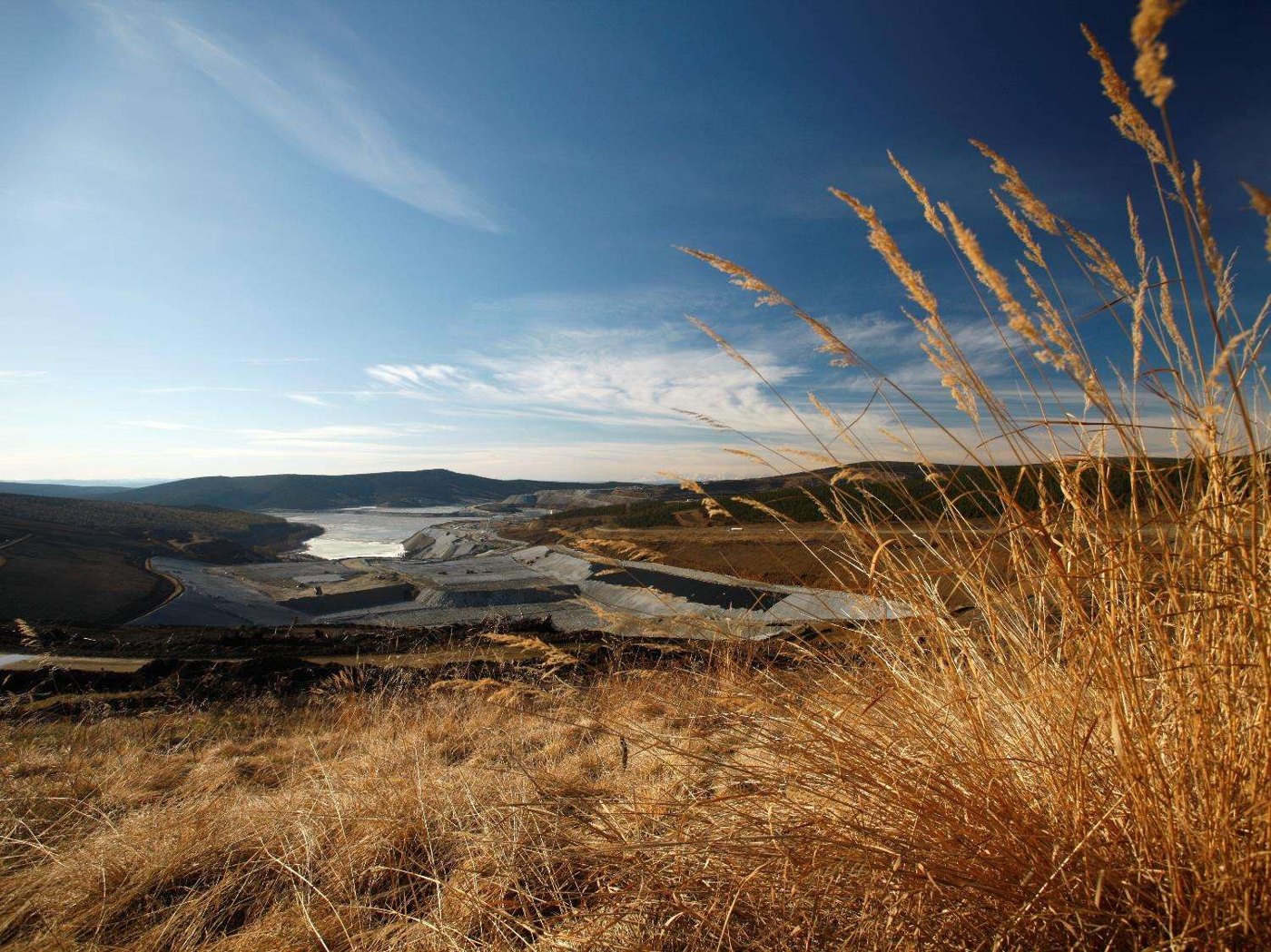
Kinross Gold Corporation (K) released its third-quarter 2026 results on 28 October 2026, marking the first quarterly report following its guidance reset on 23 September. The company stated it remains on track for updated guidance, citing advancing grade enhancement projects and the first gold pour at Redbird. Additionally, Kinross announced an increase in its return of capital commitment to 50% of free cash flow.
For the quarter, Kinross reported attributable production of 424,693 AuEq. oz, with sales totaling 410,245 oz. Revenue came in at $1,774.7M. The realized gold price averaged $4,249/oz, representing a 23% year-over-year increase but a 5.2% decline compared to Q2’s $4,483/oz.
Cost metrics saw significant upward pressure. Attributable production cost of sales rose to $1,485/oz, up from $1,145/oz a year ago, a 29.7% increase. Attributable AISC climbed to $1,947/oz, compared to $1,622/oz previously, marking a 20.0% rise. Despite these cost increases, the margin stood at $2,747/oz, a 19% improvement year-over-year. Net earnings were reported at $583.2M ($0.49 per share), while adjusted earnings reached $591.3M ($0.50 per share).
Cash flow figures reflected the operational headwinds. Operating cash flow decreased to $714.4M from $1,024.1M in the prior year period. Attributable free cash flow dropped to $281.3M from $686.7M, and adjusted free cash flow fell to $391.4M from $657.9M.
The company’s balance sheet remained robust, with cash holdings of $2,638.4M and net cash of $1,919.2M. Total liquidity stood at approximately $4.4B, with no debt maturities scheduled until 2033.
Kinross increased its return of capital commitment by 40% to 50% of free cash flow, a move first flagged on 23 September. The company executed $710M in buybacks during the first three quarters of 2026, plus an additional $100M in October, resulting in the retirement of approximately 5% of shares since April 2025. The quarterly dividend remained unchanged at $0.04.
Development progress was highlighted across several projects. Redbird 1 poured its first gold in early October. Phase X underground development is running 8% ahead of plan, having completed more than 9,600m of development. The project also recorded an extensional hit of 11.7 g/t over 27.5m, located approximately 300m down-dip. At Curlew, development exceeded 3,600m, with substantial work completed on the TDP and mill refurbishment. At Great Bear, AEX surface construction is substantially complete, with declines exceeding 500m and main-project engineering at over 55%. Meanwhile, the Lobo-Marte EIA is under review, with first gold production targeted for the early 2030s.
On the safety front, Kinross reported two unrelated fatalities at its Bald Mountain operation in September involving business-partner employees. The company conducted company-wide safety stand-downs in response.
While the release highlighted $2.6B in cash, 19% margin growth, and increased buybacks, the underlying statements revealed a 16% year-over-year volume decline and a 30% year-over-year unit-cost increase. Revenue decreased by 1.5% despite the 23% higher gold price, and free cash flow fell by 59%.
Kinross Gold Corporation (K) released quarterly results on October 23, following a pre-release of material negative guidance on September 23. The company reported production of 424,693 ounces, a 0.1% variance from the pre-announced figure of approximately 425,000 ounces, aligning fully with prior expectations.
Third-quarter all-in sustaining costs (AISC) came in at $1,947 per ounce, which is 2.5% above the top of the revised full-year range of $1,900 and 5.2% above its midpoint. However, the nine-month AISC of $1,827 per ounce sits 1.2% below the low end of that revised range. To achieve a full-year 2026 AISC between $1,850 and $1,900, fourth-quarter AISC would need to land between approximately $1,920 and $2,020 per ounce, representing a flat-to-higher trajectory than the third quarter. Cost of sales for the first nine months was $1,396 per ounce, just under the $1,420 low end of guidance. Assuming a flat fourth quarter of $1,485 per ounce, the full-year 2026 cost of sales would approximate $1,418 per ounce.
Free cash flow (FCF) totaled $281.3 million, a 59% year-over-year decline and the weakest quarterly performance since the company’s growth program began. Even when adjusted, FFC fell 40.5% to $391.4 million, a figure below what a $4,249 gold price environment would typically generate. This performance stands as the most significant negative data point in the release.
The company reaffirmed its decision to increase capital returns from 40% to 50%, a move originally announced on September 23. This commitment serves as an offset to the previously cut guidance. Additionally, Kinross reported its first gold production from the Redbird 1 project. While a milestone, the output is immaterial at the group scale, particularly compared to the 29,319 ounces produced from the Bald Mountain operation in the quarter.
The release also noted two contractor fatalities at the Bald Mountain site. While not quantified operationally, the incident raises regulatory and social-license risks in Nevada.
Market reaction to the guidance cut saw the stock fall from $40.43 on September 22 to $34.50 on September 24, an 11.3% decline. The price continued to drop to $31.27 by October 23, marking a 22.6% decrease from pre-cut levels. Trading at $32.18 into this print, the market was already positioned for a poor quarter, with the release neither confirming a fresh deterioration nor providing relief.
Kinross Gold Corporation (K) is a senior gold producer operating six mines and maintaining a development pipeline. All assets are 100% owned except for Manh Choh, where Kinross holds a 70% interest and the remaining 30% is held as a non-controlling interest.
The company’s producing portfolio includes Tasiast in Mauritania, which reported lowest cost of $1,072/oz in Q3 and holds approximately 4.4 moz in reserves; Paracatu in Brazil, the largest volume producer with approximately 4.8 moz in reserves, approximately 70% hydro power, and a cost of $1,202/oz; Fort Knox and Manh Choh in Alaska; Round Mountain in Nevada; Bald Mountain in Nevada; and La Coipa in Chile, which produces gold-silver-copper by-products.
Development projects include Great Bear in Ontario, which holds 2.7 moz Measured & Indicated and 4.3 moz Inferred resources at grades of 2.7/4.1 g/t, with a PEA showing a $7.1B NPV at $4,100/oz and first gold expected in late 2029; Round Mountain Phase X, containing 1.4 moz AuEq with first production in 2028; Curlew, with 0.9 moz at 5.8 g/t expected in 2028; Bald Mountain Redbird 2, with 0.6 moz expected between 2028 and 2032; and Lobo-Marte in Chile, which holds 6.7 moz reserves, 4.6 moz LOM production, approximately $1,000/oz AISC, $1.8B capex, and is targeted for the early 2030s.
Additional optionality exists in Maricunga in Chile, which holds 7.1 moz M&I and 4.9 moz Inferred resources, as well as Tasiast underground and satellites, Fort Knox Phase 11, and Paracatu pit extensions. The company’s stated thesis focuses on grade enhancement, with group output rising from approximately 1.85M oz in 2026–2027 to approximately 2.0M oz in 2028, and toward approximately 850 koz/yr combined from Great Bear and Lobo-Marte in the 2030s at materially lower AISC than the current portfolio.