Kinross provides operational and return of capital update
Kinross cuts output and lifts AISC, while a payout bump reads defensive.
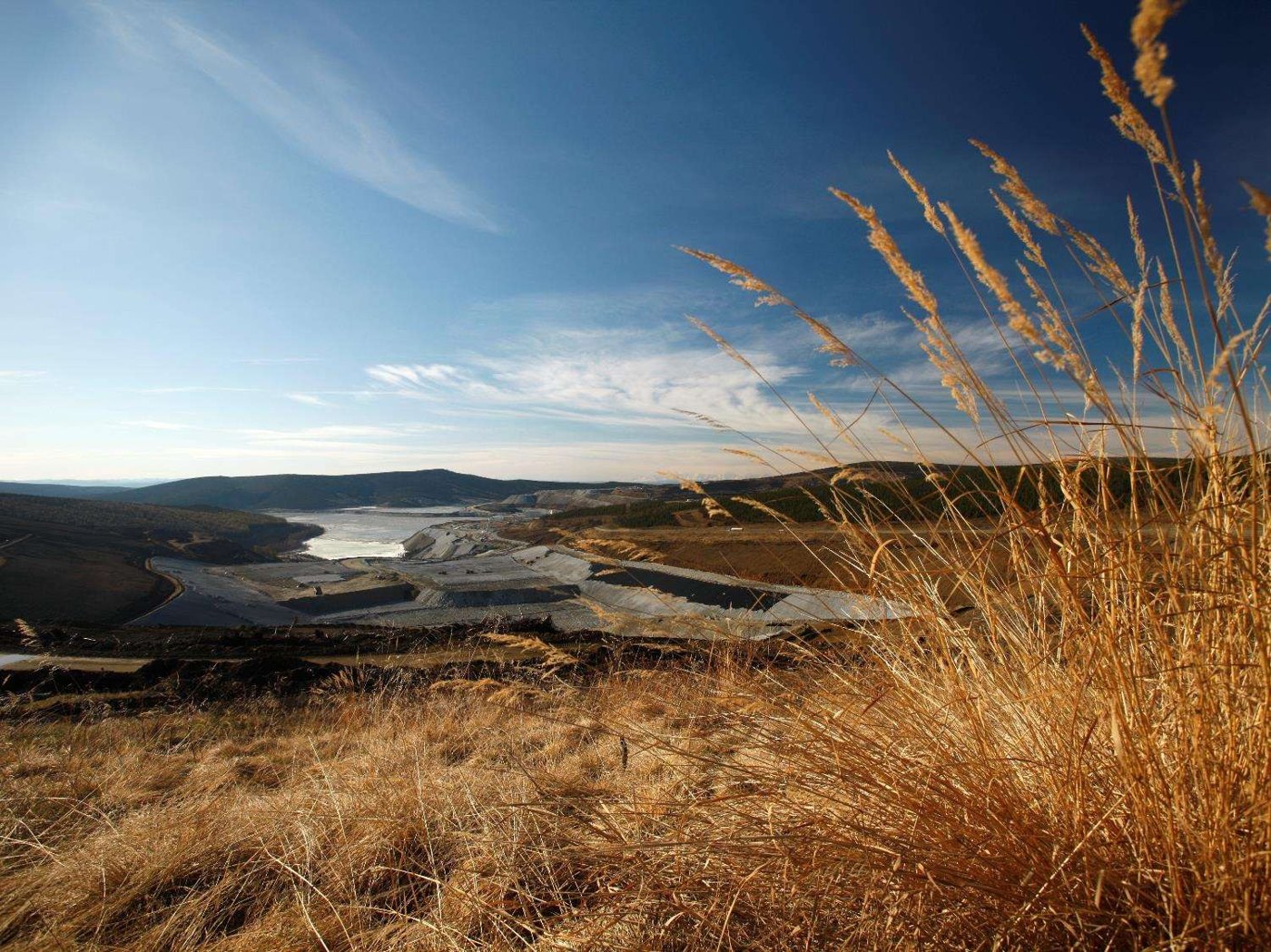
Kinross Gold Corporation (K) issued an operational and guidance update alongside a change to its capital return policy, noting that the release does not constitute an earnings report with new quarterly financial statements. The company has lowered its full-year 2026 and 2027 attributable production guidance to approximately 1.84 to 1.86 million AuEq. oz. per year. This new range is explicitly described as 2% to 3% below the low end of previously disclosed guidance, which stood at approximately 2.0 million AuEq. oz. ±5%, or 1.90–2.10 million ounces. The new midpoint of approximately 1.85 million ounces represents roughly a 7.5% decline from the prior midpoint and approximately 2.6% below the prior low end.
Cost guidance has been raised across both metrics. Attributable production cost of sales is now projected at $1,420–$1,460/oz, up from $1,360/oz ±5%. Attributable AISC is guided to $1,850–$1,900/oz, an increase from $1,730/oz ±5%. The entire new AISC range sits above the entire old AISC range.
For the third quarter of 2026, Kinross guided attributable production to approximately 425,000 AuEq. oz. This represents a roughly 14% sequential decline against the second-quarter 2026 actual of 492,326 oz. It also marks a substantial shortfall compared to the first-half average of approximately 492,000 oz per quarter, contradicting prior transcript statements that Q3 would be "in line with the first half."
The company attributed these production declines to two smaller assets: La Coipa in Chile and Round Mountain in the USA. At La Coipa, "unprecedented winter weather events throughout the third quarter" reduced mining rates and mill throughput. Additionally, the site experienced higher-than-expected copper grades and lower recoveries in sulphide ore, resulting in high-copper material being stockpiled. A pre-feasibility study is currently underway for a flotation circuit, and the company has flagged possible underlying copper porphyry mineralization below the pits.
At Round Mountain Phase S, lower mining rates, grades, and recoveries have cut 2026 and 2027 expectations, with higher-grade Phase S ore deferred "into future periods." However, Phase X infill drilling is reported to be better than expected in early stoping horizons, and Phase X remains on track for 2028.
Offsetting these operational challenges, Kinross raised its return-of-capital target from 40% to 50% of free cash flow for 2026, a move the release describes as a 25% increase in the target. Approximately $800 million has been returned year to date in 2026, including approximately $655 million in buybacks. Since Q1 2025, the company has returned more than $1.5 billion, repurchasing more than 4% of its shares.
The company stated that the production revision is "concentrated" at La Coipa and Round Mountain, while its portfolio defense remains intact. Paracatu and Tasiast are expected to produce a combined 1.1 million ounces for the fifth consecutive year, in line with previously disclosed guidance.
Revised cost assumptions include gold at $4,350/oz, oil at $100/bbl, BRL at 5.10, CLP at 920, and MRO at 40. The gold price assumption is lower than the $4,500/oz used in the February 2026 guidance, while oil is raised from $70/bbl to $100/bbl.
Kinross Gold Corporation (K) has issued a revised guidance package that lowers both volume and cost expectations, marking a negative deviation from its own reaffirmation eight weeks prior. The update reduces the gold-equivalent ounce midpoint by approximately 150,000 oz, representing a decline of roughly 7.5% compared to the previous guidance.
On a per-ounce basis, the All-In Sustaining Costs (AISC) midpoint increases by $145/oz, or 8.4%, while the production cost of sales midpoint rises by $80/oz, or 5.9%. Using the company’s revised gold price assumption of $4,350/oz and the revised AISC of $1,875/oz, the prior plan projected an operating margin of approximately $2,620/oz against 2.0 million oz, totaling roughly $5.24 billion. The revised plan projects a margin of approximately $2,475/oz against 1.85 million oz, totaling roughly $4.58 billion. This represents a reduction of approximately $0.65 billion in foregone operating margin compared to the July plan, calculated on company-disclosed per-ounce and volume figures.
The guidance cut extends into 2027 with no recovery year offered, resulting in two consecutive years of lower output and higher unit costs than previously anticipated. The cost increase is not attributed to foreign exchange, as assumptions have improved with the Brazilian real at BRL 5.10 versus 5.25 and the Chilean peso at CLP 920 versus 940. Oil is identified as the primary swing factor, with the assumption raised to $100/bbl from $70/bbl; however, hedges through 2027 are expected to cap the AISC impact of elevated oil at under 2%.
Paracatu and Tasiast remain in line with expectations and continue to be the company’s two largest and lowest-cost operations. Kinross also announced a 40% to 50% increase in its payout, a capital-return commitment intended to partially offset the cash-flow impact on per-share returns metrics. The release does not quantify the specific split of the production shortfall between La Coipa and Round Mountain, nor does it provide updated mine-level production guidance or restate 2026 capital expenditures by asset, despite resource reallocation toward stockpiling and potential flotation study work at La Coipa.
Kinross Gold Corporation (K), a Canadian senior gold producer listed on the TSX and NYSE, is headquartered in Toronto with operations and projects across six jurisdictions. The company’s leadership includes CEO J. Paul Rollinson and CFO Andrea Freeborough, with Bernard Wessels appointed as COO in Q2 2026, succeeding the retiring Claude Schimper.
Kinross operates a diversified portfolio of producing assets. Paracatu in Brazil remains the largest producer by volume, delivering 601 koz in FY2025 with an expected output of approximately 600 koz in FY2026 at an average cost of ~$1,240/oz. The site holds Proven and Probable (P&P) reserves of 4,839 koz at 0.4 g/t, marking its eighth consecutive year above 500 koz. In Mauritania, the Tasiast operation is the company’s highest-margin asset, producing 503 koz in FY2025 and expected to yield ~505 koz in FY2026 at ~$1,050/oz. Tasiast holds P&P reserves of 4,401 koz at 1.3 g/t, alongside inferred resources of 2,377 koz at 2.1 g/t. West Branch deep drilling has confirmed mineralization extending 1.8 km down plunge, with the deposit remaining open.
In Chile, the La Coipa mine produced 232 koz in FY2025, though FY2026 expectations have been cut due to Q3 weather and copper-recovery issues. La Coipa holds P&P reserves of 436 koz at 1.8 g/t. In the United States, Fort Knox in Alaska holds P&P reserves of 976 koz at 0.4 g/t, presenting a mid-term Phase 11 opportunity. The Manh Choh mine in Alaska is 70% owned by Kinross, with 70% of its production, costs, and capital expenditures attributable to the company; it holds P&P reserves of 444 koz at 6.8 g/t. Round Mountain in Nevada is guided to produce ~120–130 koz in FY2026, a reduction from pre-release guidance, and holds P&P reserves of 1,888 koz at 1.3 g/t with substantial inferred resources of 1,960 koz. Additionally, Bald Mountain in Nevada holds P&P reserves of 1,225 koz at 0.6 g/t, with the Redbird 2 project currently under construction.
The company’s development and pipeline include several major projects. Round Mountain Phase X holds an initial underground reserve of 1.2 moz at 3.2 g/t, requiring $1.3–1.4 billion in capital with first production targeted for 2028. The Kettle River-Curlew project in Washington holds ~940 koz life-of-mine at 5.8 g/t, requiring $485 million in capital and targeting first production in 2028. Bald Mountain Redbird 2 holds ~643 koz life-of-mine, requiring $490 million in capital with first production expected in 2028.
In Ontario, the Great Bear project holds Measured and Indicated resources of 2,713 koz at 2.7 g/t and inferred resources of 4,291 koz at 4.1 g/t. A Preliminary Economic Assessment outlines a 12-year life with ~518 koz/yr in the first eight years, an AISC of $856/oz, and an NPV of $7.1 billion at $4,100/oz. First gold is targeted for late 2029, contingent on federal and provincial permits by spring 2027. In Chile, the Lobo-Marte project holds 6,733 koz P&P at 1.3 g/t, projecting ~4.6 moz over 15 years at ~350 koz/yr steady state with an AISC of ~$1,000/oz. The project requires $1.8 billion in initial capital, showing an NPV of $4.3 billion and 26% IRR at $4,100/oz, with first gold expected in the early 2030s. The Maricunga project in Chile holds 7,140 koz M&I and 4,876 koz inferred resources, currently held as optionality subject to regulatory proceedings over wetland remediation.
Kinross’s portfolio is diversified across Brazil, Mauritania, Chile, the United States, and Canada, avoiding single-jurisdiction concentration risk. Mauritania is characterized as stable with a pro-mining policy and a five-year collective labour agreement finalized in Q4 2025.