Hemlo Mining Corp. Reports Third Quarter 2026 Operating Results
Hemlo reported flat third-quarter output with a delayed ramp-up and no cost guidance provided for 2026.
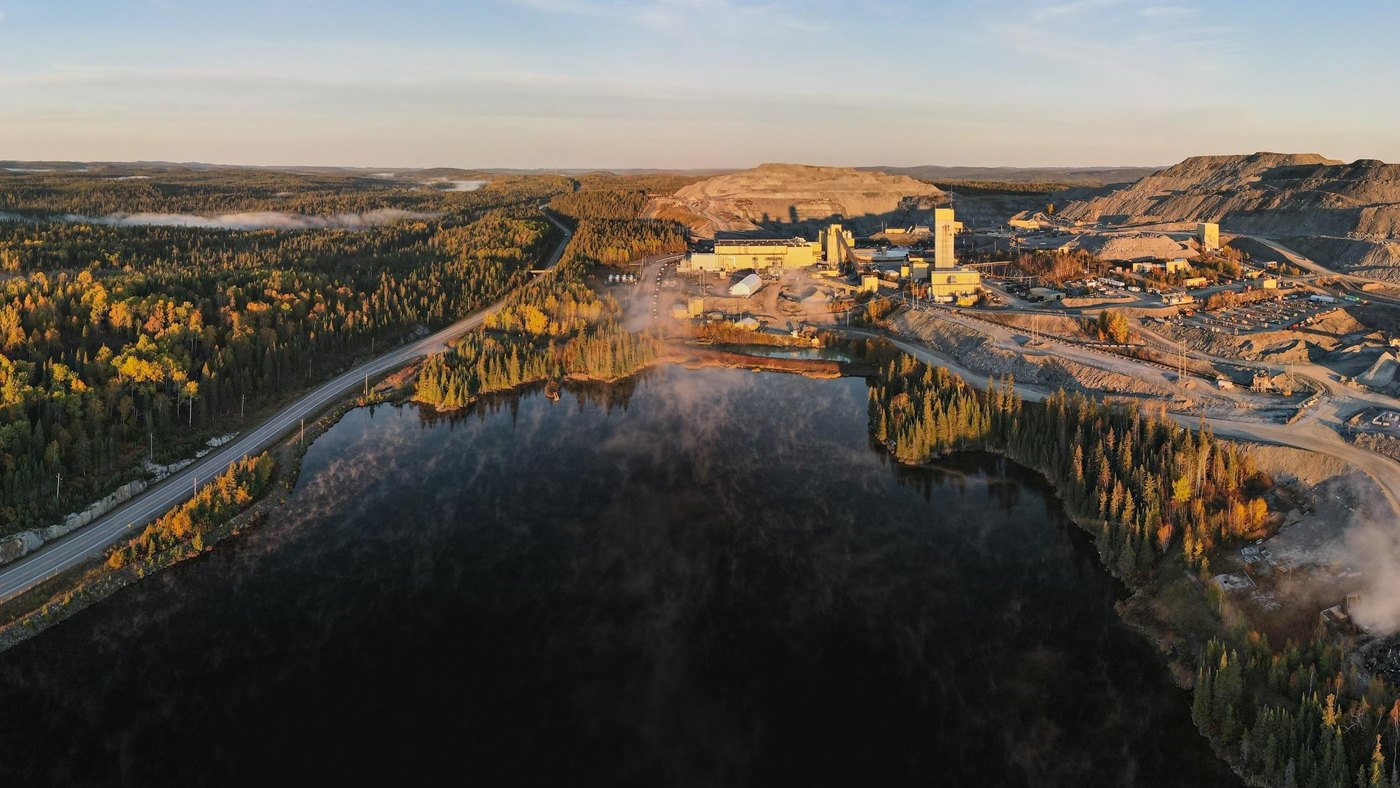
Hemlo Mining Corp. (HMMC) released its third-quarter 2026 operating results on Tuesday, providing production data only, with full financials deferred to November 9, 2026, and a conference call scheduled for November 10, 2026. The company did not disclose revenue, costs, AISC, margins, cash flow, or earnings figures.
Total gold production reached 29,617 oz, an increase of 1,759 oz (+6.3%) from the 27,858 oz produced in the second quarter. Attributable gold production rose 464 oz (+1.8%) to 25,652 oz, compared to 25,188 oz in Q2. Total gold sold was 32,424 oz, essentially identical to Q2’s 32,425 oz. Attributable gold sold stood at 29,830 oz, up 1,972 oz (+7.1%) versus the Q2 figure of 27,858 oz reported in the prior release, a discrepancy noted in the company’s appendix.
The company attributed its headline operating improvement to grade mix rather than throughput. Processing volume was 342,000 tonnes, a 0.6% decrease from Q2’s 344,000 tonnes, but head grade increased 14.5% to 3.00 g/t from 2.62 g/t. Recovery rates improved to 95.0% from 94.3%, with a daily average throughput of 3,718 tonnes per day.
Production was split between the Williams and Interlake segments. Williams processed 297,000 tonnes at 2.53 g/t, yielding 21,688 oz, a production decrease of 828 oz (-3.7%) quarter-over-quarter on flat grade. Interlake processed 45,000 tonnes at 6.15 g/t, producing 7,929 oz, a 48.4% increase quarter-over-quarter. Interlake accounts for 13% of tonnes but 27% of ounces and is subject to a 50% NPI royalty held by Franco-Nevada.
Hemlo stated that an underground substation outage reduced available power in the affected area, constraining mining rates and delaying the planned production ramp-up. Mining, development, and exploration activities continued at lower rates than originally planned, leading to a re-sequencing of the plan. A replacement substation is due in December 2026 at a cost of approximately US$250,000, per the September 14 releases, and a similar unit was relocated and commissioned post-quarter-end.
On growth and execution, production drilling increased 35% and paste filling rose 13% versus Q2. Test mining began beneath the historical open pit using a local contractor, with production drilling on the first test stope expected to commence imminently. Seven mobile units were delivered in Q3 for approximately $8.5 million, bringing the fleet to 17 of 21 planned units. The workforce now consists of 555 full-time employees and 373 contractors, approximately 75% of whom are local.
As of September 30, 2026, the company held cash of $144.778 million, up from $131.956 million at December 31, 2025. Net cash stood at $2.278 million, compared to net debt of $(93.044) million at the end of 2025. The release noted that these balance-sheet figures are preliminary and unaudited. Safety and environmental records remained consistent with prior quarters, with no lost-time injuries or reportable environmental incidents.
Hemlo Mining Corp. (HMMC) released routine quarterly production figures on Monday, deliberately excluding financial metrics such as revenue, AISC, cash cost, realized price, free cash flow, and earnings, which are scheduled for disclosure on November 9, 2026. The report confirmed that a substation outage delayed the planned production ramp-up, forcing operations to continue at below-plan rates. This outage was previously disclosed on September 4 and September 14, 2026.
Despite the operational delays, the company reported an improvement in grade mix, which lifted the recovered grade to 3.00 g/t from 2.62 g/t. Hemlo also confirmed that its net debt has flipped to a marginal net cash position of $2.278M. While production was directionally better, this was driven by the Interlake grade mix, where Hemlo shares profits 50/50 with Franco-Nevada. Throughput remained flat to slightly down, Williams grade was flat, and Williams ounces declined 3.7% quarter-over-quarter.
The release did not include new information regarding equipment deliveries, the exploration program, or the workforce build-out. Market reaction had already priced in significant volatility; shares closed at C$8.29 on September 14 and fell to C$7.40 on September 15, a 10.7% drop following the initial outage disclosure. The stock continued to decline, falling approximately 28% to C$5.29 by October 20, the last available data point prior to this release. The company noted that the market had already heavily de-rated the stock, setting a low bar for the quarterly report.
Hemlo Mining Corp. (TSX: HMMC; OTCQX: HMMCF) is a Canadian gold producer that acquired the Hemlo Gold Mine from Barrick Mining Corporation for aggregate consideration of up to approximately US$1.1 billion ($875M cash, 34.6 million shares, and up to $165M of contingent cash payments tied to gold price thresholds), closing Nov 26, 2025. The company was formerly Carcetti Capital Corp. and completed a 2/3 share consolidation on Nov 27, 2025.
The company’s flagship asset is the Hemlo Gold Mine, located approximately 35 km east of Marathon in northwestern Ontario on the Trans-Canada Highway, with rail and grid power access. The mine has produced roughly 25 million ounces of gold since 1985, with peak production of about 1 moz/year from 1985 to 2003.
The land package comprises approximately 44,500 hectares along the principal structural corridor of the Hemlo camp. This includes the Williams deposit (100% owned), the Interlake claims (100% owned, 50% NPI to Franco-Nevada), the Hemlo Mine property (approximately 10,000 ha), the Hemlo North property (approximately 12,000 ha) and the Pic property (approximately 23,000 ha, approximately 25 km northwest), plus the past-producing David Bell property.
Infrastructure includes a hoist capacity of approximately 6,000 tpd and a mill capacity of roughly 10,000 tpd (permitted 13,500 tpd) with two independent grinding lines. The mine is currently running at roughly 3,718 tpd, representing approximately 62% of hoist capacity and roughly 37% of permitted mill capacity.
The operating model transitioned to an owner-operator underground workforce on Mar 16, 2026, with 97% contractor retention, while Manroc Developments was retained for Alimak mining. Staged throughput targets include 4,800 tpd (Phase 1), 6,000 tpd (Phase 2) and 10,000 tpd (Phase 3), with incremental open-pit production targeted from 2028.
Leadership includes Jason Kosec as President, CEO and Director; Jonathan Awde as Executive Chair; Jon Case as CFO; Eric Tremblay as COO; Dr. Robert Quartermain as Lead Director; Raphael Dutaut as VP Exploration; Garett Macdonald as VP Operations and GM; and Mike Tsafaras as VP Engineering and Projects. The board consists of Awde, Quartermain, Eva Koci, Glenn Kumoi, Audra Walsh, and Tom Yip.
An Impact Benefit Agreement with Biigtigong Nishnaabeg covering the full mine life was completed in June 2026. Approximately 75% of the workforce is drawn from surrounding communities.