Cascadia Steps Out and Drills 75.55 m of 1.19% Cu and 0.97 g/t Au (2.18% CuEq) at the Carmacks Project, Yukon
Cascadia’s Zone 2000S step-outs at 1.2 g/t gold over 10 metres beat the prior anchor on grade and metreage.
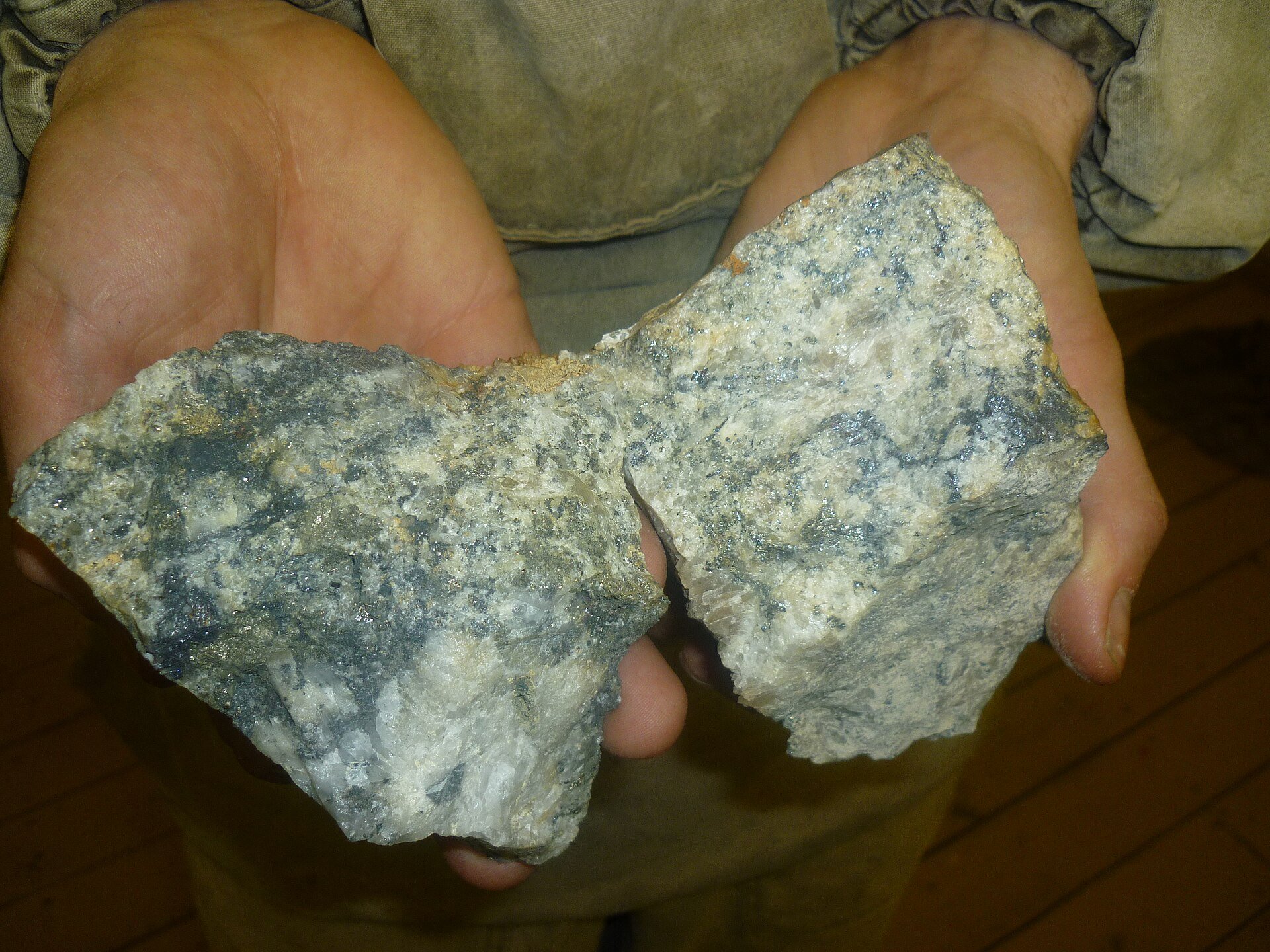
Cascadia Minerals Ltd. (CAM) has released assay results from three new holes drilled during its 2026 Carmacks program, all located at Zone 2000S. The intersections indicate an expansion of the sulphide system northward toward Zone 147.
Key intercepts from the program include:
- CD-26-058: 75.55 m @ 1.19% Cu, 0.97 g/t Au, 10.4 g/t Ag, 335 ppm Mo (2.18% CuEq) from 425.73 m; incl. 48.66 m @ 1.61% Cu, 1.39 g/t Au (3.03% CuEq); incl. 14.50 m @ 2.30% Cu, 2.68 g/t Au (5.08% CuEq). Peak Ag 173 g/t over 0.74 m; peak Au 6.99 g/t over 1.1 m.
- CD-26-059: 93.99 m @ 0.96% Cu, 0.70 g/t Au, 4.6 g/t Ag, 919 ppm Mo (1.94% CuEq) from 468.14 m; incl. 63.97 m @ 1.26% Cu, 0.96 g/t Au (2.52% CuEq). Secondary shallow raft: 7.28 m @ 0.77% Cu from 132.18 m. Semi-massive molybdenite: 0.52 m @ 6.47% Mo from 513.48 m.
- CD-26-057: 60.51 m @ 0.71% Cu, 0.37 g/t Au (1.10% CuEq) from 489.18 m; incl. 31.47 m @ 0.98% Cu (1.54% CuEq); deepest test on section, 430 m below surface.
The collar geometry places hole 059 142 m northeast of 056, while 058 is positioned approximately 100 m northeast of 056. Hole 057 was drilled 65 m down-dip of 050.
The company reports that the strike length of Zone 2000S is now estimated at approximately 600 m, comprising 300 m of historical length and 300 m of 2026 extension, bringing the zone within 300 m of Zone 147.
The current program status stands at 36 holes totaling 17,309 m of an expanded 18,000 m plan. Sixteen holes have been previously released, with three now added. Assays for six additional holes at 2000S are pending, and three holes have been completed at Zone 14, Zone A, and Zone 1213. This release contains drill results and is not an earnings release.
Cascadia Minerals Ltd. (CAM) has extended a high-grade sulphide zone 300 m north of its existing resource, effectively doubling the strike length of Zone 2000S to approximately 600 m. This extension brings the zone within 300 m of Zone 147, at roughly twice the resource grade. Bridging the gap between 2000S and 147 represents a potential resource-growth vector in what the company describes as the "best possible location."
The discovery does not yet include tonnage estimates or an updated resource model, nor does it alter metallurgical assumptions. No data has been tonne-quantified, marking this release as a precursor to a future resource update. The company targets an updated resource in 2027 and an updated Preliminary Economic Assessment (PEA) in 2028.
Cascadia remains a pre-revenue explorer with a defined 36.3 Mt Measured and Indicated resource and a 2023 PEA. Prior-period context for the PEA included a $230.4M post-tax NPV5% and 29% IRR at $3.75/lb Cu and $1,800/oz Au, as well as a $330.1M NPV and 38% IRR at $4.25/lb Cu and $2,000/oz Au. The company is not yet a producer and has no reserves or mine plan currently being executed.
Market reaction to the company’s recent drilling has been significant. The stock nearly doubled from $0.28 on July 31, 2026, to $0.54 on September 23, 2026, before pulling back to $0.46 by September 30, 2026. This movement was largely driven by the August 10 and September 1 anchor results, which are now substantially embedded in the share price. However, this latest release beats that anchor on both grade and grade-metres, resulting in a positive delta rather than a priced-in disappointment.
Financially, the company reported zero debt and approximately $14.2M in cash as of June 30, 2026. For the first half of 2026, Cascadia recorded a net loss of $3.53M and an operating cash outflow of approximately $1.31M, with exploration spending of about $3.2M. The company remains funded with no going-concern flags, and its 2026 drilling and baseline work are secured. Scaling up operations in 2027 will likely require additional capital.
Cascadia Minerals Ltd. (CAM) holds the Carmacks Project, a 180 km² property located in the central Yukon’s Minto Copper Belt, approximately 35 km southeast of the past-producing Minto Mine. The site is road-accessible and supported by a 40-person camp with grid power available 10 km away. The company’s resource estimate includes 36.3 million tonnes of measured and indicated resources grading 0.81% copper, 0.26 g/t gold, 3.23 g/t silver, and 0.01% molybdenum, containing 651 million pounds of copper, 302,000 ounces of gold, and an equivalent grade of 1.07% CuEq. Additionally, there are 2.9 million tonnes of inferred resources grading 0.60% copper, containing 38 million pounds of copper.
A 2023 preliminary economic assessment outlined a 7,000 tonnes per day open-pit operation with a nine-year mine life, requiring approximately C$220 million in initial capital expenditure and projecting a payback period of roughly two years. Beyond Carmacks, Cascadia’s portfolio includes the Catch discovery-stage porphyry copper-gold-silver project, where Agnico Eagle can earn up to an 80% interest for up to $30 million. The company also holds interests in the Macks, Milner, Rosy, Idaho Creek, Byng, and Mars properties within the Stikine terrane.
Agnico Eagle holds approximately 14.17% of Cascadia on a non-diluted basis, or 19.85% on a partially diluted basis, with board nomination rights and a right of first offer on the Carmacks project. As of June 30, 2026, the company had 209,313,778 shares outstanding, with a fully diluted count of approximately 247 million. Warrants are struck at prices between C$0.20 and C$0.32. The company reported zero debt and approximately $14.2 million in cash at that date. Management includes President and CEO Graham Downs, Vice President of Exploration and Qualified Person Thomas Hawkins P.Geo., and Vice President of Corporate Development Andrew Carne P.Eng.