Lithium Argentina Announces Cauchari-Olaroz Stage 2 Scoping Study Results and Acceleration of Initial Phase of 10,000 tpa
Lithium Argentina AG’s stage 2 scoping study shows a US$3.1 billion NPV, though direct lithium extraction technology export approval remains pending.
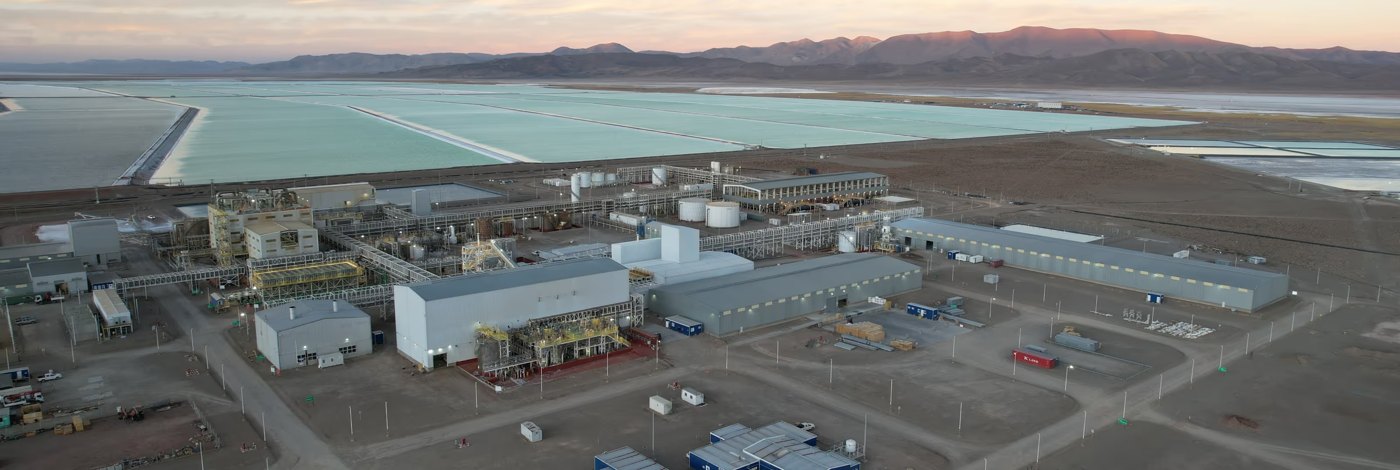
Lithium Argentina AG released its Cauchari-Olaroz Stage 2 Scoping Study on September 30, 2026, at 16:05, accompanied by an announcement accelerating an initial 10,000 tpa phase. The document is a company-authored technical study rather than an earnings release.
The study outlines a 100% project basis expansion of 45,000 tpa LCE, lifting total Cauchari-Olaroz capacity to approximately 85,000 tpa over a 40-year life. At a lithium carbonate price of $18,000/t, the project yields an NPV8% of $3.1 billion and an IRR of 28.5%, with a payback period of approximately five years. Capital costs are estimated at ~$1.013 billion, including contingency, resulting in a capital intensity of ~$22,530/t. Life-of-project operating costs are projected at $5,006/t, broken down into reagents ($1,734), salts harvesting ($776), labour ($609), and other costs. Sensitivity analysis indicates that at $16,000/t, the NPV would be $2.5 billion with an IRR of 25.3%, while at $20,000/t, the NPV would rise to $3.7 billion with an IRR of 31.4%. The base-case processing utilizes a proven hybrid pre-concentration and solvent extraction (SX) direct lithium extraction (DLE) route.
The release highlights an operational acceleration of an initial 10,000 tpa adsorption-DLE module, targeting first production in 2028. This initial phase is explicitly not included in the Scoping Study or its associated economics. Permitting in Argentina and China is targeted for the first half of 2027. Export authorization from China for the adsorption-based processing technology has not yet been obtained, although module engineering has begun in China. Capital expenditure for the initial phase remains undefined and will be provided after detailed engineering later this year. Full EIA approval for the 45,000 tpa expansion is anticipated in 2027.
The release reiterates RIGI approval, which provides fiscal stability, a 25% corporate tax rate, and FX benefits. Stage 2 is expected to be funded by internally generated cash flow plus project-level debt.
On Sept 30, 2026, Lithium Argentina AG released an updated Stage 2 development plan for its Cauchari-Olaroz project, delivering on a commitment made during the Q2 earnings call and Management Discussion & Analysis. The company had previously agreed with Ganfeng on Aug 11, 2026, to a modular approach for an initial 10,000 tpa LCE growth capacity. The release arrives on schedule, following the Nov 10, 2025 PPG Scoping Study, which serves as the natural benchmark for comparison.
The PPG Scoping Study projected a $8.1B NPV, 33% IRR, 150,000 tpa production, and $3.3B capex, equating to approximately $54,000 NPV per annual tonne. In contrast, the Stage 2 plan outlines a $3.1B NPV, 28.5% IRR, 45,000 tpa capacity, and $1.0B capex, resulting in approximately $69,000 NPV per annual tonne. The higher per-tonne NPV reflects a brownfield expansion leveraging existing pads, wells, and processing infrastructure, while the lower IRR is consistent with Stage 2 carrying the Stage 1 operating base and a shorter incremental build. Operating costs of $5,006/t align closely with PPG’s $5,027/t and remain below current Stage 1 cash costs of approximately $5,600/t year-to-date.
The study presents a new, defensible project NPV of approximately $3.1B on a 100% basis, a figure the market did not previously have in numeric form. The plan confirms that Stage 2 can be funded through cash flow and project debt, a strategy aimed at limiting equity dilution, which has been a stated priority for the CEO. However, the attributable NPV to Lithium Argentina is only 44.8% of the $3.1B total, or approximately $1.4B, as Ganfeng holds 46.7% and JEMSE holds 8.5% of Cauchari-Olaroz.
The release includes a warning that the study is subject to significant assumptions and a high degree of uncertainty, characteristic of the lowest-confidence study class. It does not change near-term cash flows. Additionally, the accelerated 10,000 tpa module depends on Chinese export authorization that is not yet in hand, alongside dual-jurisdiction permitting. The economics for this accelerated phase are unquantified, and the company has not defined the initial-phase capex or schedule, despite describing it as the "fastest and most capital-efficient path." Capital intensity is noted at approximately $22,500/t, and the permitting window is set for 2027.
Market reaction was muted, with the stock closing at $7.83 on both Sept 29 and Sept 30, indicating no pre-emptive drift into the print following the release issued just after market close.
Lithium Argentina AG (TSX: LAR, NYSE: LAR), headquartered in Zug, Switzerland, holds and manages large-scale lithium brine assets in Argentina.
The company’s flagship Cauchari-Olaroz operation in Jujuy Province is the largest lithium brine operation in Argentina and is currently in production. Ownership of the asset is split 44.8% between Lithium Argentina, 46.7% between Ganfeng, and 8.5% between JEMSE, representing the Jujuy provincial government. The Stage 1 nameplate capacity is 40,000 tpa LCE, and the operation averaged approximately 95–97% of design capacity through the first half of 2026. As of January 1, 2026, the resource estimate stands at 28.1 Mt LCE measured and indicated at 562 mg/L, plus 9.6 Mt LCE inferred, marking a 42% increase in measured and indicated resources over the 2019 estimate.
Growth assets include the Cauchari-Olaroz Stage 2 expansion, which adds 45,000 tpa to bring total capacity to approximately 85,000 tpa. Additionally, the company holds a 33% interest in the Pozuelos-Pastos Grandes (PPG) project in Salta, a consolidated joint venture with Ganfeng holding 67%. PPG targets 150,000 tpa LCE across three phases, with a scoping study completed in November 2025 indicating an $8.1B NPV and 33% IRR at $18,000/t.