Bravo Reports Results of Pre-Feasibility Study for its Luanga Project
Bravo’s maiden 7.7 moz reserve supports a US$1.45 billion NPV as capital expenditure rises to US$785 million.
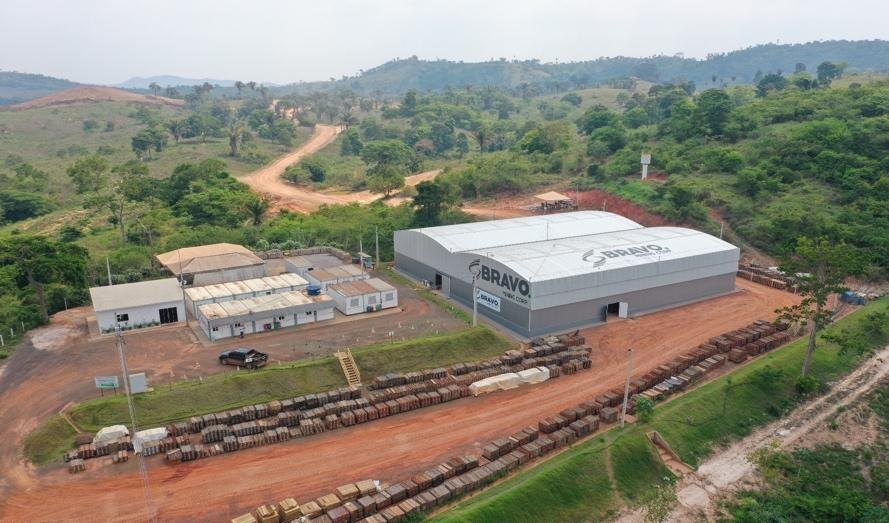
Bravo Mining Corp. (BRVO) released the results of an independent Pre-Feasibility Study (PFS) for its 100%-owned Luanga palladium, platinum, rhodium, gold, and nickel deposit in the Carajás Mineral Province of Pará State, Brazil. Delivered on September 22, 2026, the study falls within the company’s previously guided window for the third quarter of 2026. The report marks the first NI 43-101 Mineral Reserve declaration for the project, formally superseding the Preliminary Economic Assessment (PEA) dated July 7, 2025.
The study establishes a Proven & Probable (2P) Reserve of 86.7 million tonnes at a grade of 2.77 g/t PdEq, containing 7,731,000 ounces of contained PdEq at a cut-off grade of 0.87 g/t PdEq. This reserve comprises 17.7 million tonnes of Proven material at 2.99 g/t PdEq and 69.0 million tonnes of Probable material at 2.72 g/t PdEq. The conversion from the February 18, 2025 Measured & Indicated Resource includes 55% of the original tonnes but captures 74% of the contained PdEq metal. The Reserve, effective as of September 16, 2026, explicitly excludes 22,100 meters of 2026 infill and expansion drilling, relying instead on a Mineral Resource Estimate with an effective date of February 18, 2025. The calculation assumes a mining recovery of 95%, dilution of 7%, and a 5 m x 5 m x 5 m sublevel cave mining unit, with reserves reported at the plant ROM pad.
The base case economics, modeled as a vertically integrated operation with AACE Class 4 cost accuracy, project an after-tax NPV at 8% of US$1,449 million, an after-tax IRR of 35.1%, and a post-tax payback period of 2.0 years post-construction. Pre-production capital expenditure is estimated at US$784.9 million, including US$181.3 million for the Barcarena ZPE smelter. Total life-of-mine sustaining capital is US$98.2 million, bringing total LOM CAPEX to US$908.7 million, with closure costs estimated at US$25.6 million. The peak funding requirement is US$877 million, yielding an NPV/CAPEX ratio of 1.65x and LOM undiscounted project free cash flow of US$2,815 million. Operating costs are projected at a C1 cash cost of US$478/oz for 4E PGM and an AISC of US$706/oz for 4E PGM, with average LOM opex at US$47.56/t milled. The project is expected to generate LOM EBITDA of US$4,196.6 million at a 50.3% margin, with an effective tax rate of 15.25% after accounting for US$628.3 million in SUDAM benefits. Capital cost accuracy is scoped within a −20%/+30% range, incorporating a 15% embedded contingency.
The mine life is projected at 9.6 years, with an average plant feed rate of 8.67 million tonnes per annum and a peak of 10.03 Mtpa (27,400 tpd). Average annual payable production is estimated at 393,800 ounces of 4E PGM and 9,800 tonnes of nickel. Over the life of the mine, payable production is expected to total 2,089,000 ounces of palladium, 1,507,000 ounces of platinum, 161,000 ounces of rhodium, 181,000 ounces of gold, and 98,200 tonnes of nickel. The operation will produce 1,466,700 tonnes of dry concentrate at approximately 100 g/t PGM+Au and 7% Ni, all of which will be smelted. This process will yield 146,700 tonnes of PGM-Ni alloy at a 10% alloy yield and 878,100 tonnes of sulphuric acid as a by-product. The LOM strip ratio is 6.6:1, involving 576.1 million tonnes of waste and 662.8 million tonnes of total mined material. Mining costs alone are estimated at US$2,540.7 million over the life, of which US$2,039.3 million is attributed to waste mining. Oxide material in the Mineral Resource Estimate is not processed; it is stripped and stockpiled.
Metallurgical improvements include the adoption of Jameson Cell flotation, raising the concentrate grade target to approximately 100 g/t PGM+Au from the ~80 g/t target in the 2025 PEA. Recoveries have improved compared to the previous assessment: palladium from 77.0% to 81.5%, platinum from 81.0% to 80.0%, rhodium from 51.0% to 55.0%, gold from 48.0% to 88.0%, and nickel from 50.0% to 70.6%. Global 4E recovery increased from 78.0% to 80.1%. The comminution flowsheet has shifted from the PEA’s two-stage crushing, HPGR, ball mill, and stirred mill configuration to replace MMD sizers and the SAG mill. Tailings management has switched from dry-stack to a conventional downstream-constructed TSF aligned with GISTM standards. Smelter recovery rates present conflicting data in the release: the main text states 98% for 4E PGM and 90% for nickel, while Reserve footnote (j)(iv) lists 99% for palladium and platinum, 95% for rhodium and gold, and 98% for nickel.
The price deck for the LOM
Bravo Mining Corp. (BRVO) has released a Preliminary Feasibility Study (PFS) for its project, marking a transition from the earlier 2025 Preliminary Economic Assessment (PEA) to a Reserve-backed development plan. The PFS establishes a maiden 2P Reserve of 7,731 koz PdEq, representing a 74% metal conversion from Mineral Resources and Reserves (M&I). This Reserve is the first for the project and is built on a Mineral Resource Estimate effective February 18, 2025. The study class has improved from AACE Class 5 in the PEA to Class 4 for both the Base Case and Alternate Case A, with an estimated accuracy range of −20%/+30%.
The PFS reports a post-construction payback period of 2.0 years, a shortening from the 2.4 years cited in the PEA. Metallurgical performance has improved, with gold recovery increasing by 40 percentage points and nickel recovery up by 20.6 points. The concentrate grade has been raised to approximately 100 g/t PGM+Au. These metallurgical gains were previously flagged in releases dated January 12 and August 11, 2026, and are now incorporated into the study. The Base Case Net Present Value (NPV) is US$1,449 million, which exceeds the PEA Base Case of US$1.25 billion and falls within the PEA’s overall range. Funding for the Definitive Feasibility Study (DFS) and Final Investment Decision (FID) is covered by cash reserves of US$94.1 million as of June 30, 2026, consistent with financings announced in January and April 2026.
Despite these improvements, the PFS presents several metrics that are weaker than the PEA’s Alternate Case, which assumed vertical integration and yielded an NPV of US$1.86 billion and an Internal Rate of Return (IRR) of 49.6%. The PFS Base Case delivers an NPV of US$1,449 million and an IRR of 35.1%, representing a 22% lower NPV and a 14.5 percentage point lower IRR. This divergence is partly attributable to the PFS Base Case being Reserve-only, resulting in a 9.6-year mine life and 86.7 million tonnes of run-of-mine (ROM) material, whereas the PEA included Inferred resources in its schedule, projecting a 17-year life and 165 million tonnes of ROM. Even the PEA-level Opportunity Case, which includes Inferred resources, currently projects an NPV of US$1,777 million over 13 years, remaining below the PEA’s Alternate Case.
Capital costs have escalated significantly. Pre-production CAPEX is US$784.9 million, which is 16% higher than the PEA’s vertically integrated case of US$677.6 million and 58% higher than the PEA Base Case of US$495.8 million. Peak funding requirements stand at US$877 million. Capital efficiency has declined, with the PFS reporting an NPV-to-peak-funding ratio of 1.65x, compared to implied ratios of roughly 2.5x for the PEA Base Case and 2.7x for the PEA Alternate Case. The All-In Sustaining Cost (AISC) is US$706 per ounce, above the PEA’s alternate case AISC of US$697 per ounce and well above the PEA base case AISC of US$638 per ounce, despite the improved recoveries.
The Reserve captured only 55% of M&I tonnes, leaving 45% of M&I tonnage outside the 0.87 g/t PdEq cut-off. The mine life of 9.6 years is considered short for a project with this level of capital intensity. The Reserve is based on data from February 18, 2025, making it approximately 19 months old at the time of the release. The company noted that 22,100 meters of 2026 drilling have been excluded, framing this as potential upside, though it also indicates the Reserve is stale on the day of publication.
The release contains several internal inconsistencies that require resolution in the technical report due within 45 days. Two different sets of smelter recovery rates are disclosed: 98% for 4E and 90% for Ni in the text, versus 99% for Pd and Pt, 95% for Rh and Au, and 98% for Ni in the Reserve footnote. These differences affect payable metal calculations. Additionally, the Reserve pit shell utilized a rhodium price of US$5,000 per ounce, while the financial model uses US$8,000 per ounce, a 60% difference on approximately 11% of revenue by contained metal value.
Sulphuric acid assumptions also present a discrepancy. The PFS assumes a price of US$650 per tonne, compared to US$160 per tonne in the PEA and approximately US$440 per tonne cited by the company in its January 26, 2026 release. At US$650 per tonne, 878.1 kilotonnes of acid represents roughly US$571 million of gross revenue over the life of mine (LOM), or about 6% of gross revenue. At US$440 per tonne, this figure would be approximately US$386 million. The company did not disclose an acid-price sensitivity.
Payabilities are disclosed only as "current market toll treatment rates with a European metals refiner … equates to $25/oz," lacking the transparency of the PEA’s explicit per-metal payability percentages, which were Pd 85%, Pt 85%, Rh 84%, Au 84%, and Ni 72%. The economics are described as "high margin," but the Base Case depends on securing and maintaining ZPE fiscal benefits, including US$90.2 million in capex savings and US$41.20 per tonne in opex savings. The ZPE authorization is expressly separate from environmental licences, as stated in the September 3, 2026 release.
Management’s guidance track record from November 5
Bravo Mining Corp. (TSXV: BRVO; OTCQX: BRVMF) is a Canadian-listed, Brazil-focused mineral exploration and development company. Its flagship asset is the 100%-owned Luanga palladium, platinum, rhodium, gold, and nickel deposit in the Carajás Mineral Province, Pará State, Brazil, which was acquired subject to pre-existing royalties.
The deposit features approximately 8.1 km of strike length, with 86% of the Mineral Resource Estimate (MRE) tonnage located above 250 m depth. Mineralisation has been confirmed to approximately 450 m in the North and Central sectors, while near-surface, steeply dipping zones are amenable to open-pit extraction. The 2025 MRE, effective February 18, 2025, utilized a 0.5 g/t PdEq cut-off and included Reserves. The Measured & Indicated category stands at 158 Mt at 2.04 g/t PdEq for 10.4 moz PdEq, with an Inferred category of 78 Mt at 2.01 g/t PdEq for 5.0 moz PdEq. Additionally, the M&I sulphides contain 194,848 t of nickel, and the Inferred category contains 97,719 t.
On September 16, 2026, the company reported a new Reserve of 86.7 Mt at 2.77 g/t PdEq for 7,731 koz PdEq, marking the first Reserve in the company's history. The development concept involves an open pit with a contracted truck-and-shovel fleet and a conventional flotation concentrator at site incorporating Jameson Cells at 10 Mtpa. A pyrometallurgical smelter is planned in the Barcarena ZPE, approximately 600 km away, to produce a saleable PGM-Ni alloy plus sulphuric acid for local fertiliser producers.
Permitting progress includes the granting of a Preliminary Licence (Licença Prévia) by SEMAS on March 3, 2025, following EIA/RIMA approval and a public hearing on December 12, 2024. Conditions are being met, with an Installation Licence application targeted for Q4 2026. Bravo Mining is the designated anchor tenant of the Barcarena ZPE, described as the first mineral project ever designated an anchor in a Brazilian ZPE. This status followed CZPE approval in November 2025, a presidential decree on January 22, 2026, and formal establishment authorization granted August 25 and published September 1, 2026, conferring a 20-year fiscal, customs, and administrative regime.
The company also holds IOCG-style copper-gold targets on the Luanga licences, including the T5 discovery, which returned 11.48 m at 14.3% Cu and 3.3 g/t Au in 2024, and a magmatic Ni/Cu-rich sulphide target at Babylon. A dedicated copper-gold division was created on February 5, 2026, under Fabio Masotti, formerly Director of Exploration at Vale.
As of September 8, 2026, Bravo had drilled 447 holes totaling 98,353 m (703 holes / 149,139 m including Vale holes), per the investor presentation. The September 14, 2026 release reported 404 of 447 holes with results and 35 outstanding.
- Measured & Indicated: 158 Mt at 2.04 g/t PdEq for 10.4 moz PdEq
- Inferred: 78 Mt at 2.01 g/t PdEq for 5.0 moz PdEq
- M&I Sulphide Nickel: 194,848 t
- Inferred Nickel: 97,719 t
- New Reserve (effective September 16, 2026): 86.7 Mt at 2.77 g/t PdEq for 7,731 koz PdEq
- T5 Discovery (2024): 11.48 m at 14.3% Cu and 3.3 g/t Au
Disclosure notes on management titles indicate inconsistency between sources. The investor presentation lists Simon Mottram as President & CEO and Luis Azevedo as Executive Chairman, while every 2026 news release quotes Azevedo as "Chairman and CEO" and identifies Mottram as President and Qualified Person. The current title structure should be confirmed from the company's filings.