BCM Resources Closes Financing
Thompson Knolls explorer secures $7M lifeline as Rio Tinto looms in the neighborhood
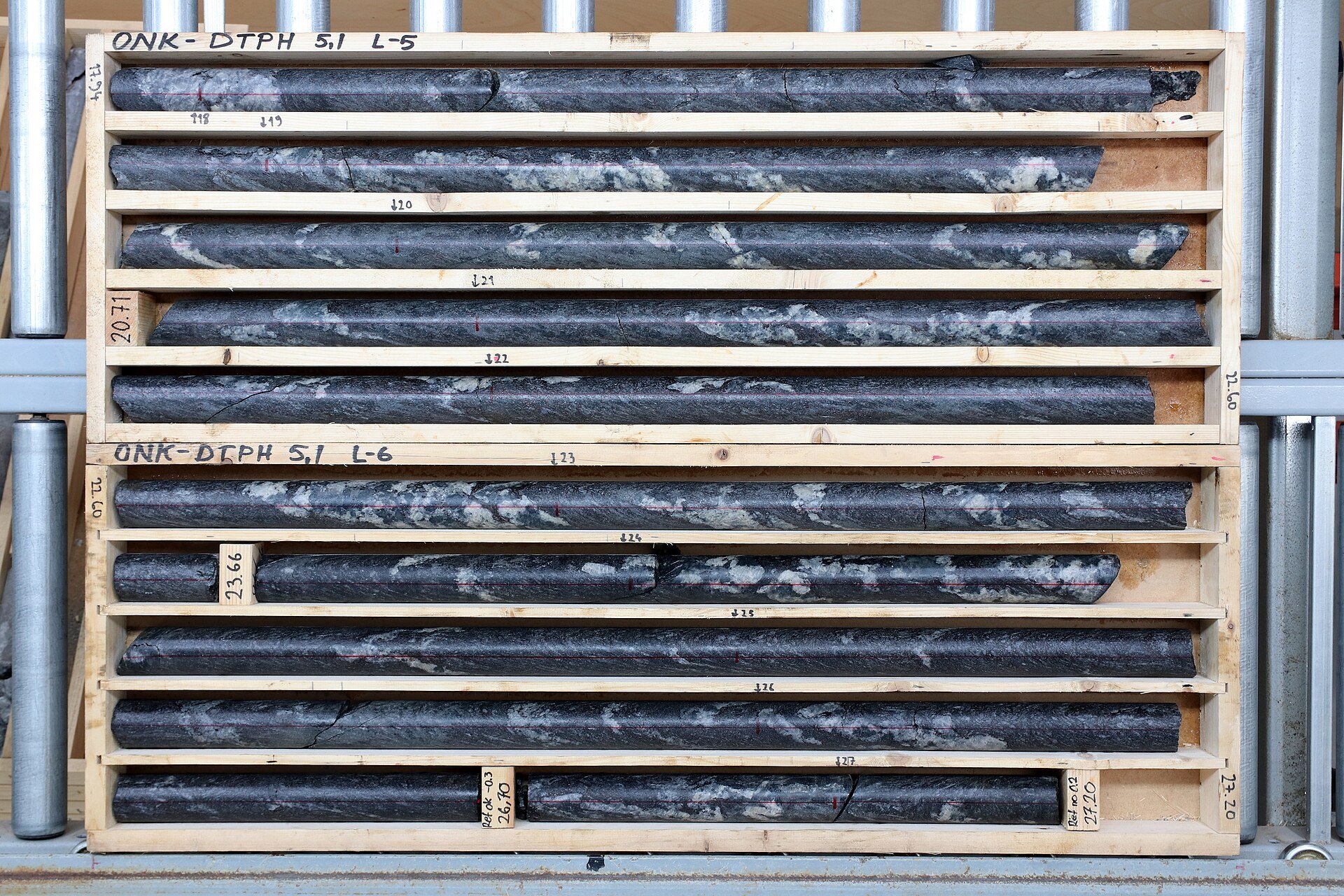
On February 10, 2026, BCM Resources Corporation closed a non-brokered private placement raising gross proceeds of $7,180,000. The financing consisted of 35,900,000 units priced at $0.20. Each unit includes one common share and one warrant exercisable at $0.30 for 12 months. The warrants include an acceleration clause if the stock trades at or above $0.45 for 20 consecutive days. Proceeds are earmarked for the ongoing drilling program at the Thompson Knolls (TK) project in Utah and general corporate purposes. This follows the February 2 announcement that the placement was fully subscribed.
This financing is a critical survival event for BCM Resources. According to the interim financial statements for the period ended November 30, 2025, the company was in a dire liquidity position with only $168,011 in cash and a working capital deficit of $306,228. - Solvency: The $7.18M infusion immediately rectifies the working capital deficit and provides roughly two years of G&A runway or significant capital for an aggressive multi-hole deep drilling campaign. - Validation: Raising over $7M at $0.20—a price significantly higher than the 2024-2025 lows of $0.04—suggests strong investor confidence in the "copper core" theory developed by the Colorado School of Mines. - Dilution: The issuance of 35.9M shares represents approximately 17% dilution to existing shareholders (based on 205.7M shares outstanding as of Nov 2025). If warrants are exercised, dilution increases significantly.
BCM Resources is focused on the Thompson Knolls (TK) Porphyry Cu-Au-Mo project in Millard County, Utah. The project is located 210 km southwest of the world-class Bingham Canyon mine. - Flagship Project: Thompson Knolls is a "blind" discovery, meaning the mineralization does not outcropping at the surface. - Historical Hits: Hole TK8 returned 155.4m of 0.66% Cu, 0.12 g/t Au, and 7.4 g/t Ag. - The "Core" Theory: Recent geological modeling by the Colorado School of Mines suggests the current hits are distal to a much larger, higher-grade copper core located to the southwest.