Astra Extends High-Grade Mineralization and Defines Regional Targets for Follow-Up 10,000-20,000 Metre Program at La Manchuria
Astra’s final phase iii assays extend shallow gold-silver zones at moderate grade while expanding its district ground to 39,000 hectares.
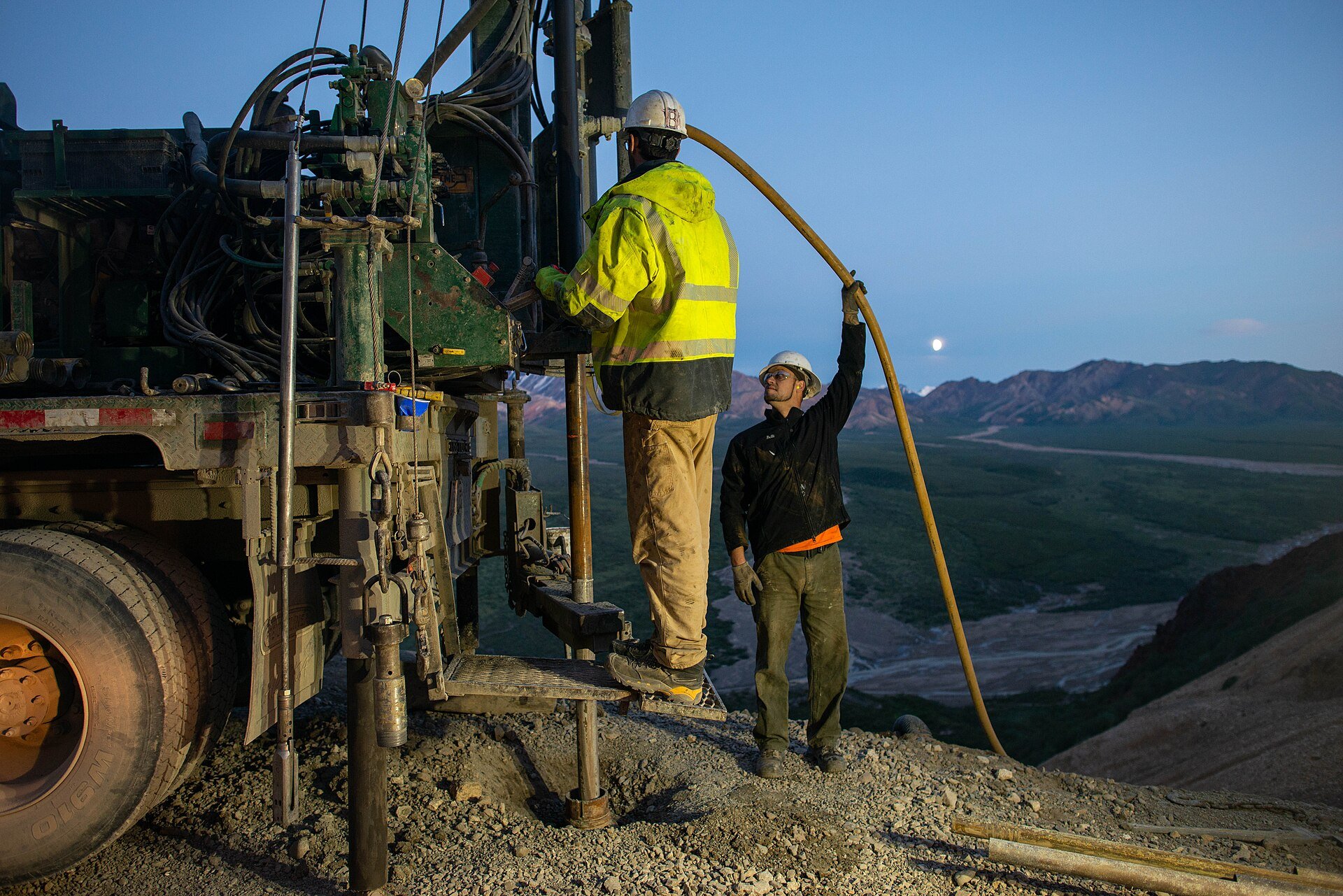
Astra Exploration Inc. (ASTR) released the second and final batch of Phase III assays from its La Manchuria project, covering eight diamond holes from the 16-hole, 5,176-metre program completed between April and June 2026. Highlighted intercepts include a 3-metre interval grading 4.34 g/t Au and 363.7 g/t Ag in the Basalto Zone, reported as a 50-metre step-out that remains open. In the Manchuria Hill Eastern Zone, the company reported an 8-metre interval grading 3.12 g/t Au and 10.3 g/t Ag, described as a 200-metre northwest step-out open to the northwest.
The company stated that mineralization remains open in all four cardinal directions, although deeper drilling at 200-300 metres vertical did not return favourable vein widths due to poor host lithology. The claim group was expanded from roughly 5,600 hectares to 39,000 hectares by staking open ground. Astra announced a Q4 2026 program of 10,000-20,000 metres to test the Manchuria Hill expansion and five regional targets: La Pampa, Breccia, Floats, Solo, and Creek. The company’s treasury is stated at C$12.5M, supporting fully funded drilling.
Astra Exploration Inc. (ASTR) is a junior explorer rather than a producer, meaning its materiality is judged against exploration optionality and equity value rather than cash flow or reserve replacement. The recent news confirms that several shallow zones remain mineralized and extends the eastern footprint 200 m northwest. While this is incremental and supportive, it is not transformational. The depth extension result is negative for the feeder-zone thesis, although this was already disclosed in the August 2026 release, so it is not entirely new information.
The stock has fallen from a high of C$0.87 in May to C$0.34 by mid-September, a 61% decline, and trades at the 52-week low. The prior August 2026 Phase III bonanza-grade release did not lift the stock; instead, the stock dropped about 20% on the day of that release. This indicates that the earlier high-grade anchors are not embedded as a positive bar. The market has already re-priced the stock downward, and this final batch is neither a major positive surprise nor a thesis-destroying miss.
Against the company's C$46.7M market capitalization, the expanded 39,000-hectare land position and planned 10,000-20,000 m program add optionality, but the release itself does not change the resource, reserve, or economic study picture because there is still no mineral resource.
Astra Exploration Inc. (ASTR) is a Vancouver-based precious metals explorer listed on the TSXV. The company holds an 80% interest in the La Manchuria gold-silver project in Santa Cruz, Argentina, with an option to increase its stake to 90%. This low-sulphidation epithermal system is located in the Deseado Massif.
In northern Chile, Astra Exploration owns 100% of the Pampa Paciencia gold-silver project, a Paleocene low-sulphidation epithermal target. The company also holds 100% of the Don Mario project in the Maricunga belt, which is a high-sulphidation epithermal and porphyry gold target.
No mineral resource or reserve has been defined, and all drilling to date is at the exploration stage. Recent financials show no revenue, a Q2-2026 net loss of C$3.76M, cash of about C$13.7M, and total assets of about C$13.9M.