Cosa Identifies Priority Drill Targets at the Darby Uranium Project, Athabasca Basin, Saskatchewan
None
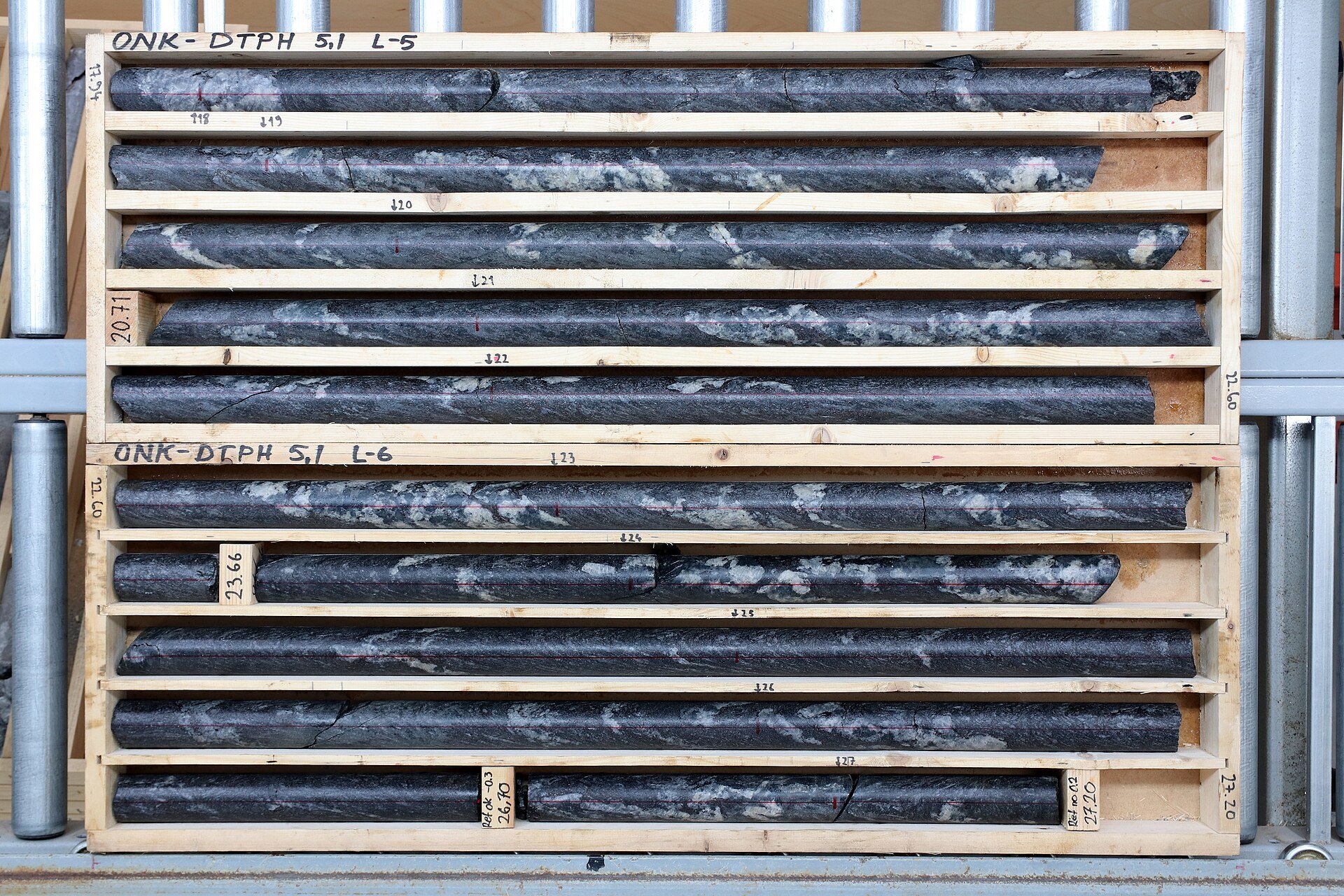
On October 14, 2025, Cosa Resources announced it has identified high-priority, drill-ready targets at its Darby Uranium Project in the Athabasca Basin, Saskatchewan. The Darby project is a 70/30 joint venture with Denison Mines Corp., with Cosa acting as the operator.
The targets were generated by relogging historical drill core, focusing on two main conductive trends: Delta and Charlie. Key findings include: * Delta Trend: Historical drill hole DB-27 showed a broad 52-metre interval of anomalous uranium in the sandstone and hit 0.13% U3O8 over 0.3 metres in the basement. The newly identified target aims to intersect the associated basement fault at the unconformity. * Charlie Trend: Historical drill hole DB-09 intersected a 42-metre zone of continuously anomalous uranium in the basal sandstone above graphitic faulting in the basement. The follow-up target will test the intersection of these faults with the unconformity.
Cosa plans to conduct a winter drill program in 2026 at both the Darby and Murphy Lake North (MLN) projects and is currently finalizing programs and budgets with its partner, Denison.
This news is a positive, but non-material, operational update that aligns with the company's previously stated strategy.
- Execution on Plan: Following the acquisition of the Denison projects in January 2025, Cosa outlined a multi-project exploration plan. The June 17, 2025 news release explicitly stated that summer work at Darby would consist of "relogging historical drill core to refine drill-ready targets for winter 2026 drilling." This announcement confirms the successful completion of that work, demonstrating competent execution.
- De-risking, Not Discovery: The identification of targets based on re-interpreting historical data is a crucial and cost-effective step in exploration. It increases the probability of success for the upcoming drill program by focusing on areas with multiple positive indicators (alteration, structure, geochemistry). However, it is not a discovery and does not intrinsically add value until those targets are successfully drilled. The market has been anticipating this work, so its completion is an expected milestone.
- Project Pipeline Progression: Throughout 2025, the primary focus has been the Murphy Lake North (MLN) project, which yielded the "most significant" results to date for the company in its August 2025 update. This news on Darby shows progress on a second key JV project, building out the exploration pipeline for 2026 and beyond. It reinforces the value of the Denison transaction by demonstrating prospectivity across multiple assets.
- Context of Previous News: The news follows a series of systematic exploration updates across the company's portfolio throughout 2024 and 2025, including the transformative deal with Denison, drilling at Ursa, geophysics across multiple projects, and the highly encouraging summer drill program at MLN. This Darby update fits perfectly within that logical progression of exploration.
In conclusion, the news is positive as it confirms the prospectivity of a key asset and solidifies plans for a 2026 catalyst. However, it is non-material because it is an incremental, expected step rather than a game-changing result. The material event for Darby will be the results from the planned 2026 drill program.
Cosa Resources is a Canadian junior exploration company focused on the discovery of uranium in the Athabasca Basin region of Saskatchewan. The company assembled a large land package through staking and strategic acquisitions. A transformative event was the January 2025 closing of a deal with Denison Mines, which saw Cosa acquire a 70% interest in three projects (Murphy Lake North, Darby, Packrat) and brought Denison in as its largest strategic shareholder.
While the company has multiple projects, the current flagship is the Murphy Lake North (MLN) Project. This 70/30 JV with Denison lies just 2.7 km east of IsoEnergy's world-class Hurricane deposit. Drilling in 2025 at MLN confirmed the extension of the Hurricane trend geology and, more significantly, identified a two-kilometre strike of strong alteration and structure at the parallel Cyclone trend, making it the primary focus for near-term follow-up.