Taranis outlines new area of mineralization at Thor
None
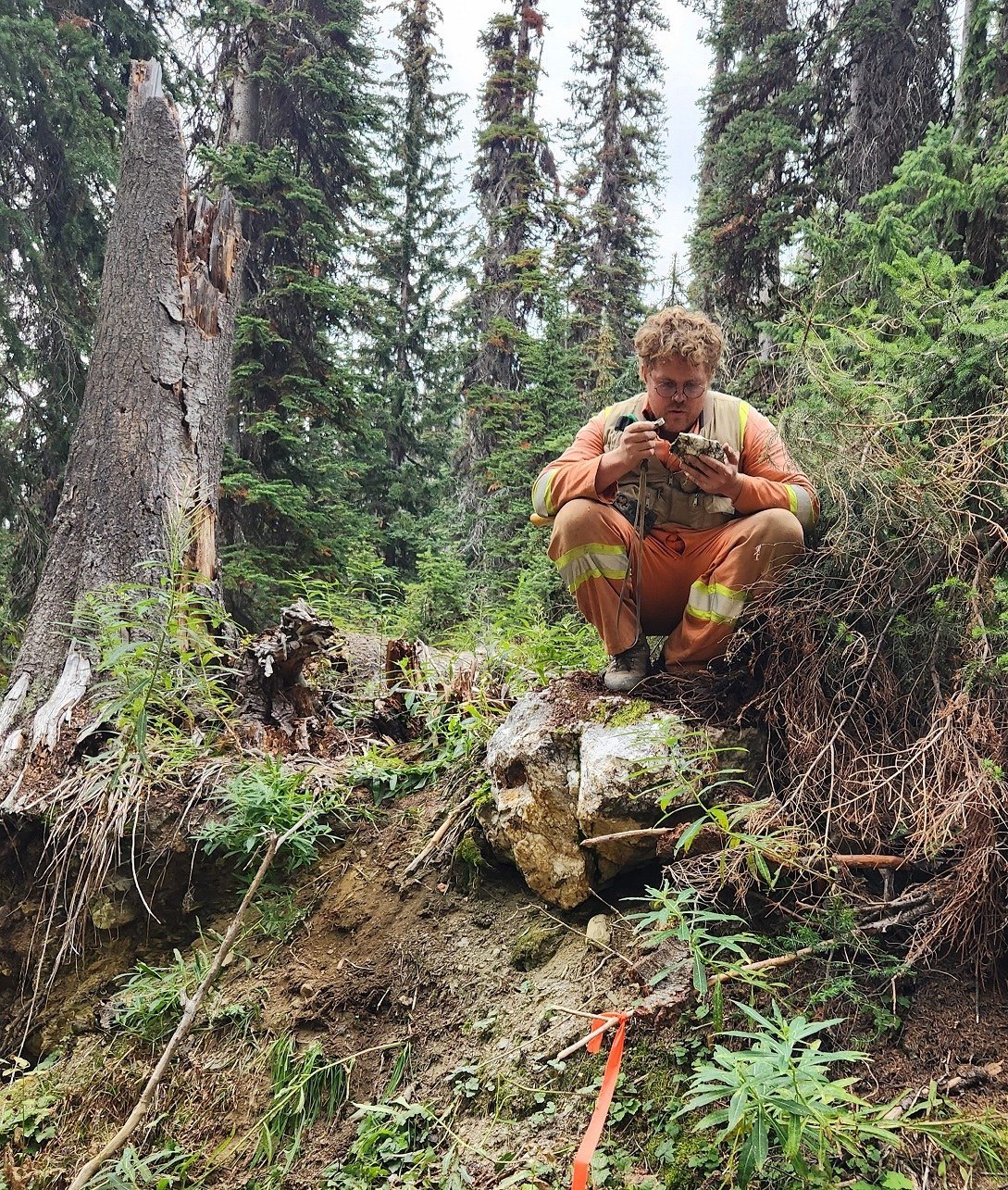
The most recent news release, dated October 27, 2025, from Taranis Resources Inc. announces the discovery of a new area of epithermal mineralization, named Borr, located 1.4 km southeast of the main Thor epithermal deposit. Drill hole Thor-256 reportedly intersected epithermal mineralization characterized by massive pyrite, sphalerite, galena, and tetrahedrite. The company's President and CEO, John Gardiner, states that the Borr area presents an opportunity for considerable expansion of the existing high-grade, near-surface mineral resource. Crucially, analytical results (i.e., specific grades and widths of mineralization) from drill hole Thor-256 were mentioned but not provided in this release.
This announcement follows the completion of the 2025 exploration activities (reported October 20, 2025), which included 2,505 meters of diamond drilling (5 holes) focused on a magmatic breccia feeder zone, with analytical results from this program still pending.
The news describes a new discovery of "epithermal mineralization" in an unexplored area, which is inherently positive for the long-term potential of the Thor project. The CEO's assertion of "considerable expansion" is encouraging. However, the lack of specific analytical results (grades and widths) from drill hole Thor-256 in this release is a significant omission. Without these quantitative details, the true economic significance of this new mineralization cannot be assessed. It's merely a visual confirmation of the presence of minerals, which is a preliminary step in exploration.
In the context of previous news, Taranis has been actively pursuing two primary exploration themes: 1. Deep, intrusive-related targets (I-1 and Z-900/1300): Extensive geochemical and geophysical work in 2024 and 2025 has focused on identifying a large, bulk-mineable intrusive source for the epithermal deposit. While some drill holes like Thor-246 intersected wide zones (53m) of anomalous gold (0.452 g/t Au) with associated pathfinder elements, the company itself acknowledged these were "obviously not 'ore grade'" but indicative of proximity to a mineralized body. The latest news focuses on an "epithermal" discovery, potentially a different style or shallower manifestation of the overall system. 2. Near-surface, high-grade epithermal and Horton Area boulders: The company previously refined targets in the Horton area based on high-grade boulders (e.g., up to 14.55 g/t Au and 1705 g/t Ag in grab samples), but initial drilling there was for bedrock information, not targeted mineralization, and did not yield significant gold or silver. The current Borr discovery is described as "epithermal mineralization" and an expansion of the "high-grade, near-surface mineral resource."
The current news offers a qualitative positive for exploration success in identifying new mineralization in a virgin area. However, without assays, it cannot be considered a "material positive" in terms of economic impact or a "game changer." It simply indicates continued positive geological targeting and the potential for future material results. It's a "routine" exploration update that outlines a discovery, but defers the critical quantitative data. The market will likely await the actual assay results to properly evaluate the materiality.
The company's financial position (negative working capital, reliance on small private placements at decreasing prices) indicates a high need for material, positive news to attract capital and sustain operations. A strong drill intercept (with assays) would be highly impactful, but this release does not provide that.
Taranis Resources Inc. is a Canadian exploration and development company primarily focused on its 100% owned Thor Silver-Gold-Zinc-Lead-Copper project located in southeastern British Columbia, Canada. The Thor project covers a significant mineralized footprint and has a 130+ year history of exploration.
Flagship Project: Thor Project * Location: Southeastern British Columbia, Canada. * Commodities: Silver, Gold, Zinc, Lead, Copper. * Stage: Advanced exploration with a NI 43-101 mineral resource estimate (dated April 11, 2024) linking previously known mines into a single, near-surface epithermal deposit. * Geological Model: Taranis operates under a "linked epithermal-porphyry" model, hypothesizing that the near-surface, high-grade epithermal mineralization is underlain by a deeper, larger intrusive-related source (I-1 and Z-900/1300 targets). * Exploration Strategy: Utilizes modern geophysical techniques (magnetotelluric, magnetic, VLF, ground magnetic/gradiometer surveys), advanced geochemical studies (mass-balance Gresen method, rare-earth element, major oxide analysis), and extensive diamond drilling. * Key Discoveries/Targets: * Thor Epithermal Deposit: The main near-surface resource. * I-1 Intrusive Target: A deeply buried (400m below surface), resistive, circular-shaped intrusive (1.2 km diameter) considered the likely source of the epithermal deposit. Identified through geophysical surveys and validated by geochemical zonation patterns in drill core (anomalous in boron, gold, zinc, arsenic, tungsten). * Z-900/1300 Target: An elongated resistivity feature, an alteration zone overlying the I-1 intrusive, showing anomalous gold over substantial widths (e.g., 53m of 0.452 g/t Au). * Borr Area: A new area 1.4 km southeast of the main deposit with newly discovered epithermal mineralization (pyrite, sphalerite, galena, tetrahedrite), but without reported assays yet. * Horton Area: West of the Great Northern zone, where high-grade boulders (up to 14.55 g/t Au, 1705 g/t Ag) were found, with ongoing work to identify bedrock sources (Targets 2 & 3). * Bulk Sample: A 10,000-tonne bulk sample permit has been extended to August 21, 2028, with engineering work currently underway by Novus Engineering. The purpose is to accurize grade, metallurgical recoveries (especially critical minerals like copper, indium, zinc, antimony, silver, gold), and support economic analysis. * Property Expansion: In January 2025, Taranis acquired a 100% interest in an additional 1,634 hectares adjoining Thor, expanding the project footprint to accommodate larger potential deposits.