Homeland Allows Non-Core Portions of the Coyote Basin Project to Lapse
Homeland laps Coyote Basin claims to concentrate resources on Cross Bones drilling.
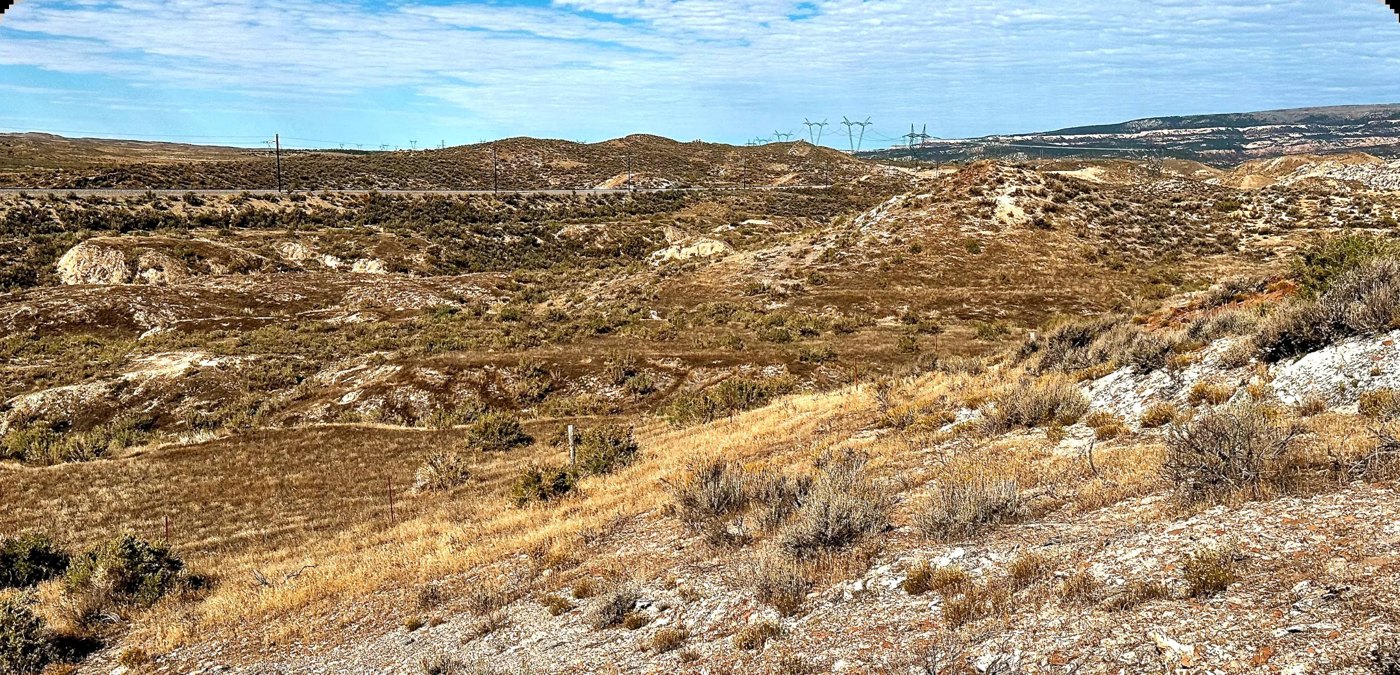
Homeland Uranium Corp. has decided to allow non-core mining claims for its Coyote Basin Uranium Project in Colorado to lapse, reducing the project footprint from 18,656 acres to 2,827.8 acres. The company retained 49 BLM mining claims and three Colorado state exploration leases, which cover the area of the 2025-26 drilling campaign and historical uranium mineralization indicators.
Analytical results from ten check samples sent to the Saskatchewan Research Council (SRC) confirmed the initial results from SGS Laboratories with no material difference. The company will continue to review drilling program results to determine if the drillhole spacing was optimal and is evaluating whether the reverse circulation drilling technique utilized impacted sample collection.
Homeland Uranium Corp. (HLU) has consolidated its property holdings in a routine move designed to reduce annual Bureau of Land Management renewal fees, which cost $200 per claim. This administrative step aligns with the company’s strategic pivot away from the Coyote Basin, where Phase II drilling conducted in early 2026 returned sub-grade uranium concentrations of ≤30 ppm U and highlighted potential uranium disequilibrium issues. While the SRC verification adds minor technical confidence, it does not alter the sub-grade nature of the Coyote Basin results. No material financial or operational impact is expected from the move, which serves as a standard cost-saving measure for an exploration-stage company.
Homeland Uranium Corp. is a US-focused uranium explorer and developer positioned to participate in the growing US nuclear supply chain. Its flagship projects are the Coyote Basin and Cross Bones uranium projects in northwestern Colorado, covering a combined portfolio of approximately 37,252 acres.
At Coyote Basin, a historical resource is estimated at 35.4 million pounds of U3O8. Phase II drilling confirmed near-surface radioactivity, but geochemical assays returned economically sub-grade concentrations.
At Cross Bones, historical exploration data was acquired to accelerate evaluation. The project is fully permitted for a 30-hole inaugural drill program. Phase I mapping and radiometric surveying identified the new East Ridge Showing.
The company is in the exploration stage with no NI 43-101 compliant mineral resources or reserves.