GFG Expands Aljo Gold System 150 m East with Step-Out Results of 7.23 g/t Au over 2.0 m as Discovery-Driven Exploration Advances Across Goldarm
GFG demonstrates lateral continuity at Aljo via step-outs but finds lower grades than previous discovery-stage intercepts.
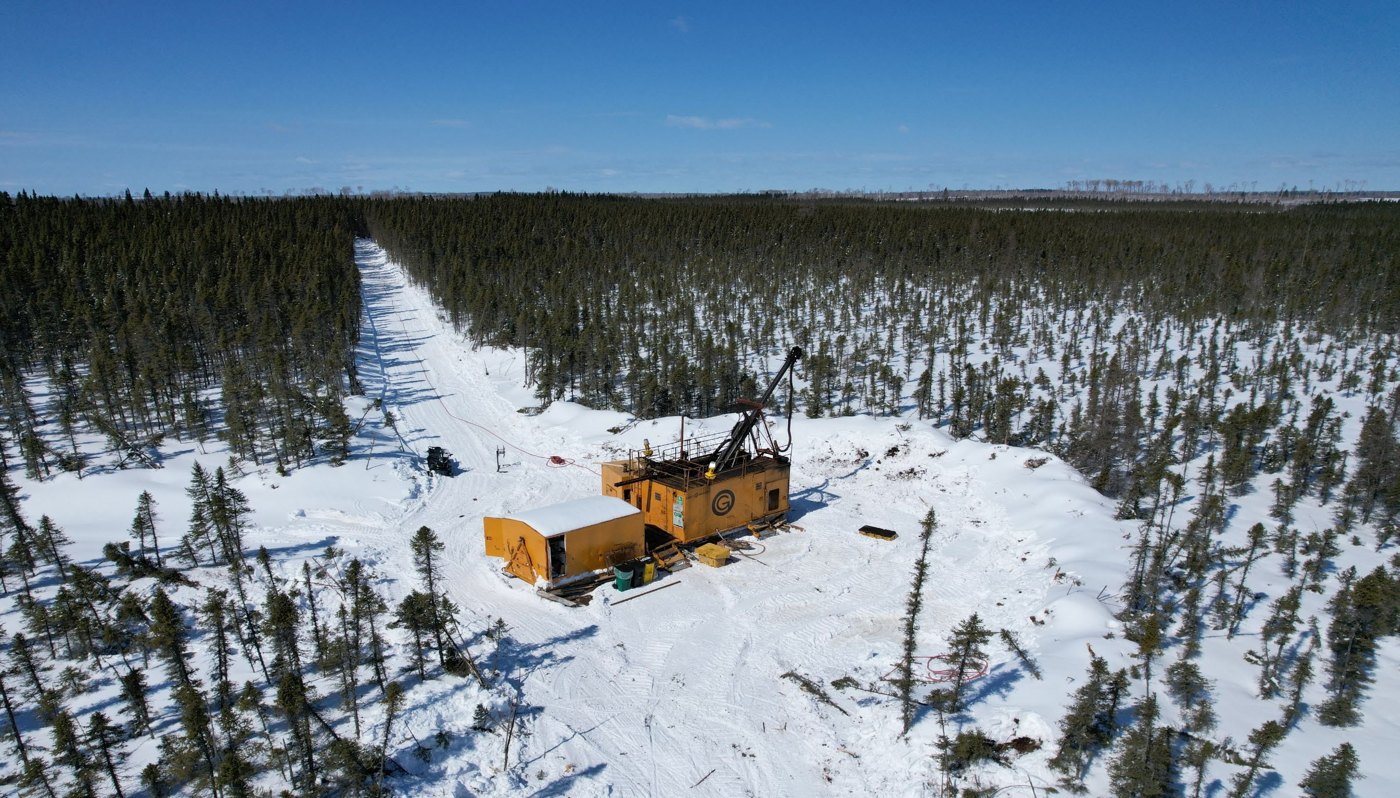
The most recent news (February 10, 2026) reports the final results from the Phase 2-2025 drill program at the Aljo Gold Project. The highlight is a 150-meter step-out to the east of the known system, yielding 7.23 g/t Au over 2.0 m and 1.23 g/t Au over 16.0 m. These results follow the January 21, 2026, release which showed a broad intercept of 1.01 g/t Au over 51.5 m. Management has announced a 6,000-meter follow-up program for Aljo in 2026, alongside a 2,500-meter regional program at Goldarm and a 90-hole sonic till program.
The news is material in that it confirms the Aljo system remains open to the east and possesses lateral continuity. However, compared to the 2024 discovery-stage results (e.g., 23.08 g/t Au over 7.6 m), the grades in the most recent eastern step-outs are notably lower, suggesting the system may be transitioning into a broader, lower-grade bulk-tonnage target in certain zones. - Project Advancement: The successful 150m step-out de-risks the "room to grow" thesis but does not yet establish a high-grade resource core. - Budgetary Commitment: The 6,000m commitment for 2026 indicates management believes they have sufficient data to justify aggressive spending. - Comparison to Projections: In late 2024, the company projected a 4,000m program; they exceeded this by drilling throughout 2025 and are now scaling up to 8,500m total for 2026. This shows a steady increase in exploration intensity.
GFG Resources is focused on the Timmins Gold District in Ontario. - Flagship Project: Aljo Gold Project (part of the Goldarm Property). It is a past-producing high-grade mine environment. - Development Stage: Advanced Exploration. The company is currently moving toward "resource-scale spacing" in the Main Zone. - Geological Context: The project features stacked vein arrays associated with porphyry dikes, located north of the Porcupine-Destor Deformation Zone.