Aston Bay Identifies New Near-Surface Copper Targets Through Integrated 3D Modelling at the Epworth Copper-Silver Project, Nunavut, Canada
Aston Bay’s 3D modelling identified new near-surface copper targets at the Epworth project.
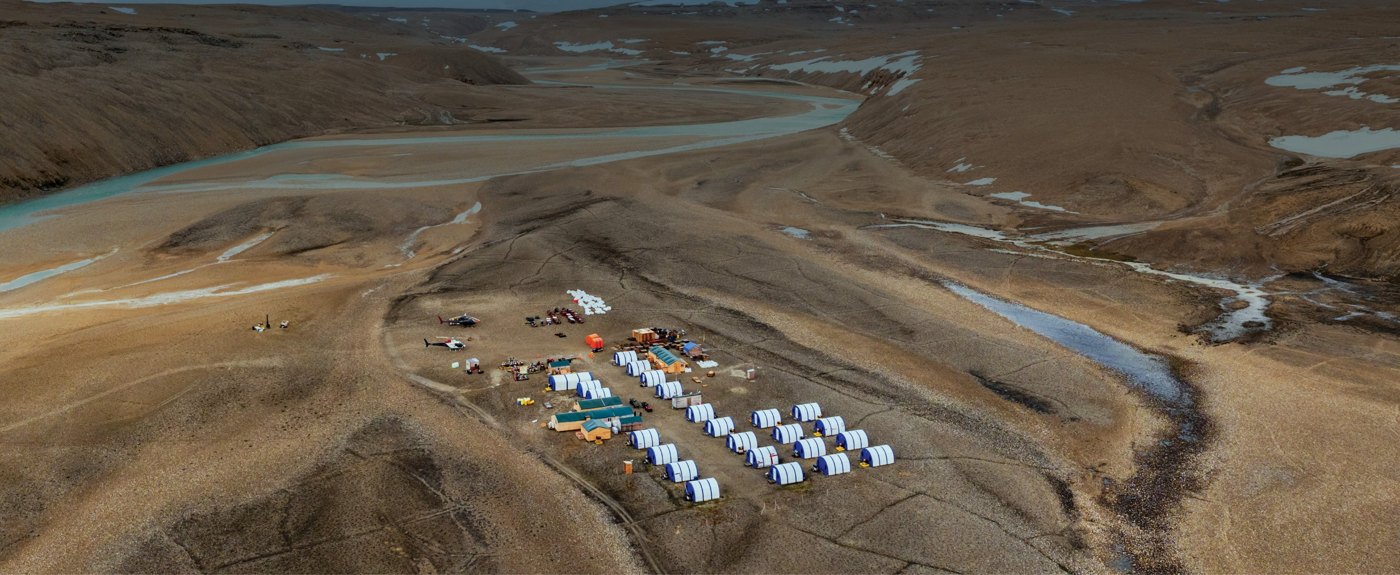
Aston Bay Holdings Ltd. (BAY) released an exploration update on August 27, 2026, detailing advanced 3D geophysical modelling at the Epworth Copper-Silver Project in Nunavut. The company utilized Magnetic Vector Inversion and Resistivity Inversion to identify a basin-scale "plumbing system" for copper mineralization and converging large, previously unrecognized near-surface targets.
To support further exploration, the company staked an additional 18.7 square km of ground, expanding the total Epworth Property area to 1,040.7 square km. Planning is underway for fall 2026 ground geophysics, mapping, and sampling to refine these targets. Camp and fuel logistics are pre-positioned for an anticipated drill program in 2027.
The update also detailed QA/QC protocols and assay methodologies from Activation Laboratories, confirming standard industry practices for base and precious metals.
Aston Bay Holdings Ltd. (BAY) released an update that marks a logical progression in its exploration cycle, following surface discoveries in 2025 and ground mapping plans for 2026. The company has consistently advanced from airborne surveys in July 2025 to surface discoveries in January 2026, and now to 3D modeling in August 2026. This incremental step aligns with prior management guidance.
The announcement does not introduce new capital, resource estimates, or permitting milestones. The focus remains on de-risking the path to a 2027 drill program. The update confirms that exploration activities are proceeding as planned without unexpected upside or downside surprises.
Aston Bay Holdings Ltd. is a Canadian mining company focused on the Storm Copper & Silver Project and the Epworth Copper & Silver Project, both located in Nunavut, Canada. The Storm Project is in the development stage, with a Pre-Feasibility Study nearing completion. It holds an Indicated Resource of 8.2 Mt @ 1.47% Cu & 4.5 g/t Ag and an Inferred Resource of 3.3 Mt @ 1.30% Cu & 3.1 g/t Ag. The Epworth Project is in the exploration stage, featuring a large land package of over 1,040 square km with high-grade surface showings and geophysical targets. The company holds a 20% carried interest in Storm through a joint venture with American West Metals, which funds development until a bankable feasibility decision.