TomaGold Continues to Expand Berrigan Mine at Depth with a New Major 204.25 m Intersection in the Berrigan Deep Zone
TomaGold Corporation has announced assay results from the first of five extension holes, TOM-25-011EXT, at its Berrigan Mine Project in Québec. The results confirm the vertical continuity and scale of the Berrigan Deep Zone polymetallic hydrothermal system. The hole intersected a major 204.25 m mineralized envelope grading 2.05% ZnEq (0.48 g/t AuEq), including significant high-grade intervals such as 31.31% ZnEq over 2.40 m and 5.93% ZnEq over 4.60 m. These results validate the geological model for the deep system, with consistent mineralization observed in four additional extension holes (TOM-25-009EXT, TOM-25-010EXT, TOM-25-012EXT, and TOM-25-013EXT) for which assay results are pending.
The primary intersection in hole TOM-25-011EXT returned 204.25 m grading 2.05% ZnEq (0.48 g/t AuEq) from 553.90 m to 758.15 m. This interval includes 51.50 m grading 3.26% ZnEq (0.77 g/t AuEq) from 553.90 m to 605.40 m. Within this broader zone, the company reported the following high-grade intercepts:
- 2.40 m grading 31.31% ZnEq (7.38 g/t AuEq) from 554.40 m to 556.80 m (containing 5.89 g/t Au, 98.21 g/t Ag, 1.28% Cu, 1.75% Zn).
- 14.40 m grading 4.62% ZnEq (1.08 g/t AuEq) from 591.00 m to 605.40 m.
- 4.60 m grading 5.93% ZnEq (1.38 g/t AuEq) from 681.55 m to 686.15 m.
- 7.45 m grading 5.90% ZnEq (1.38 g/t AuEq) from 697.05 m to 704.50 m.
Additional high-grade intersections were identified in the upper zone of the hole. These include 12.45 m grading 3.02% ZnEq (0.71 g/t AuEq) from 498.30 m to 510.75 m, which includes 1.40 m grading 16.23% ZnEq (3.78 g/t AuEq) from 498.30 m to 499.70 m (containing 2.28 g/t Au, 5.60 g/t Ag, 0.07% Cu, 7.94% Zn). Further significant intervals within this upper section include 2.90 m grading 4.52% ZnEq (1.06 g/t AuEq) from 507.85 m to 510.75 m and 1.95 m grading 3.26% ZnEq (0.76 g/t AuEq) from 522.25 m to 524.20 m.
Other significant intercepts in TOM-25-011EXT include:
- 6.50 m grading 4.17% ZnEq (0.97 g/t AuEq) from 715.50 m to 722.00 m.
- 18.65 m grading 3.72% ZnEq (0.88 g/t AuEq) from 739.50 m to 758.15 m.
- 10.00 m grading 3.29% ZnEq (0.77 g/t AuEq) from 655.50 m to 665.50 m.
- 5.75 m grading 3.20% ZnEq (0.74 g/t AuEq) from 639.25 m to 645.00 m.
- 2.25 m grading 3.17% ZnEq (0.74 g/t AuEq) from 574.65 m to 576.90 m.
- 1.15 m grading 4.06% ZnEq (0.94 g/t AuEq) from 560.60 m to 561.75 m.
- 1.70 m grading 1.25% ZnEq (0.29 g/t AuEq) from 730.60 m to 732.30 m.
- 4.40 m grading 1.78% ZnEq (0.42 g/t AuEq) from 774.00 m to 778.40 m.
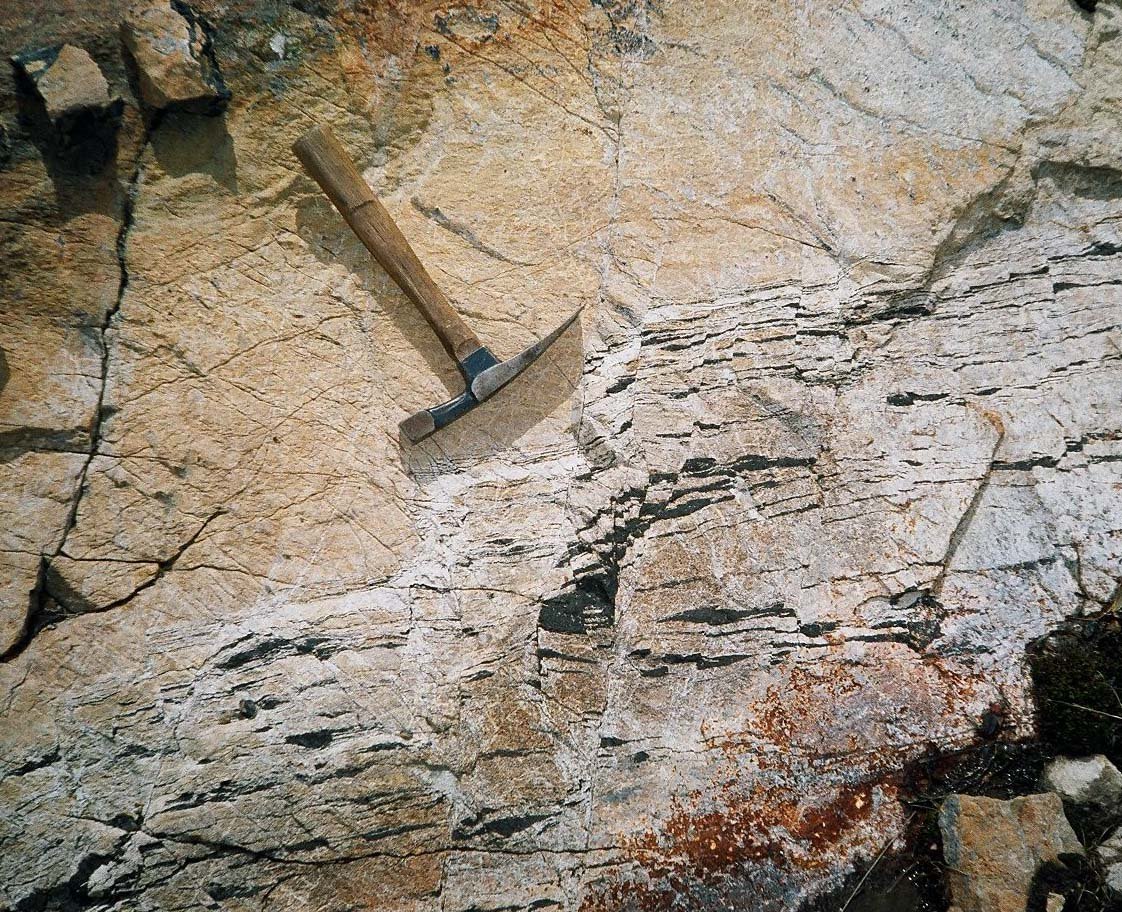
Geologically, the mineralized envelope intersects ultramafic to mafic rocks, including serpentinitized peridotites, komatiites, pyroxenites, and gabbros. Mineralization is controlled by regional structures, shear zones, and contact breccias. The sulphide assemblage is dominated by sphalerite and pyrrhotite, with copper showing spatial correlation with higher gold grades. Pervasive alteration includes chlorite, talc, and carbonates.
Hole TOM-25-011EXT reached a final depth of 834.70 m. ZnEq/AuEq calculations were based on specific metal prices ($4,150/oz Au, $51.34/oz Ag, $5.023/lb Cu, $1.392/lb Zn) and metallurgical recovery factors (95% Zn, 85% Au/Ag, 90% Cu). The true width is estimated at 80-85% of core length.
David Grondin, President and CEO, stated: “The extension of hole TOM-25-011EXT, which intersected 2.05% ZnEq (0.48 g/t AuEq) over 204.25 m (including 31.31% ZnEq over 2.40 m), has confirmed the continuity and extent of the Berrigan Deep mineralized system... The interception of a mineralized envelope spanning more than 224 metres underscores the scale of this hydrothermal system. Beyond the high-grade zones already delineated in its upper portion, this broad mineralized interval at depth demonstrates the persistence of mineralization and increases our confidence in the system’s potential for further expansion.”
Future work includes pending assay results for the four additional extension holes: TOM-25-009EXT, TOM-25-010EXT, TOM-25-012EXT, and TOM-25-013EXT. Downhole (BHEM) and surface (UTEM) geophysical surveys are currently underway to map structural conductors and guide future drilling.