RUA GOLD Expands Reefton Goldfield Resource Base and Completes Auld Creek PFS
Rua’s Auld Creek PFS yields negative NPV, zero reserves and halved antimony recovery.
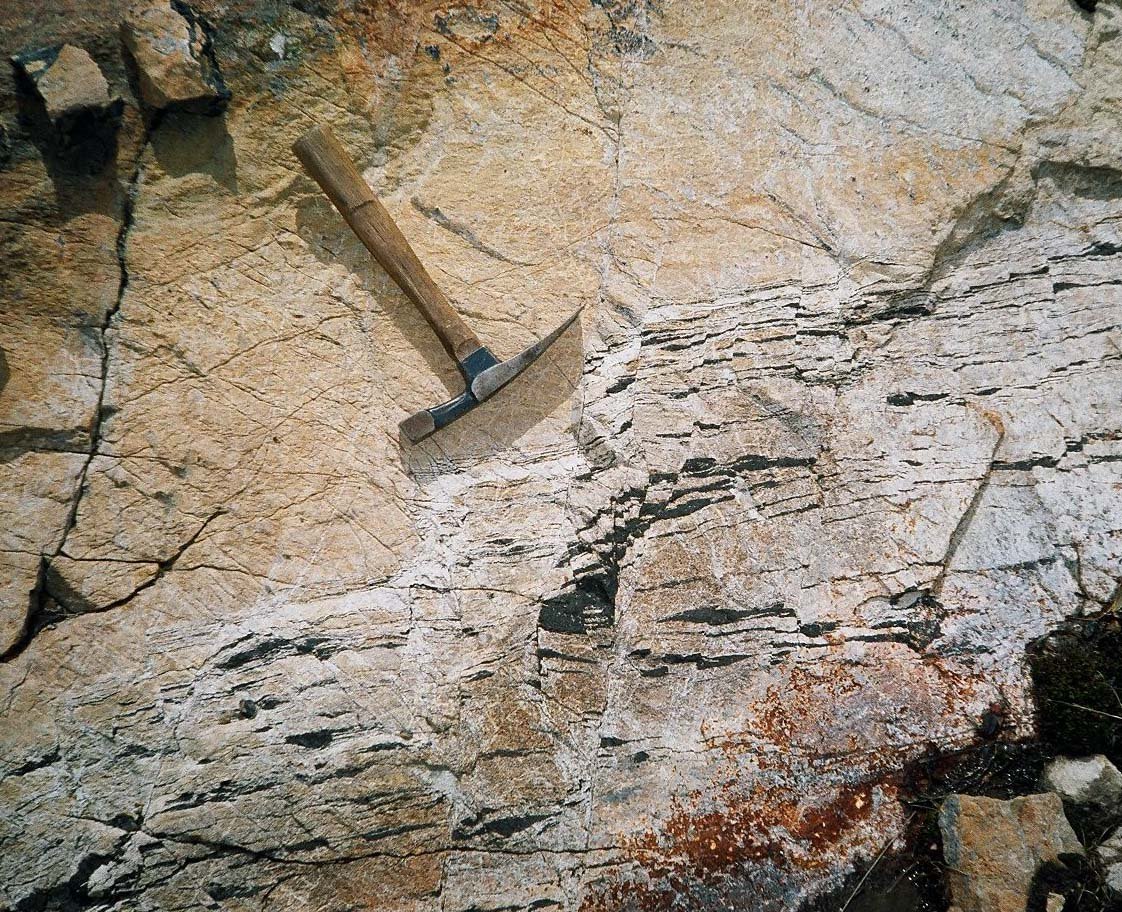
Rua Gold Inc. (RUA) released a Mineral Resource update and completed the Auld Creek Pre-Feasibility Study (PFS), effective November 3, 2026. The resource update indicates that the Reefton Goldfield totals now stand at 1.27 Mt at 2.4 g/t Au for 99,000 oz Indicated and 8.82 Mt at 2.6 g/t Au for 730,000 oz Inferred across five deposits.
The maiden Globe Progress resource, following an exploration permit granted in August 2026 for roughly NZD 4,000 in permitting costs, reports 0.19 Mt at 2.28 g/t for 14,000 oz Indicated and 4.40 Mt at 2.44 g/t for 346,000 oz Inferred. At Auld Creek, the Indicated resource is 1.08 Mt at 2.4 g/t Au and 0.8% Sb for 85,000 oz Au and 8,100 t Sb, while the Inferred resource is 0.45 Mt at 2.4 g/t Au and 0.4% Sb for 35,000 oz Au and 1,700 t Sb. Alexander River holds 156,000 oz Inferred at 3.6 g/t, Big River has 101,000 oz at 2.72 g/t, and Supreme has 92,000 oz at 1.96 g/t; these figures are unchanged from the February 27, 2026 estimates but are restated with the November 3, 2026 effective date. On a consistent 1.5 g/t gold-only cut-off, Auld Creek Indicated gold rose from 29,200 oz to 86,200 oz, with the average grade falling from 3.56 g/t to 2.76 g/t, while Inferred gold fell from 48,100 oz to 39,000 oz.
The PFS outlines a standalone 250,000 t/y underground operation using sub-level open stoping, processing 1,330 kt over 5.6 years. At a base case of US$3,700/oz gold and US$26,000/t antimony, the after-tax NPV5% is negative US$30.5 million, and IRR and payback are not meaningful. No Mineral Reserve was declared, and the study states it "does not establish economic viability for the standalone development case."
Pre-production capital is estimated at US$133.5 million, with post-start-up capital at US$36.3 million. Total cash costs are US$2,048/oz and all-in costs are US$2,435/oz. The operation would recover 78,762 oz gold and 4,349 t antimony, averaging 19,672 AuEq oz/yr. Recoveries are 95% for gold and 54% for antimony, with payabilities of 90% for gold and 75% for antimony, subject to a 28% corporate tax. The company attributes the deterioration primarily to lower antimony recovery. The AuEq factor has fallen from 2.15 to 1.04, reflecting revised antimony prices, recoveries, and payabilities.
Forward work includes metallurgical variability and concentrate quality testing. A study commencing Q1 2027 will assess Globe Progress as part of a combined operating plan. The release explicitly states that "The district development strategy remains unquantified" and "No district economic assessment is presented in this release." A supporting NI 43-101 technical report is to be filed on SEDAR+ within 45 days.
Rua Gold Inc. (RUA) released a Preliminary Feasibility Study (PFS) that presents a stark contrast to the economic projections the company has promoted over the past six months. On May 5, 2026, the company published a Preliminary Economic Assessment (PEA) showing an after-tax NPV5% of US$42.4 million, a 17% internal rate of return (IRR), US$1,400/oz cash costs, and US$1,850/oz all-in sustaining costs (AISC) at a gold price of US$3,300/oz. Investors were subsequently presented with an upside case projecting an NPV of US$113 million and a 36% IRR at a gold price of US$4,700/oz, a scenario repeated in commentary on October 26, 2026.
The new PFS replaces those figures with a negative after-tax NPV5% of US$30.5 million, representing a swing of roughly US$73 million. This outcome occurs at a higher gold price assumption of US$3,700/oz compared to the previous US$3,300/oz; substituting the lower gold price would result in an even more negative outcome. A comparison of the PEA and PFS metrics reveals significant changes:
- Gold price assumption: US$3,300/oz to US$3,700/oz
- After-tax NPV5%: +US$42.4M to -US$30.5M
- Annual AuEq production: 26,665 oz/yr to 19,672 oz/yr
- AuEq grade processed: 3.36 g/t to 2.56 g/t
- Total cash costs: US$1,400/oz to US$2,048/oz
- AISC: US$1,850/oz to US$2,435/oz
- Antimony recovery: 85% to 54%
- Caught metal: ~84,000 oz Au and ~9,000 t Sb to 78,762 oz recovered gold and 4,349 t recovered antimony
- Pre-production capital: US$132.6M to US$133.5M
- Mineral Reserve: none declared
The primary driver of the deteriorated economics is metallurgical rather than geological. Antimony recovery has dropped from 85%, which management described as "well understood" in an October 6, 2026 interview, to 54%. Because the earlier PEA relied on antimony credits to subsidize a modest gold endowment, the halving of antimony recovery has removed the economic foundation of the project. The company’s own explanation identifies lower recovery as "the primary factor contributing to the reduced economics," confirming that the flagship thesis rested on a metallurgical assumption that has failed testing.
The project’s capital intensity is now exposed. A pre-production build of US$133.5 million producing approximately 19,700 AuEq oz/yr implies about US$6,800 of capital per annual ounce of production. With all-in costs of US$2,435/oz against a US$3,700/oz gold price assumption and no declared mineral reserve, the project does not currently present a financeable standalone proposition.
While resource growth is real, it does not rescue the project’s economics for three reasons. First, confidence in the data is low: 96% of the gold in the Globe Progress deposit is classified as Inferred, meaning it is excluded from the PFS entirely. Of 466 holes, only 199 have usable QA/QC data (none from the CRAE holes), 175 collar surveys are of unknown method, RC holes were excluded due to wet-sampling bias, and no metallurgical test work exists for Globe Progress. Inferred material cannot support a PFS mine plan. Second, the company states its district strategy is unquantified and presents no district economics. Third, the contained antimony tonnage has declined from 13,000 t (3,000 t Indicated plus 10,000 t Inferred) in the February 2026 estimate to 9,800 t (8,100 t Indicated plus 1,700 t Inferred), with the PFS now recovering only 4,349 t.
The timing of the study is significant. The PFS was previously described as the de-risking event and the bridge to full permitting by mid-2027 and production in 2028. The current release states that development "remains subject to establishing a viable project case," indicating a reset of the stated development timeline rather than an incremental step within it.
Context from the Q3-2026 filing, which was not disclosed in today’s release, includes a C$22.6 million nine-month net loss, C$20.5 million of cash at September 30, 2026, a disclosed going-concern material uncertainty, and no revenue. A negative-NPV study at the flagship project materially raises the probability and cost of the next equity raise.
The only genuinely positive and new element is the conversion of gold resources at Auld Creek, where the Indicated category rose roughly threefold on a like-for-like cut-off. This represents real technical progress and provides the single input that could support the next iteration of the study. However, it does not offset the negative NPV, the lack of a mineral reserve, or the broken metallurgical assumption presented in the same release.
Rua Gold Inc. (TSX: RUA, NZX: RGI, OTCQX: NZAUF, Frankfurt: X9R), a Vancouver-headquartered pre-revenue exploration and development company focused on New Zealand, released information regarding its portfolio without providing new financial results. The company’s flagship asset is the Auld Creek deposit, a high-grade gold-antimony occurrence within the Reefton Goldfield on the South Island. Auld Creek outcrops at the surface and has been drilled since late 2024, having been selected as the primary asset for mine development.
Rua Gold holds a dominant land position in the district, comprising over 120,000 hectares of permits according to the release, or approximately 125,000 hectares per the investor presentation. The field has historically produced more than 2 million ounces of gold at grades between 9 and 50 g/t. The company’s district holdings also include the Alexander River, Big River, and Supreme deposits, as well as the Globe Progress property. Globe Progress was acquired for approximately NZD 4,000 in permitting costs and carries a substantial historical database, including 418,000 ounces recovered underground at 12.2 g/t between the 1890s and 1920s, and roughly 606,000 ounces produced by OceanaGold as an open pit between 2007 and 2016 prior to rehabilitation.
The proposed development concept for Auld Creek is a hub-and-spoke model, where multiple deposits feed a central flotation plant near Auld Creek. This facility would produce separate gold and antimony concentrates on a no-cyanide flowsheet with a sub-one-hectare surface footprint. The preliminary feasibility study (PFS) was intended to validate this concept at the first spoke; however, the release confirms that the model has not been validated and no district-level economic assessment has been produced.
The company’s second project is Glamorgan, an undrilled epithermal system in the Hauraki Goldfield on the North Island, located adjacent to OceanaGold’s Wharekirauponga. Nine drill pads were approved in August 2026, with approximately 9,000 metres scheduled to commence in Q4 2026. This project carries no economic assumptions.
Management and board members include CEO Robert Eckford, a co-founder and former CFO of Aris Mining; COO Simon Henderson, an exploration geologist with three decades of experience in New Zealand orogenic and epithermal systems; VP Risk, Stakeholder and Regulatory Affairs Simon Delander, formerly of Endura Mining; and Chairman Oliver Lennox-King, formerly of Fronteer Gold and Roxgold. Darren Prins serves as CFO and Corporate Secretary, having been appointed interim in September 2026 during the incumbent’s maternity leave. No analyst price targets or consensus estimates were provided in the materials.