Asante Reports Q3 2026 Operating & Financial Results and Issues Clarification Regarding November 12, 2026 Press Release
Asante’s Bibiani mine operates at a $7,681/oz all-in sustaining cost, with $100 million in funding expected to arrive in 17 days.
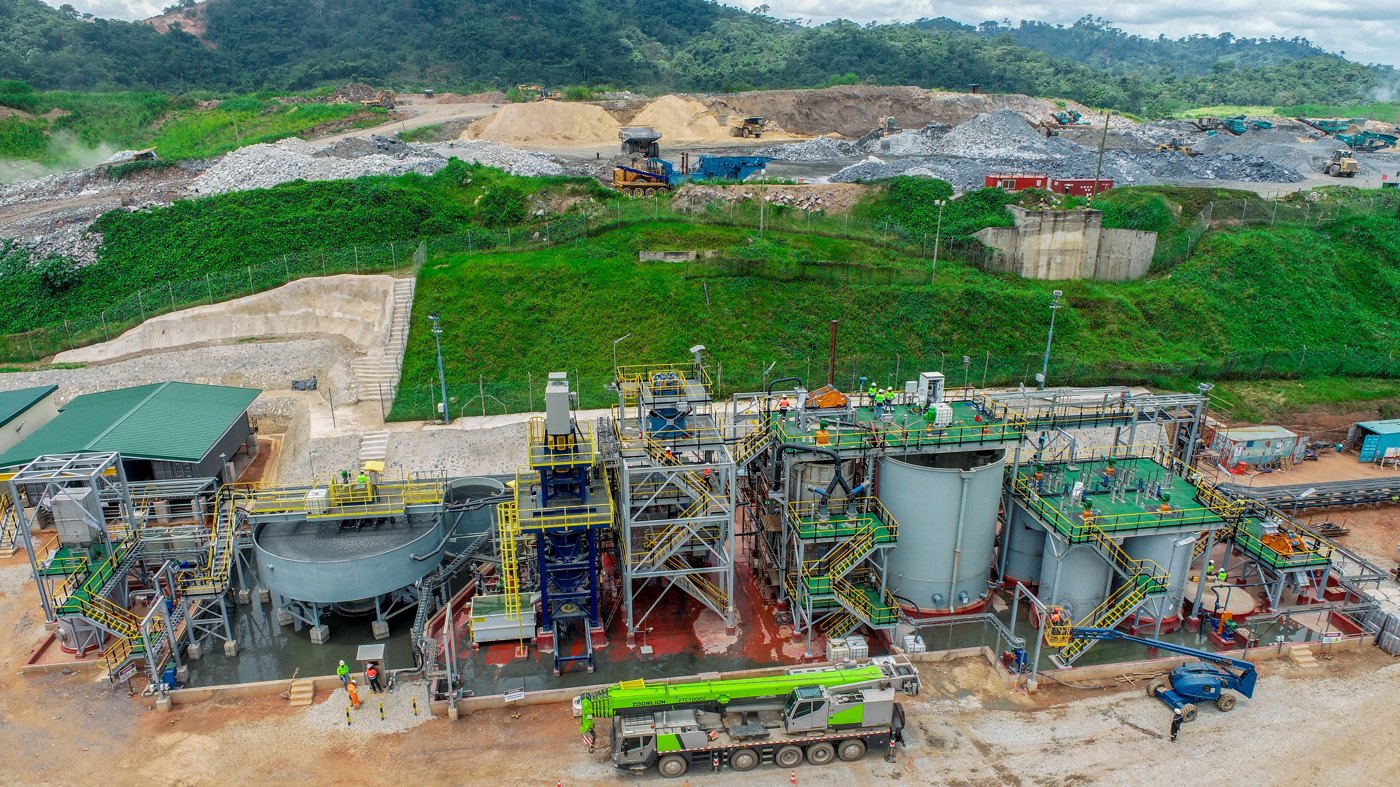
Asante Gold Corporation (ASE) released its results for the third quarter and the nine months ended September 30, 2026, a filing that formally withdraws full-year 2026 guidance and introduces significant going concern language. The company’s August 7, 2026, production guidance of 275,000–300,000 oz eq at an all-in sustaining cost (AISC) of US$3,200–3,600/oz is no longer in effect. For the nine-month period, Asante produced 165,594 oz eq, representing 60.2% of the low-end guidance target after 75% of the year had passed. The AISC for this period was US$4,308/oz, which is 19.7% above the top of the previously guided range.
The withdrawal of guidance follows a challenging third quarter, where the company delivered 48,517 oz eq. To have reached even the low end of the original annual target, Asante would have needed to produce 109,406 oz in the fourth quarter, a volume more than double the output achieved in Q3.
The financial position has deteriorated further, with the working capital deficiency widening to US$309.7 million from US$217.6 million at June 30, 2026. This deficit stands against US$64.0 million in cash. Consequently, the filing includes explicit going concern language, stating: "These conditions indicate the existence of a material uncertainty that may cast significant doubt on the Company's ability to continue as a going concern."
Lending arrangements have also tightened. The deadline for a US$100 million funding event has slipped for the third time, moving from August 31 to September 30, then to October 31, and now to November 30, 2026. This new deadline falls 17 days after the release date. Failure to meet this obligation would trigger a cross-default across senior debt, mezzanine financing, the stream, and the hedge book. Additionally, senior lenders have imposed a newly approved Technical Action Plan featuring KPI-based default triggers at both mines. Missing these operational performance measures constitutes an event of default, effectively placing lender-mandated operating control over the company.
The release also disclosed a failure in disclosure controls. The current filing replaces a November 12, 2026, release that was issued by a news service without the company's authorization. As a result, the market received the numbers a day early and unvetted, prompting Asante to reissue the corrected information.
Amid the operational and financial challenges, Asante reported results from infill drilling at the Bibiani Bridge mine. The highlights include:
- 60m at 3.13 g/t Au from 103m (MGRC26-763)
- 25m at 4.95 g/t Au from 119m (MGRC26-762B)
- 6m at 62.48 g/t Au from 136m (MGRC26-765)
- 48m at 2.12 g/t ending in mineralisation (MGRC26-741)
The company noted that success at Bibiani Bridge could reclassify part of the northern Main Pit underground resource into an expanded open pit, potentially deferring "significant" underground capital expenditure planned for 2027–2028. However, the release clarified that "No firm estimate of additional tonnes, grade, mine life extension has been made at this stage."
Asante declined to quantify the turnaround strategy, its associated costs, or its total funding requirement. The company stated it would defer these details to a plan to be presented in January 2027.
Asante Gold Corporation (ASE) has withdrawn its full-year guidance and issued an explicit going-concern statement, arriving nine days before a US$100 million funding deadline that has already been missed three times. On a consolidated basis, the company’s third-quarter all-in sustaining cost (AISC) of US$4,860/oz exceeded the realized gold price of US$4,178/oz by US$682/oz, or 16.3%. Asante Gold sold 50,943 ounces of gold in the quarter and recorded a loss on each ounce on an all-in sustaining basis.
The divergence between the company’s two operating assets was stark. At Bibiani, the realized price was US$3,873/oz against an AISC of US$7,681/oz, resulting in a negative spread of US$3,808/oz. Bibiani produced 14,097 ounces, with AISC rising 80.0% from the US$4,268/oz reported for the first half of 2026. In contrast, Chirano realized US$4,301/oz against an AISC of US$3,722/oz, generating a positive spread of US$579/oz and serving as the only part of the business currently generating a return.
The market had already priced in substantial deterioration prior to the release. The stock fell from C$1.06 on the prior earnings release date of August 17, 2026, to C$0.62 on November 12, marking a 41.5% decline. It then fell a further 33.9% to C$0.41 on November 13, closing at the 52-week low. The release confirmed the worst-case scenario of lost guidance and an imminent deadline, while also introducing an unanticipated governance issue: an unauthorized release on November 12.
The situation extends beyond a typical poor quarter. Q3 gross profit was US$3.4 million on US$212.8 million of revenue, yielding a 1.6% gross margin. At Bibiani, the primary crusher is out of service, and the plant is operating on mobile units outside of design specifications. Recovery rates have fallen to 57.6%, and remediation of a wall failure from January 2026 will not restore ore access until the first quarter of 2027, representing a twelve-month delay from a single event. The company is now operating under a lender-imposed Technical Action Plan with default-triggering key performance indicators, effectively transferring control of the operating agenda to the lending group.
Drilling at the Bridge project has identified genuinely good geology that could be value-accretive if converted. The study work is scheduled behind a January 2027 turnaround plan and a financing that does not yet exist.
Asante Gold Corporation (TSXV: ASE, Ghana: ASG, OTCQX: ASGOF) is a Ghana-focused gold producer. The company’s operations are centered on the Sefwi-Bibiani Gold Belt in the Western North Region, where it manages the Bibiani and Chirano mines, alongside the earlier-stage Kubi Gold Project on the Ashanti Gold Belt.
The Bibiani Gold Mine features an open pit and a new sulphide treatment plant with a nameplate capacity of approximately 4.0 Mtpa. For the nine months ending in 2026, the mine produced 65,835 oz eq at an all-in sustaining cost (AISC) of US$4,994/oz. According to an August 2026 NI 43-101 report, the asset holds 1.53 moz in reserves at 2.00 g/t and 2.06 moz in measured and indicated resources at 2.08 g/t, supporting a nine-year life of mine. The mine is currently facing operational challenges, including a primary crusher that is out of service, reliance on mobile crushing, and a Q3 recovery rate of 57.6%. Additionally, remediation work is underway on the Main Pit southeast wall following a failure in January 2026, and an incomplete resettlement programme is restricting access to the Main Pit.
The Chirano Gold Mine, located approximately 40km away on the same belt, operates as a combined open pit and underground facility. During the same nine-month period in 2026, Chirano produced 99,759 oz eq at an AISC of US$3,836/oz. The asset has 1.30 moz in reserves at 1.71 g/t and 2.53 moz in measured and indicated resources at 1.96 g/t, with a seven-year life of mine. Operations include the ramping Aboduabo open pit and the Obra and Suraw underground mines, which are currently generating cash for the company.
The Kubi Gold Project is in an earlier stage of development and does not currently contribute to production numbers. Asante Gold holds a land position exceeding 80km of strike on the Sefwi-Bibiani belt. The company’s 2026 exploration budget is US$23.4M, with 83,963 metres drilled in the first nine months.