Ero Copper Reports Record Third Quarter 2026 Results
Ero raises cost guidance after Xavantina gold cut fell 35%, with records masking the production miss.
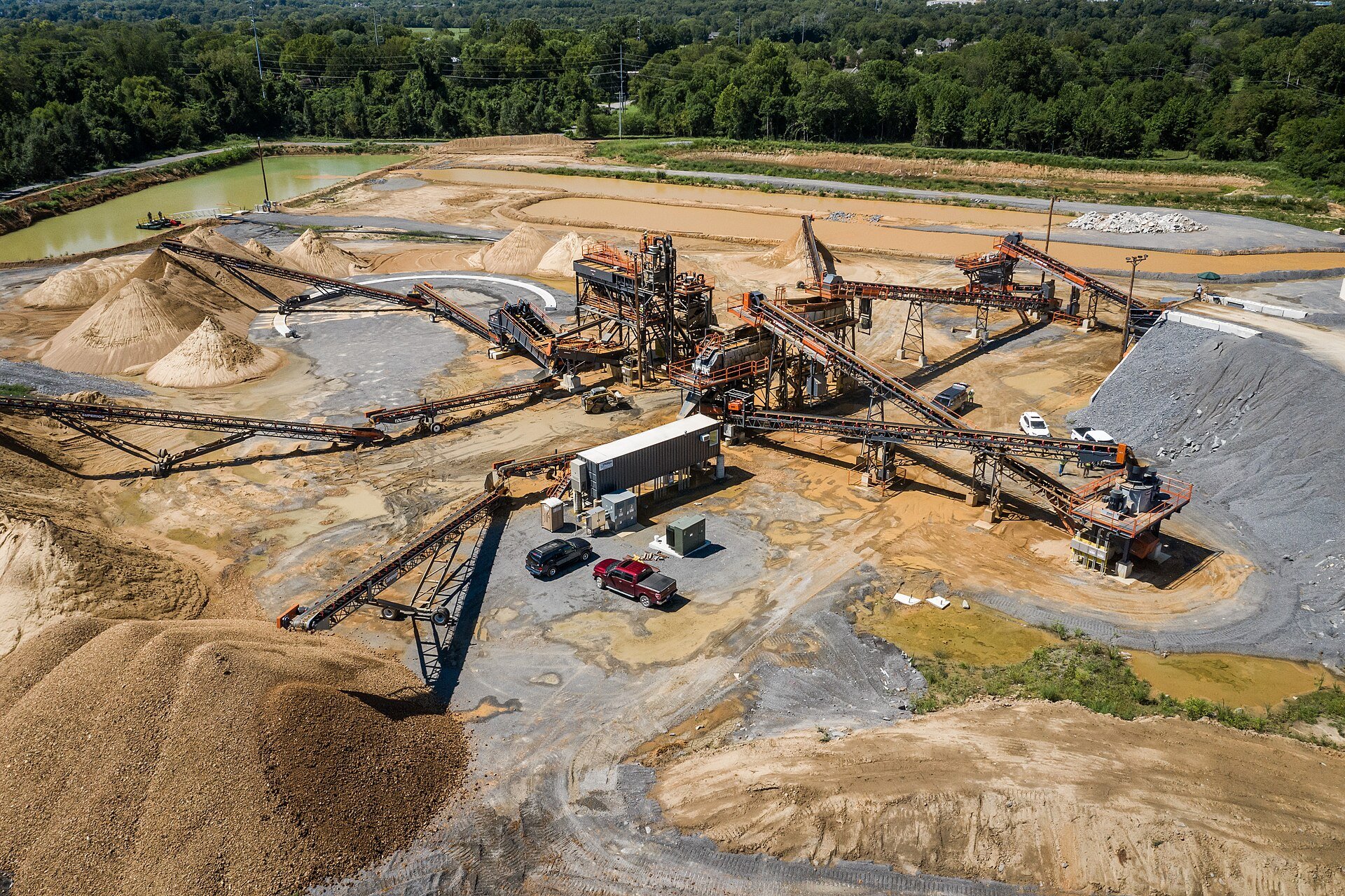
Ero Copper Corp. (ERO) released its third-quarter 2026 results, covering the three and nine months ended September 30, 2026, after market close on November 2, 2026. The company reported revenue of $348.0 million, a 22.4% increase quarter-over-quarter and a 96.5% increase compared to the $177.1 million reported in Q3 2025. Gross profit reached $169.6 million, reflecting a 48.7% gross margin, an improvement from 42.7% in the second quarter and 32.4% a year ago. Adjusted EBITDA rose 39% quarter-over-quarter to $200.6 million, while cash flow from operations increased by the same margin to $191.2 million. Net income attributable to owners was $116.2 million, or $1.10 on a diluted basis, and adjusted net income was $129.3 million, or $1.22 on a diluted basis, marking a 48% quarter-over-quarter increase.
The company’s balance sheet strengthened significantly during the period. Net debt decreased by approximately $100 million in the quarter to $353.5 million and is down $148.2 million since December 31, 2025. Leverage ratio improved to 0.5x from 1.2x at year-end. Available liquidity increased by $82.3 million to $264.1 million, which includes $150.0 million of undrawn revolver capacity, up from $80.0 million at June 30. Management stated that 97% of the $136.4 million of cash available for deleveraging year-to-date was applied to debt principal.
On the operational front, consolidated copper production totaled 18,345 tonnes, a 6% volume increase, but at C1 cash costs of $2.51 per pound. This cost figure was $0.16 per pound above the top end of the prior full-year cost guidance range of $2.15–$2.35 per pound. At the Caraíba mine, production was 9,387 tonnes at a cost of $2.89 per pound, while Tucumã produced 8,958 tonnes at $2.12 per pound. Xavantina produced 25,258 ounces of gold, of which only 7,844 ounces were mined. The remaining 17,414 ounces came from re-processing historic gold concentrate stockpiles at a C1 of $621 per ounce and an AISC of $710 per ounce. Mined gold at Xavantina carried a C1 of $1,892 per ounce and an AISC of $3,607 per ounce.
Guidance updates presented a mixed outlook. Consolidated copper production guidance remains unchanged at 67,500–77,500 tonnes, and capital expenditure guidance is unchanged at $285–$330 million. However, consolidated copper C1 guidance was raised to $2.25–$2.45 per pound, driven by an increase for Caraíba to $2.55–$2.75 per pound from $2.30–$2.50 per pound, while Tucumã guidance remained unchanged at $1.95–$2.15 per pound. Xavantina’s mined gold production guidance was cut to 30,000–35,000 ounces from 40,000–50,000 ounces, with mined C1 raised to $1,650–$1,800 per ounce and AISC raised to $3,300–$3,600 per ounce. The headline "total gold" guidance of 75,000–80,000 ounces, compared to the prior 40,000–50,000 ounces, is attributable to approximately 45,000 ounces of historic stockpile recovery, an item that appeared as a dash in the prior guidance column.
Regarding the Furnas project, the 45,000-meter Phase 3 program was completed in the third quarter, more than two years ahead of schedule. This completion satisfies the exploration component of the Vale Base Metals earn-in. The Preliminary Feasibility Study (PFS) remains targeted for 2027.
Ero Copper Corp. (ERO) released updated financial guidance that signals a shift in cost expectations and production volumes, particularly at its Xavantina and Caraíba operations. While the company reported record revenue and EBITDA backed by cash generation, the new guidance highlights rising costs and lower output at key assets.
At the Xavantina underground mine, Ero Copper has reduced its mined output guidance from 40,000–50,000 oz to 30,000–35,000 oz. The company also raised its all-in sustaining cost (AISC) for mined gold by 40.8% at the midpoint to $3,300–$3,600/oz. This cost structure includes $8.0 million of quarterly sustaining capital expenditure and $3.0 million in sustaining leases. At these levels, mined gold generates minimal margin unless the spot price of gold exceeds approximately $3,500/oz. The company noted that its 2026 "gold growth" narrative now relies on drawing down a finite stockpile.
Cost pressures are also evident at the Caraíba operation, where the cost structure is deteriorating more rapidly than the group average. Caraíba’s C1 cost guidance increased by 10.4% at the midpoint, with third-quarter actuals coming in at $2.89/lb, a 24.6% increase from the $2.32/lb recorded in the third quarter of 2025. This rise coincided with a decline in grade from 1.01% copper a year earlier to 0.90%, alongside a 100 basis point slip in recovery. To maintain flat tonnage, the company processed 16.5% more ore through the mill at an 11% lower grade.
On a consolidated basis, Ero Copper’s copper cost line has moved outside its original range. The guidance has shifted from $2.15–$2.35/lb to $2.25–$2.45/lb, with the third-quarter actual cost reported at $2.51/lb. The increase is approximately $0.10/lb, representing roughly $16 million in annualized costs at midpoint volumes. This change was partly pre-signaled during the August call, which flagged a $0.10/lb sensitivity if Brazilian real strength and inflation persisted.
Despite these cost increases, Ero Copper reported strong financial metrics. The company achieved $100 million in net debt reduction in a single quarter, bringing its leverage ratio to 0.5x. Liquidity increased by 45% quarter-over-quarter, and capital expenditure was held steady. The company’s stock has fallen 27% from its August high.
Ero Copper Corp. (TSX: ERO, NYSE: ERO), a Vancouver-headquartered copper-gold producer listed on the TSX and NYSE, operates three producing assets and is advancing a fourth project in Brazil.
The company’s cornerstone operation is Caraíba in the Bahia State, which includes the Pilar underground mine and the Surubim open pit. Caraíba’s 2026 production guidance is 35,000–40,000 tonnes at a C1 cost of $2.55–$2.75/lb, a range that has been raised. The asset is on a ramp-up path targeting 40,000–45,000 tonnes in 2027 and 45,000–50,000 tonnes in 2028. This expansion depends on the Pilar shaft, located over 1,100 meters below surface, which is currently passing through peak capital expenditure, with full production benefit expected in 2028.
In the Pará State, the Tucumã operation declared commercial production on July 1, 2025. The asset’s 2026 guidance is 32,500–37,500 tonnes at a C1 cost of $1.95–$2.15/lb, a range that remains unchanged and has been delivered. Tucumã is Ero Copper’s lowest-cost asset, recording a C1 cost of $2.07/lb year-to-date. A modular tailings filtration expansion is scheduled for completion in the fourth quarter of 2026.
The Xavantina operation in the Mato Grosso State is a narrow-vein underground gold mine that was mechanized in 2025. Ventilation and cooling upgrades were completed in the first half of 2026. The asset’s 2026 total gold production guidance is 75,000–80,000 ounces, of which only 30,000–35,000 ounces are mined directly; the balance is derived from re-processing historic concentrate stockpiles.
Ero Copper is also advancing the Furnas Copper-Gold Project in the Pará State’s Carajás region. The company holds an earn-in interest with Vale Base Metals for 60%, subject to up to an 11% free carry on construction capital expenditure. The project is at the preliminary economic assessment (PEA) level, with a projected 24-year life and a pre-feasibility study (PFS) targeted for 2027. Located roughly 50 kilometers from Vale’s Salobo operations, the site benefits from nearby paved roads, a power substation, and rail load-out facilities, which materially reduce the scope for greenfield infrastructure.
As of June 30, 2026, Ero Copper reported trailing twelve-month adjusted EBITDA of $656.6 million, net debt of $353.5 million, and equity of $1.22 billion. The company had 104.3 million shares outstanding, improving to roughly 106.0 million on a diluted basis.