Kingfisher Completes 2026 Drill Program at HWY 37 Project with 13,551 m Drilled, Golden Triangle
Kingfisher’s Hank porphyry project expanded with 13,551 metres of visual mineralisation, though assay results confirming grades remain pending.
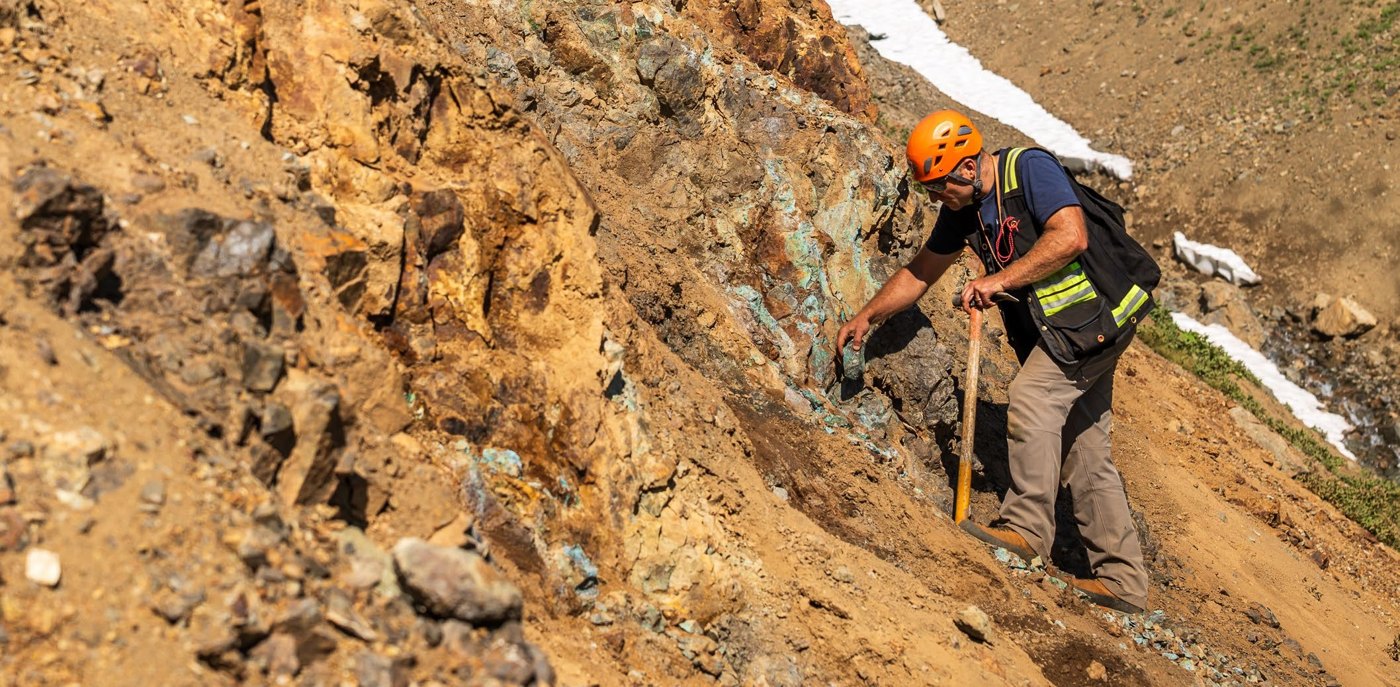
Kingfisher Metals Corp. (KFR) released an exploration update on October 21, 2026, detailing the completion of its 2026 drilling program. The release provides final depths and visual observations for holes completed after the September 21, 2026 announcement, alongside a seasonal summary, but contains no new assay results. The campaign, which ran from June to October 15, 2026, utilized up to four drills to advance 13,551 meters across 24 new holes (HW-26-012 to HW-26-035). The company also completed a 24.5-meter extension of hole HW-25-011, while one hole, HW-26-A, was lost at a depth of 26 meters.
At the Hank Porphyry, approximately 8,070 meters were drilled across nine holes. Kingfisher stated that every hole intersected the porphyry system or its alteration halo, indicating the system remains open at depth, along strike, and laterally. Notable intersections included:
- HW-26-028 (942 m): A stockwork body of quartz-chalcopyrite-pyrite veins from 634 m to 846 m (212 m downhole). Vein abundance rises from approximately 10% between 634-666 m to an estimated 30-85% by volume below 666 m. The company described this as the highest vein abundance and highest visual chalcopyrite estimates of the 2026 season or any historical drilling at HWY 37.
- HW-26-031 (1,106 m): Porphyry-style quartz-chalcopyrite-pyrite veins from approximately 778 m to the end of the hole (approximately 328 m downhole), with trace bornite in veins from 778-838 m. The system remains open along strike, laterally, and at depth.
- HW-26-023 (1,061 m): Potassic and chlorite-magnetite porphyry alteration from approximately 765 m to the end of the hole, with disseminated chalcopyrite and trace bornite.
- HW-25-011 (extension): Porphyry Cu-Au mineralization confirmed from 959 m to the end of the hole (983.4 m).
In the Upper Hank gold system, six holes at Flats, Felsite Hill, and Pits intersected QSP/argillic alteration with pyrite. HW-26-033 at Pits (239 m) hit epithermal colloform-banded veins at 68 m. Early-stage exploration included HW-26-026 at West Bald Bluff (157 m), which drill-tested altered Hazelton sediments and volcanics with approximately 8% pyrite. Holes HW-26-027 and HW-26-034, representing the first-ever tests at Rojo Grande, were terminated before reaching planned target depths due to drilling conditions and weather. The company conceded that favorable host levels were not reached in these instances.
Corporate developments include the purchase of the Willow Creek Camp property and the construction of a second permitted camp at Burrage Creek, which is scheduled for 2027 occupancy. Kingfisher is planning approximately 20,000 meters of drilling for the 2027 season. All 2026 core has been logged, sampled, and submitted, with results pending for every 2026 hole except the previously reported partial HW-26-015 interval.
Kingfisher Metals Corp. (KFR) is a pre-resource explorer with no NI 43-101 resource or reserve, no economic study, net present value, or mine plan. The company reported cash of approximately C$30.5 million at Q1-2026, following a C$30 million bought-deal in March 2026, and raised an additional ~C$20.9 million from Barrick in July 2026. Citing ~C$47 million in pro-forma cash, the company stated it is fully funded for the current program. This financial context is prior-period information and was not disclosed in today’s release.
The latest update provides visual evidence of the deposit’s scale and geometry, including a 212 m stockwork body, nine drill holes targeting the porphyry, and a thick vein system at depth. However, the release contains zero assayed tonnes, no change to grade, and no change to confidence. It is an interim program update rather than a final result.
The stock previously re-rated approximately 5.8x, rising from C$0.28 on 2025-10-21 to C$1.62 on 2026-08-07, driven by the Hank/Williams discovery, regional geophysics, and a strategic investment from Barrick. Since that high, the stock has round-tripped approximately 44% to C$0.91. The last real assay, HW-26-015 reported on 2026-09-21, produced only a one-day price pop from $1.10 to $1.21 before fading. The market is currently de-rating and is not embedding a large positive surprise, but is instead waiting for assayed grade.
There is no assay delta to measure in this release. All nine Hank holes hit the system, but no grades were proven. The porphyry system was hit in every Hank hole, and the stockwork body represents the best visual intensity to date. The company remains cashed up and Barrick remains engaged, with no key-hole misses against the anchor. This is solid, expected, incremental news flow that keeps the discovery thesis alive ahead of an assay wave.
Kingfisher Metals Corp. (TSXV: KFR, FSE: 9700, OTCQX: KGFMF) is a Canadian copper-gold explorer operating in British Columbia’s Golden Triangle. The company’s land package totals approximately 1,165 km², comprising the HWY 37 Project, which covers 933 km² and includes the Hank porphyry discovery, the Upper Hank epithermal system, the Williams satellite porphyry, and targets such as Turquoise, Rainbow, and Mess Creek. The portfolio also includes the 232 km² Forrest Kerr Project, held under a three-year option from Aben Gold, alongside two district-scale orogenic gold projects totaling 641 km².
The company is led by CEO and President Dustin Perry and Vice President of Exploration and Qualified Person Tyler Caswell. The technical team includes advisors with backgrounds from GT Gold, Seabridge, Newmont, Teck, and Glencore. Barrick Mining is a strategic shareholder, holding approximately 9.9% of basic shares and ~14.1% on a partially diluted basis post-warrants, having acquired its stake at C$1.35 per unit in July 2026.
Kingfisher Metals has 157,429,335 shares outstanding, an increase from approximately 140 million in mid-2026 following the Barrick placement. The company’s capital structure includes approximately 19.9 million warrants with an average exercise price of ~C$0.36 and ~11.5 million options with an average exercise price of ~C$0.48, resulting in a fully diluted share count of approximately 168 million prior to the Barrick transaction. The company claims approximately 60% institutional ownership and has disclosed no debt. As an early-stage discovery company, it currently holds no resources, reserves, or economic studies.
Infrastructure advantages for the projects include their location along Highway 37 and the Northwest Transmission Line. The company maintains an airstrip and staging area on-site and has referenced provincial and federal road-upgrade funding in its presentation materials.