Boron One Holdings Inc. Announces Positive Preliminary Economic Assessment (PEA) for Its Piskanja Boron Project
Boron One’s $639m PEA NPV contrasts with $80m unfunded capex as shares remain at a 52-week low.
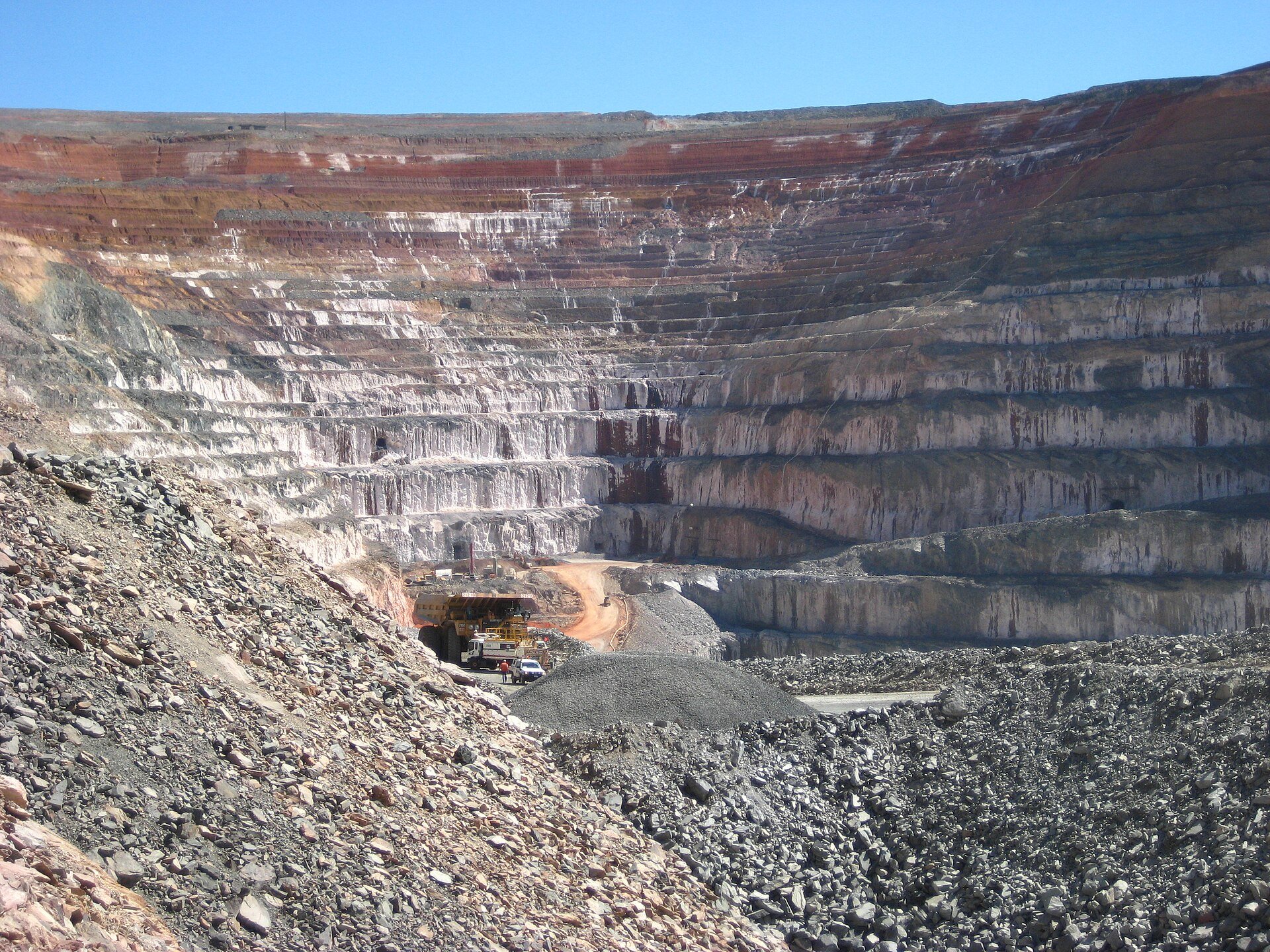
Boron One Holdings Inc. (BONE) released an updated independent Technical Report and Preliminary Economic Assessment (PEA) for its 100%-owned Piskanja boron project in southern Serbia. The exploration licence, held by wholly-owned Balkan Gold d.o.o., covers 306 hectares, with the PEA effective date set for October 12, 2026.
The project economics, presented post-tax in USD, project a net present value (NPV) of $638.8 million at an 8% discount rate and an internal rate of return (IRR) of 89.0%. Initial capital expenditure, including contingency, is estimated at $79.9 million, with a payback period of less than 12 months from commercial production. The mine is modeled for a 13-year life, generating gross project revenue of $1.97 billion and net project cash flow (post-tax) of $1.16 billion. Average annual gross revenue is projected at $140.4 million, with a life-of-mine (LOM) average annual EBITDA of $87.7 million and a net operating margin of 73.0%.
Cost and revenue metrics per tonne of product include an all-in sustaining cost (AISC) of $231.44/t and a weighted average revenue of $674.01/t. The LOM average C1 cost is $188/t for colemanite and ulexite, and $328/t for boric acid.
A new Mineral Resource Estimate defines 7,139,808 tonnes at 32.40% B2O3 in the Measured and Indicated categories, at a 12% B2O3 cutoff. This comprises: * Measured: 1,049,207 t at 34.78% B2O3 * Indicated: 6,090,601 t at 31.99% B2O3
The resource contains 2,313,569 tonnes of B2O3, split by dominant borate mineral as follows: * Colemanite: 3.83 Mt at 34.31% * Ulexite: 0.99 Mt at 40.62% * Polymineralic mix: 2.32 Mt at 25.72%
No Inferred resources are included in the economic model. The Mineral Resource Estimate (MRE) was prepared by independent Qualified Person Prof. Miodrag Banješević, updating his 2022 estimate and SRK Consulting’s 2016 estimate (amended 2019). The release does not provide prior tonnage, grade, or NPV figures, preventing a direct before-and-after comparison.
The production profile calls for an average annual saleable output of 157.6 kt of colemanite, 83.8 kt of ulexite, and 25 kt of boric acid. This will be derived from an average 432.7 ktpa run-of-mine feed using underground drift-and-fill mining with continuous miners. Twin declines of 1,315 m and 1,292 m are planned to limit ground vibration near the village, with a planned mining recovery of 75% supported by cemented backfill.
Processing involves chemical-free beneficiation for colemanite, rotary-kiln calcination for ulexite, and a sulfuric-acid hydrometallurgical leach, crystallisation, and drying process for boric acid, targeting 56.3% B2O3. All flowsheets rely on "off-the-shelf," industry-standard technology based on ALS 2023 bulk testwork.
Pricing assumptions hold flat at US$650/t for sales-grade colemanite and ulexite (40% B2O3) and US$1,000/t for technical-grade (99.9%) boric acid across the 13-year LOM. The accuracy of these assumptions is stated at the PEA level, with a variance of ±35%.
An environmental impact assessment (EIA) by the Mining Institute Belgrade was completed in November 2025, concluding a low-to-moderate accident risk profile with no high-risk categories. The study notes that no explosives or toxic or oxidizing chemicals are used in the proposed operations.
The release reiterates that the Company "has secured a binding offtake contract with a buyer." Future work, including further drilling, metallurgical optimisation, geotechnical testing, and mine-plan refinement, is required to advance to a Pre-Feasibility or Feasibility Study. The full NI 43-101 technical report will be filed on SEDAR within 45 days.
Key cautionary language in the release notes that the PEA is preliminary and contains numerous assumptions, with no certainty that results will be realized. No Mineral Reserves have been estimated, and Mineral Resources are not Mineral Reserves and do not have demonstrated economic viability.
Boron One Holdings Inc. (BONE) has released a preliminary economic assessment (PEA) for its Piskanja project, featuring a new by-borate-type resource model, mine design, geotechnical work, metallurgical flowsheet definition, environmental study, and market pricing analysis. The study consolidates technical work the company had previously signaled would be completed by 2026. Key structural elements of the assessment include a capital expenditure (capex) of $79.9 million and the exclusion of Inferred material from the resource model.
The PEA reports a post-tax net present value (NPV) of $638.8 million against a market capitalization of approximately $7.5–8.0 million. This valuation is based on a PEA-level study, which typically carries an accuracy range of ±35%. The company has not yet secured an exploitation license, and the project faces years of potential dilution.
The financial requirements for the project include $79.9 million in initial capex, $38.1 million in life-of-mine (LOM) sustaining capital, and $15.0 million in closure costs. In 2026, the company raised approximately $2.6 million in gross equity through three placements: $0.8 million in April, $0.75 million in June, and $1.0 million in August. These units were priced between $0.04 and $0.05, while the shares currently trade at $0.03. Funding the $79.9 million capex entirely through equity at the current price would require issuing between 1.6 and 2.7 billion shares, significantly exceeding the current share count. The company has not identified any project-level partners, joint venture arrangements, debt or streaming agreements, or sale of interest commitments to bridge this funding gap.
The LOM mining plan targets gross production of 5.62 million tonnes (Mt) against a Measured and Indicated resource of 7.14 Mt, representing approximately 79% of the resource. With a stated mining recovery of 75%, the plan consumes nearly the entire current resource base, leaving no Inferred tonnage to buffer against potential conversion failures during feasibility-level design.
An offtake agreement signed on May 27, 2026, commits to a minimum of 25,000 tonnes per annum (tpa) with an option to increase to 50,000 tpa over a three-year term. The agreement includes take-or-pay terms and a price floor, though the buyer, floor price, and pricing formula remain undisclosed. The agreement is conditional upon obtaining permits and passing a full-scale plant qualification trial. Against planned saleable output of roughly 266,000 tpa, the minimum commitment covers approximately 9–10% of tonnage. At a modeled price of $650/t, this represents roughly $16.3 million in annual revenue, compared to the PEA’s average annual gross revenue of $140.4 million.
The PEA models boron products at $650/t for bulk colemanite and ulexite streams. This is lower than the "well in excess of US$1,000 per tonne" pricing referenced by management in a May 27, 2026, release. The study uses a flat, unescalated price for 13 years.
The disclosure contains several unexplained financial items. The cash flow statement lists "Deductions" of $101.5 million without definition. The unit operating cost table includes a "Tax" line of $21.5/t for colemanite/ulexite and $58.4/t for boric acid, alongside a separate Corporation Tax line of $70.0 million in the cash flow, which are not reconciled. The implied effective tax rate on pre-tax project cash flow is approximately 5.7% ($70.0 million on $1,227.4 million), which is below Serbia’s headline corporate rate, with no explanation provided for allowances or incentives. Additionally, the unit cost table lists a "Royalty" line of $32.5/t and $50.0/t, implying a rate of roughly 5% of modelled revenue, but the release does not specify the royalty rate, structure, or holder.
Prior-period financial data for the year ended June 30, 2024, showed nil revenue, a net loss of $970,624, and negative operating cash flow of $915,722. The company held cash of $171,841 and total current assets of $228,722 against total current liabilities of $649,376, resulting in a working capital deficit. Total debt was $140,202, and equity was $10,373,469, of which $10,842,832 was reported as net fixed assets. The financial data also included a "Buybacks" line of $710,800 in FY2024, which appears to be a data classification anomaly given the company was issuing equity at the time.
Market context for the equity remains unfavorable. Shares have traded at $0.03, below the $0.04–$0.05 range of three 2026 placements. Investors who purchased at $0.05 in August 2026 are down approximately 40% over two months.
Boron One Holdings Inc., formerly Erin Ventures, is headquartered in Victoria, British Columbia. The company is listed on the TSX Venture Exchange under the symbol BONE, with additional quotation lines in Berlin (EKV), the US OTC market (ERVFF), and a US SEC 12G3-2(B) exemption (#82-4432). Officers named in the materials include Tim Daniels, President; Blake Fallis, General Manager; and Nenad Rakic, EurGeol, who serves as the Piskanja Project Field Manager and is a qualified person and employee of the company.
The company’s flagship asset is the Piskanja boron project in southern Serbia, located approximately 160 km south of Belgrade by paved road. The deposit is held within a 306-hectare exploration licence by wholly-owned subsidiary Balkan Gold d.o.o. It lies in the Jarandol basin, a Neogene continental sedimentary basin in the Vardar Zone tectonic belt, hosted in mudstones, sandstones, carbonates, tuffaceous sediments and conglomerates, with stratiform borate lenses of colemanite, ulexite and howlite.
The project is in the advanced exploration and pre-feasibility stage. An updated Preliminary Economic Assessment (PEA) was released on 2026-10-14. There are no Mineral Reserves, and the project sits on an exploration licence with an exploitation (Exploitation Field) approval still to be granted.
Boron One also holds the Jarandol Basin exploration licence, covering 21.03 km² (or 21 km² in the 2026-09-08 release — the two figures are not reconciled and should be treated as approximate). Held by Balkan Gold, the licence is valid for three years from April 2024 and is extendable to eight. It sits between Piskanja and the government-owned Pobrdje boron mine. Historical drilling referenced in the releases returned the following intercepts:
- 1.88 m at 41.33% B2O3
- 1.3 m at 41.88% B2O3
- 1.75 m at 39.71% B2O3
These narrow intersections are from a 2015 program that has not yet been replicated by the current four-hole, ~1,400 m program, whose results are not in the materials provided.
The company states it is advancing global decarbonisation through the responsible utilisation of boron assets, with management framing boron as a critical, strategically important mineral facing supply constraints. This is management framing, not an independently verified market view; no supply/demand study, competitor analysis or third-party market report is provided in the materials.