Paladin Energy Ltd: Quarterly Report for the period ending 30 September 2026
Paladin reported Q1 output down 19% and costs of $61.6/lb, shifting its FY27 guidance to a second-half production hockey stick.
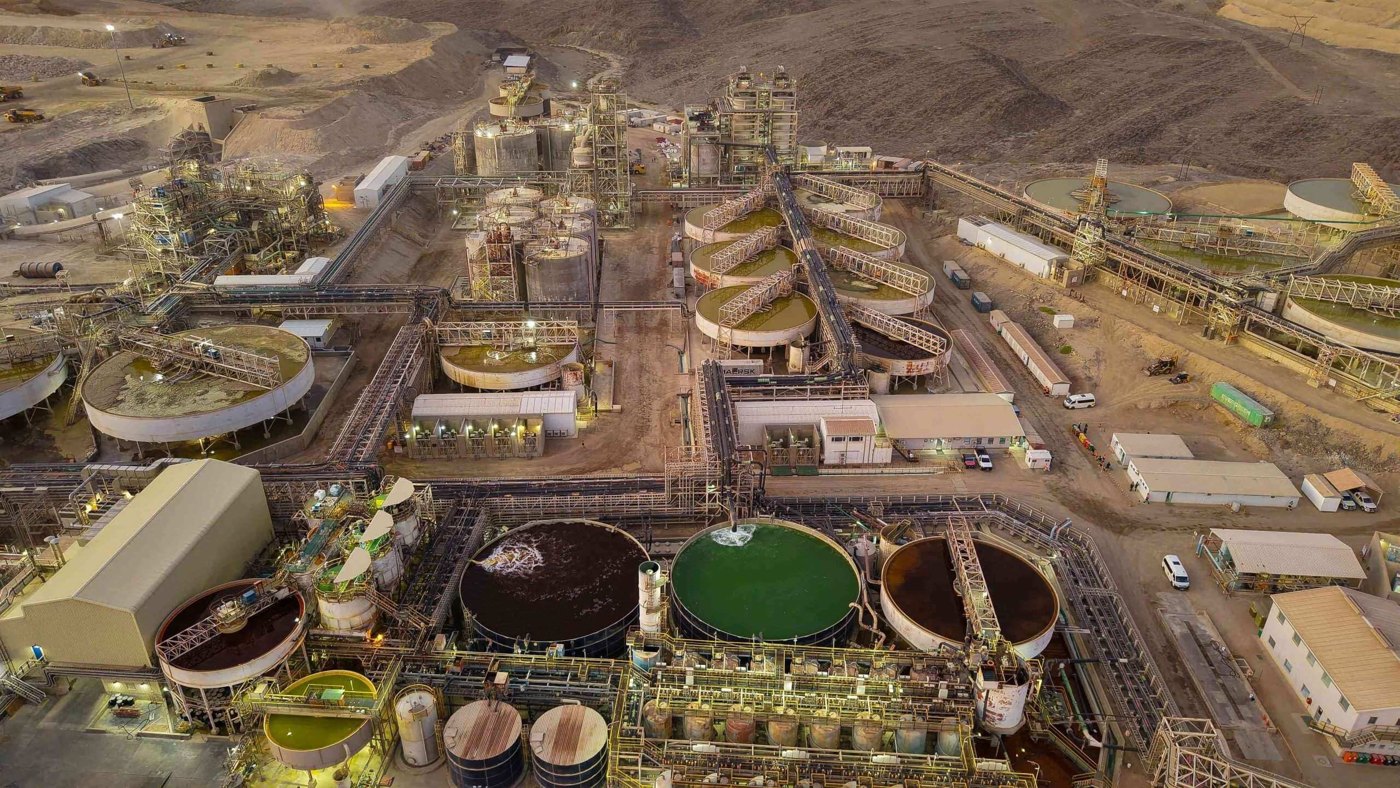
Paladin Energy Ltd. (PDN) released its Q1 FY2027 quarterly report for the quarter ended 30 September 2026, marking the first production quarter of the new fiscal year. At the Langer Heinrich Mine (LHM), which operates on a 100% basis with Paladin as the 75% owner, production reached 1.00Mlb U₃O₈. This represents a 19% decline from the 1.23Mlb produced in Q4 FY2026.
The company sold 1.16Mlb U₃O₈ at an average realised price of US$79.4/lb, an increase from US$70.6/lb in Q4, driven by higher uranium prices and a greater proportion of market-related sales. Cost of Production rose to US$61.6/lb from US$51.6/lb in Q4, a 19% increase that sits well above the FY2027 guidance band of US$44–48/lb.
Processing operations involved milling 1.17Mt at a feed grade of 486ppm, compared to 488ppm in Q4, with plant recovery at 85% versus 90% previously. Mining activity extracted 7.73Mt of total material, up from 7.45Mt in Q4, all sourced from the J pit. Capital expenditures totaled US$6.9M, with US$6.2M allocated to low-grade ore stockpiling and US$6.3M to capitalised stripping.
Closing finished product inventory stood at 1.98Mlb, which includes 450,000lb in product location swaps. The uranium product loan balance was 400,000lb, with 200,000lb replaced during the quarter. The balance sheet shows unrestricted cash and investments of US$209M, an undrawn Revolving Credit Facility (RCF) of US$70M, and a term loan of US$28M.
Management reaffirmed FY2027 LHM guidance for production of 5.1–5.6Mlb U₃O₈ at a Cost of Production of US$44–48/lb. Higher production is expected in the second half of FY2027 as higher-grade ore feed increases.
At the PLS project, Paladin signed a Mutual Benefits Agreement with the Birch Narrows Dene Nation, marking the third such agreement. An Administrative Protocol was also signed with the CNSC, targeting the completion of Construction Licence hearings by the end of calendar 2027.
Exploration at PLS included 8,465m drilled. The Atlas standout PLS26-782 intersected 42.1m composite, including 26.4m @ 0.7% eU₃O₈ and 12.5m @ 1.8% eU₃O₈ (GT 43.0%-m). Saloon East returned 19.7m @ 0.1%, and the Triple R new zone, located 100m east of the resource, intersected 12.7m including 3.4m @ 0.7%. At Michelin, 4,324m was drilled across 13 targets, alongside 1,882 line-km of drone radiometric surveys.
In corporate news, Soolim Carney was appointed Chief Corporate Services and Sustainability Officer. The Total Recordable Injury Frequency (TRIF) was 4.7 per million hours on a 12-month basis.
Paladin Energy Ltd. (PDN) reported first-quarter production of 1.00 million pounds, a figure that presents a challenge to its FY2027 guidance of 5.1–5.6 million pounds. To meet the upper end of that target, the company would need to produce approximately 4.1–4.6 million pounds across the remaining three quarters, averaging roughly 1.37–1.53 million pounds per quarter. This represents a production step-up of 37–53% compared to the quarter just reported.
The primary concern lies in the cost outcome, with unit costs reaching US$61.6 per pound, approximately 28% above the top of the reaffirmed US$44–48 per pound band. For the full-year average to land at approximately US$46 per pound on an estimated 5.35 million pounds, the remaining quarters must average roughly US$42 per pound. Achieving this steep improvement would depend on higher grades and recoveries in the southern benches of the J pit, a performance not yet demonstrated.
Unit costs have drifted upward for three consecutive quarters, rising from US$40.5 in Q2 FY2026 to US$51.6 in Q4, and finally to US$61.6 in Q1. Management attributed the recent increase to a planned maintenance shutdown, a pit transition, and improving conditions in September, explanations that mirror those provided during Q4 FY2026 when costs were already elevated.
Despite the cost pressures, realized prices jumped to US$79.4 per pound, creating a price-to-cost spread of approximately US$18 per pound. Additionally, permitting and community milestones, including the Mining Business Authorization (MBA) and the CNSC protocol, serve as de-risking events for the development pipeline.
The company’s cash position has also tightened, with cash and investments falling from US$265 million on 30 June 2026 to US$209 million, a reduction of US$56 million in a single quarter. This decline occurred before the PLS construction bill arrives. The stock has already declined significantly ahead of this report, suggesting that much of the operational disappointment appears to be discounted by the market.
Paladin Energy Ltd. (PDN) is an independent uranium producer dual-listed on the ASX and TSX. The company operates a producing mine in Namibia and holds a significant development and exploration portfolio in Canada and Australia. Its assets were acquired via Fission Uranium Corp in December 2024, a transaction that brought the Patterson Lake South (PLS) and Michelin projects, as well as the dual-listing structure, into the company’s fold.
The Langer Heinrich Mine in Namibia is an open-pit facility using conventional acid-leach processing. Paladin owns 75% of the mine, which employs a 99% Namibian-national workforce of approximately 420 employees. The site is located near the Walvis Bay port and is guided to produce approximately 5.35 million pounds of uranium per year for fiscal year 2027.
In Canada, Paladin holds 100% ownership of the Patterson Lake South project, an advanced, high-grade Athabasca Basin development centered on the Triple R deposit. The feasibility study is complete, outlining an initial 10-year mine life with production of approximately 9 million pounds per year. The project reports a C1 cost of US$11.7 per pound and an all-in sustaining cost (AISC) of US$15.2 per pound. The company is targeting a final investment decision (FID) and first production in 2031.
The Michelin project in Canada holds defined resources, including 37.6 million pounds in Measured, 44.6 million pounds in Indicated, and 9.9 million pounds in Inferred categories. These resources are currently under assessment, with exploration activities planned for this quarter.
The company’s Australian exploration portfolio, which includes tenements at Mt Isa, Manyingee, Carley Bore, and others, as well as the Saloon and Atlas tenements, remains in the early stages. Queensland has banned uranium mining, and Western Australia maintains a no-development policy, limiting these assets to option value at best.