Skeleton Coast Uranium Identifies 42 Ranked Uranium Targets Across its Five Namibian Prospecting Licenses from Reinterpretation of Regional Airborne Geophysical Data
Skeleton Coast reprocessed airborne data to identify 42 ranked targets ahead of planned field validation in the fourth quarter.
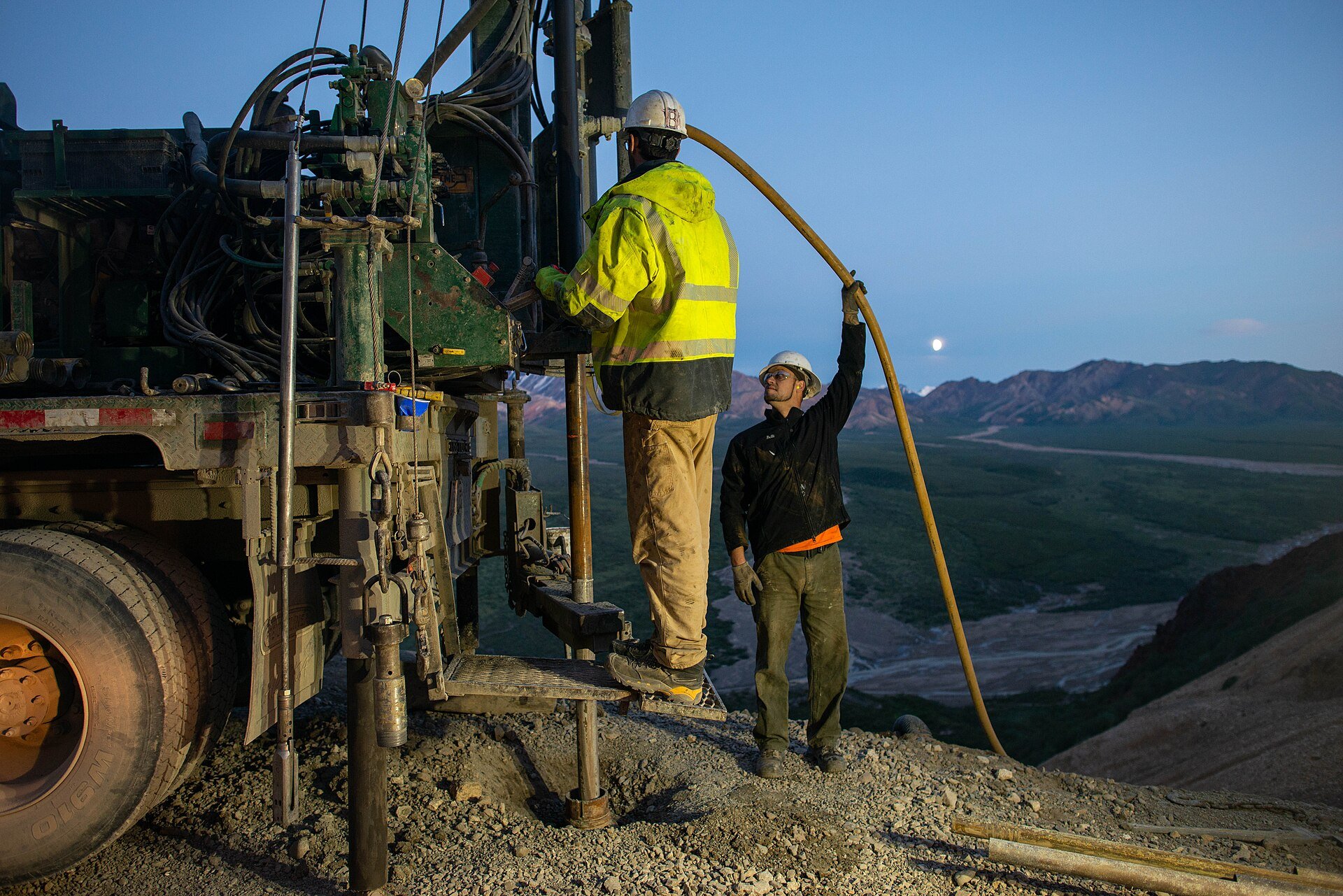
Skeleton Coast Uranium Corp. released an exploration update on October 8, 2026, detailing the identification of 42 ranked uranium targets across its five Exclusive Prospecting Licences (EPLs) in Namibia. The targets were derived from the reinterpretation of historical regional airborne geophysical data, including magnetic and radiometric surveys originally flown by the Government of Namibia in 1994/1995.
Thirteen of the targets are classified as high priority, covering approximately 8,700 hectares. EPL 8617 hosts the majority of the targets, with 30 total identified, including 10 high-priority sites. These are clustered along a palaeovalley consistent with secondary calcrete-hosted uranium mineralization. EPLs 9872 and 9873 host three high-priority targets on their common boundary. EPL 8208 hosts four targets, including a primary style target at the Etusis dome/Salem granite. EPL 9727 hosts five second-priority targets.
The company confirms its dual prospectivity model, focusing on primary leucogranite-associated and secondary calcrete-hosted styles. No ground verification, sampling, or drilling has occurred. Ground exploration is scheduled for Q4 2026, pending land access agreements and park entry permits. The company remains committed to incurring CAD$5 million in exploration expenditures by June 2028.
Skeleton Coast Uranium Corp. (SKEL) released this update as a direct follow-up to its October 1, 2026 announcement regarding the completion of historical data digitization. The move represents the expected next step in the exploration workflow, transitioning from data consolidation to target prioritization.
The identification of 42 targets is considered incremental and routine for a pre-revenue explorer in the target definition phase. It does not constitute a discovery, nor does it change the fundamental risk profile of the assets. The market likely anticipated this step following the completion of the digitization and NI 43-101 technical reports filed in August 2026.
There is no new financial information, no change in capital structure, and no material shift in the company's going concern status. The impact on the stock price is expected to be minimal, serving as a routine positive update rather than a catalyst for revaluation.
Skeleton Coast Uranium Corp. (SKEL) is a pre-revenue mineral exploration company focused on uranium and base metal properties in Namibia and British Columbia. Its flagship project consists of a portfolio of five Exclusive Prospecting Licences (EPLs) in the Erongo Region of Namibia, covering approximately 610 km². These EPLs are strategically located 10-25 km from major operating uranium mines, including Rossing, Husab, and Langer Heinrich, which account for approximately 10% of global uranium output. The exploration strategy focuses on a dual prospectivity model: primary leucogranite-associated uranium, analogous to Rossing and Husab, and secondary calcrete-hosted palaeochannel uranium, analogous to Langer Heinrich. Dr. Nathan Chutas serves as the company’s CEO and Qualified Person.