Sierra Madre Announces Guitarra Processing Plant Achieves Throughputs of up to 720 Tonnes per Day as Development at Nazareno and Guitarra Mines Accelerates
Sierra Madre delivered 720 tpd in Phase 2, exceeding disclosed mill capacity eight months ahead of schedule.
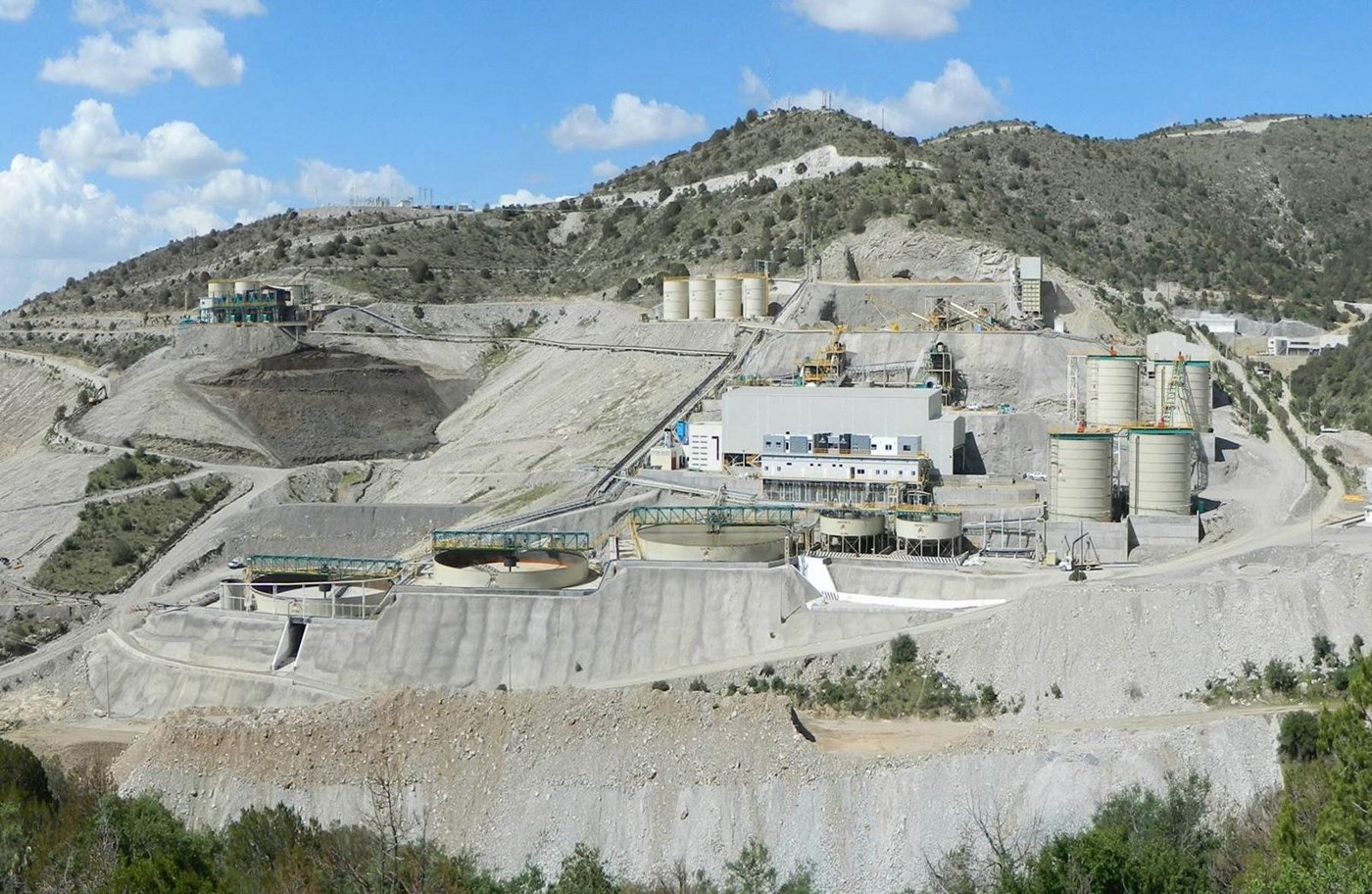
Sierra Madre Gold and Silver Ltd. (SM) released an operational update on its La Guitarra silver-gold complex on September 28, 2026, at 17:01, following the close of trading on the TSX-V. The company did not disclose revenue, cost, AISC, or cash figures in the announcement.
Throughput at the Guitarra plant has reached up to a steady 720 tonnes per day, representing an increase of more than 40% over the previous 500 tpd nameplate capacity. This marks a measurable gain compared to the up to 672 tpd reported on August 27, 2026, which was a 7.1% increase in roughly one month. The company attributes this gain to Phase 1 process work, specifically modifications to the crushing and milling circuits. Further capacity work is deferred until after the new 11x12 ball mill is commissioned.
The foundation and installation for the 11x12 ball mill are complete, involving 400 m3 of cement and 16 t of rebar. The drive motor, cyclones, and instrumentation are currently being installed, with commissioning expected in November 2026. Sierra Madre now states that this ball mill, combined with the existing ones, is expected to achieve the Phase 2 goal of 1,200-1,500 tpd, more than eight months ahead of schedule. This timeline is more than eight months ahead of the prior guidance of Q3 2027. This represents a shift from previous disclosures where the same mill was identified as the Phase 1 solution for 750-800 tpd.
Underground development has accelerated, with approximately 2.6 km of development drives completed since June 2026 across Guitarra, Nazareno, and Coloso. Since July 2026, over 800 m of access and production drives have been advanced. At Guitarra, over 1.5 km of development has occurred since June 2026. The lower Central mine now contributes an important portion of mill feed, and development has started on the Los Angeles bulk-tonnage deposit. At San Raphael I & II, dewatering has been completed with extra pumps installed, and first higher-grade block production is targeted by the end of October 2026.
In the East District, the initial mine design at Santa Ana is complete, while a portal is only being contemplated for 2027. The release does not address the 30,000 m East District drill program permitted on July 14, 2026, which was due to start within 60 days of contractor selection.
Work on Dry stack tailings Phase 4 has begun, with groundwork initiated, trees measured and marked, and bids issued. Contractor mobilization is scheduled for November 2026. The first phase capacity is 877,000 t, with a permitted total capacity of more than 5,000,000 t.
Regarding grade reconciliation, the company now states only that reconciliation from actual stope mining to date has shown higher gold grades. The September 2025 claim of approximately 40% higher silver grades and approximately 30% higher gold grades at Nazareno is not repeated. Technical data in the update is credited to the 2023 NI 43-101 estimate effective October 24, 2023, which used silver at US$22/oz, gold at US$1,700/oz, and a 77.27:1 Ag:Au ratio. No updated resource estimate was published.
Sierra Madre Gold and Silver Ltd. (SM) released an incremental operational update containing a new hard datapoint of 720 tonnes per day (tpd) and a forward-looking claim that Phase 2 has been pulled forward by eight months. The stock closed at C$1.73 on 2026-08-27, following the last earnings release, and has since fallen 19.7% to C$1.39. This price action suggests the market has been de-rating the story rather than pricing in an acceleration.
The reported throughput of 720 tpd is roughly in line with the ramp trajectory, which included 672 tpd in August, but sits below the 750-800 tpd Phase 1 target that was scheduled to be complete by 2026-09-30. The claim regarding Phase 2 acceleration cannot be reconciled with the company’s disclosed mill nameplate capacities. Achieving 1,200-1,500 tpd would require a tailings expansion, with construction starting in November 2026, as well as additional crushing throughput, neither of which was quantified in the release.
The update provided no financial, cost, AISC, grade, or recovery data, leaving no basis for revising cash-flow estimates. On a market capitalization of approximately C$363M, a 40% throughput gain is directionally helpful for a mine that generated US$8.23M of quarterly revenue and US$1.58M of gross profit, representing a 19% gross margin, in Q2 2026. However, this does not change the earnings picture on its own.
Sierra Madre Gold and Silver Ltd. (TSXV: SM, OTCQX: SMDRF) is a Mexico-focused precious metals producer and explorer led by President & CEO Alexander Langer, Executive Chairman & COO Gregory L. Liller, CFO Ken Scott, and Director/QP Gregory Smith. The board includes Luis Saenz, who specializes in geology and mining, alongside Jorge Ramiro Monroy, Alejandro Caraveo-Vallina, and Sean McGrath.
The company’s La Guitarra mine complex is located in the Temascaltepec district of Estado de Mexico, approximately 130 km southwest of Mexico City. This permitted underground mine features a flotation plant that operated until mid-2018 before restarting commercial production in January 2025. The facility currently has a nameplate capacity of approximately 500 tonnes per day (tpd), with operations running at up to 720 tpd. The complex includes three underground centres—Guitarra, Coloso, and Nazareno—along with the Los Angeles bulk-tonnage deposit, San Raphael I & II, and the East District, which comprises the Santa Ana, Magdalena, Los Locos, Rincon, Inca, and La Palma vein systems.
In the Chalchihuites district of Zacatecas, Sierra Madre owns the Del Toro silver-gold-lead mine, which was acquired from First Majestic. The mine was closed in June 2026 and is currently on care and maintenance. The fully permitted site features three underground mines—Perseverancia, San Juan, and Dolores—along with more than 62.5 km of development. Infrastructure includes a 3,000 tpd flotation circuit with three mills, sulphide and oxide circuits, and a dry stack tailings facility with a capacity of 2,000 tpd for approximately 12 years. Historical production from 2015 to 2018 averaged 2.54 moz AgEq per year. The company plans to restart operations in mid-2027, targeting first production in mid-2028. This timeline includes a 30,000-50,000 m drill program starting in mid-2027 and an updated resource targeted for early 2028.
The Tepic project in Nayarit covers approximately 2,600 hectares and is in the exploration stage. Located 22 km from Tepic City on a paved highway, the site hosts a low-sulphidation epithermal gold-silver deposit with only a historic resource. Recent drilling returned intercepts including 2.55 m @ 878.4 g/t Ag and 3.041 g/t Au (TDH007), as well as two zones in TDH014 (6.35 m @ 424 g/t AgEq; 6.05 m @ 470 g/t AgEq). No economic study has been completed for the project.