Independent Testing Confirms Elevated Magnet and Heavy Rare Earth Presence at Graphite One's Alaska Graphite Deposit
Graphite One Touts Rare Earths Bonus as Billion-Dollar Funding Quest Looms
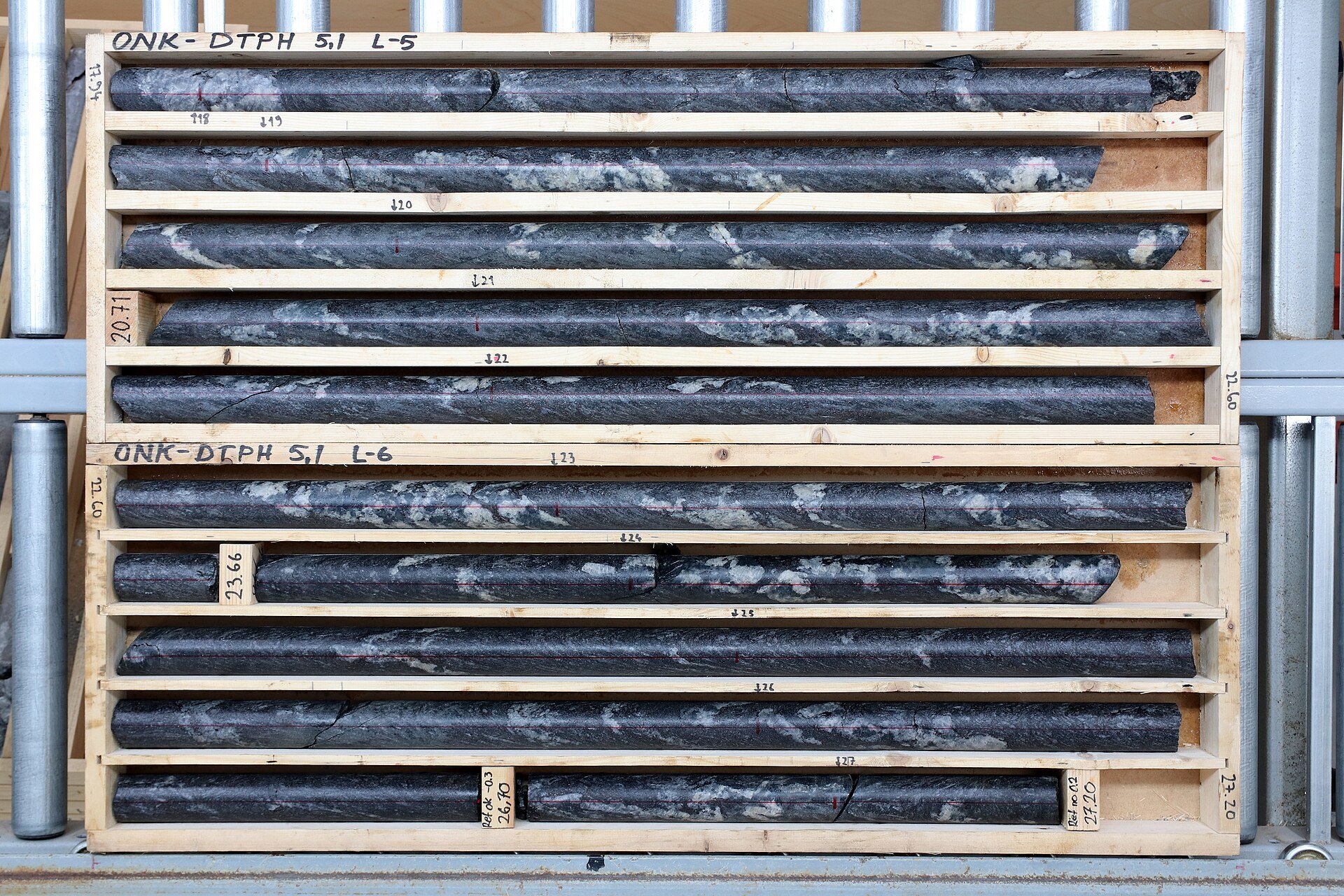
On December 16, 2025, Graphite One announced that independent testing on garnet material from its Graphite Creek deposit in Alaska confirmed elevated levels of magnet and Heavy Rare Earth Elements (HREEs). The key findings indicate that 85% of the Rare Earth Elements (REEs) in the garnet material are either magnet or HREEs. Specific concentrations include Dysprosium (32-63 ppm), Yttrium (198-427 ppm), and Scandium (84-141 ppm). The company identified garnets as the dominant host for these valuable elements and plans a 2026 testing program with a U.S. National Lab to determine the best extraction methods. The REEs are positioned as a potential by-product to the primary graphite production.
This news is a Material - Positive development. It builds directly upon the November 13, 2025 announcement which first confirmed the presence of REEs. While the initial discovery was significant, this follow-up provides crucial quantification and specifies the high-value nature of the REEs (magnet and heavy), which are critical for defense and high-tech applications and command premium prices.
The confirmation of an 85% concentration of magnet/HREEs is a significant enhancement to the project's potential economics. This isn't a new discovery that changes the company's core focus, but it adds a potentially lucrative by-product credit to an already massive graphite project. In the context of the project's daunting US$5 billion+ CAPEX revealed in the April 2025 Feasibility Study (FS), any ancillary revenue stream that could improve the NPV and IRR is highly material.
This development strengthens the project's strategic importance to the U.S. government. The Graphite Creek deposit now contains two distinct sets of materials on the critical minerals list (graphite and REEs), both of which are under the Defense Production Act Title III. This dual-criticality could improve the company's chances of securing the necessary government-backed funding, such as converting the US$895 million non-binding LOI from the EXIM Bank into a formal commitment.
However, the results are preliminary. The economic viability and metallurgical process for REE extraction are yet to be determined. The market should not yet assign a firm value to this by-product, but it undeniably adds a significant layer of optionality and strategic appeal.
Graphite One Inc. is a development-stage company aiming to build a complete, 100% U.S.-based supply chain for advanced graphite materials. Its strategy is vertically integrated, anchored by its flagship Graphite Creek Project. The project consists of two main components: 1. The Graphite Creek Mine: Located north of Nome, Alaska, it is recognized by the U.S. Geological Survey (USGS) as the largest known graphite deposit in the U.S. and one of the largest in the world. 2. Advanced Manufacturing Plant: A planned secondary treatment plant (STP) to be built in Warren, Ohio, which will process graphite concentrate from Alaska into coated spherical graphite (anode active material) for lithium-ion batteries and other value-added graphite products. The project has strong U.S. government and political support, highlighted by its FAST-41 permitting status and grants from the Department of Defense.