New LiDAR Survey Validates & Supports Grande Portage Resources' Development Plans at the New Amalga Gold Project - Updated Project Summary
None
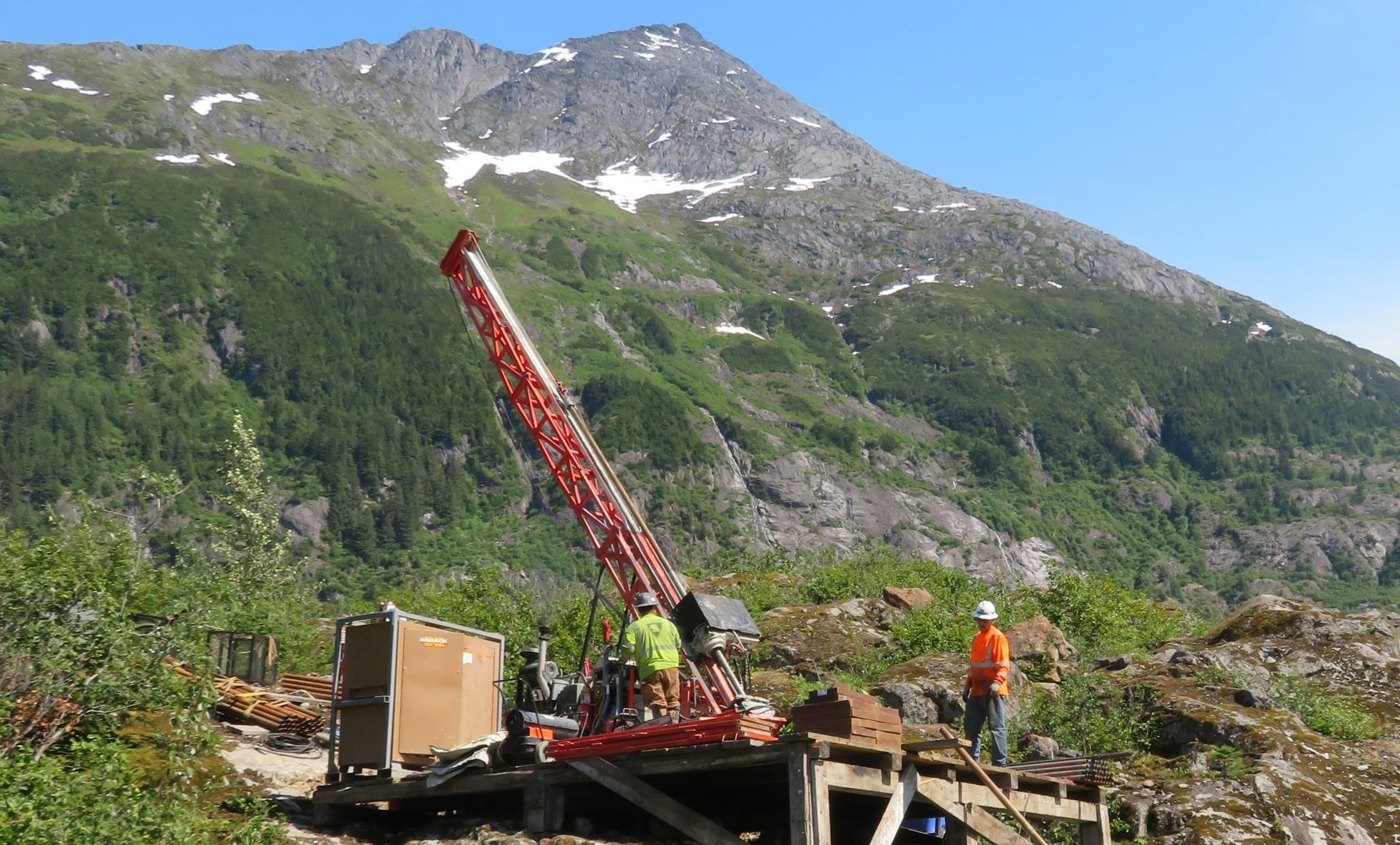
The most recent news release, dated November 24, 2025, announces that Grande Portage Resources Ltd. has received aerial LiDAR (Light Detection and Ranging) survey data for its New Amalga Gold property. This data, acquired from NV5 Geospatial, is intended to advance engineering and environmental work for the project.
According to the company, the LiDAR data validates planned infrastructure locations and provides detailed 3D mapping crucial for engineering, environmental studies, and future exploration efforts. Ian Klassen, President & CEO, highlighted the technology's value in enabling precise early engineering work, expediting fieldwork, and environmental data collection, which are key factors for advancing the project through the regulatory process towards mine development.
The release also reiterates the project's current mineral resource estimate: 1,438,500 indicated ounces of gold at a grade of 9.47 g/t Au, and 515,700 inferred ounces of gold at 8.85 g/t Au, based on 240 drill holes totaling 65,000 meters. Additionally, it mentions a Letter of Intent (LOI) with Goldbelt Inc. for the development of an ore export terminal at Cascade Point, approximately 22km from the project site.
This news is a logical progression in the New Amalga Gold Project's development lifecycle. The receipt and application of LiDAR data are standard and necessary steps for a project transitioning from advanced exploration to development, particularly in informing a Preliminary Economic Assessment (PEA) and subsequent permitting. It confirms that the company is diligently moving forward with its plans for infrastructure and environmental studies, which aligns with previous announcements regarding the initiation of the PEA (October 20, 2025) and various baseline environmental studies (March 18, 2025; September 3, 2025).
While positive, this news does not represent a "game-changer" as it does not fundamentally alter the project's resource, economics (beyond efficiency gains), or introduce unforeseen strategic advantages. It is an expected technical milestone that validates and supports existing development plans. The CEO's comments reinforce this, focusing on the utility of the data for precision and expediting processes rather than a new discovery or a significant de-risking event. Therefore, its impact is Routine - Positive, as it shows steady operational progress and adherence to the development timeline.
Grande Portage Resources Ltd. (GPG) is a Canadian exploration and development company focused on its 100%-owned New Amalga Gold Project in Southeast Alaska, approximately 25 km north of Juneau. The project was formerly known as the Herbert Gold Project and lies within the prospective 160-kilometer-long Juneau gold belt, which has historically produced over eight million ounces of gold.
The New Amalga project hosts at least six main composite vein-fault structures with high-grade, ribbon-structure quartz-sulphide veins. The gold system remains open to expansion both along strike and at depth.
Mineral Resource Estimate (Effective July 2024, 2.5 g/t Au cut-off): * Indicated Resource: 4,726,000 tonnes at 9.47 g/t Au for 1,438,500 ounces of gold, and 5.86 g/t Ag for 891,600 ounces of silver. * Inferred Resource: 1,813,000 tonnes at 8.85 g/t Au for 515,700 ounces of gold, and 7.33 g/t Ag for 390,600 ounces of silver.
Development Concept: The company envisions a small-footprint underground mining operation with off-site third-party processing (Direct Ship Ore - DSO model). This strategy is intended to reduce capital costs by avoiding an on-site processing plant and tailings facility, simplify environmental review, and minimize the ecological footprint. Sensor-based ore sorting testwork has shown promising results, increasing gold grade by 120% and reducing mass by 57% with minimal gold loss, supporting the DSO strategy.
Current Stage: The project is currently in the Preliminary Economic Assessment (PEA) stage, with the PEA initiated in October 2025 and targeted for completion by mid-to-late February 2026. Significant environmental baseline studies and permitting efforts are ongoing.